Why Is St-Hubert Chicken Breast Often Dry? (The 60-Minute Warmer Lamp Rule, Roaster's Choice Mystery & Kitchen Freshness Hacks)
Unpacking the science of rotisserie heat holding, Reddit kitchen insider confessions, the lean meat vs fat dilemma, and 5 foolproof ordering tricks to guarantee juicy chicken every time.
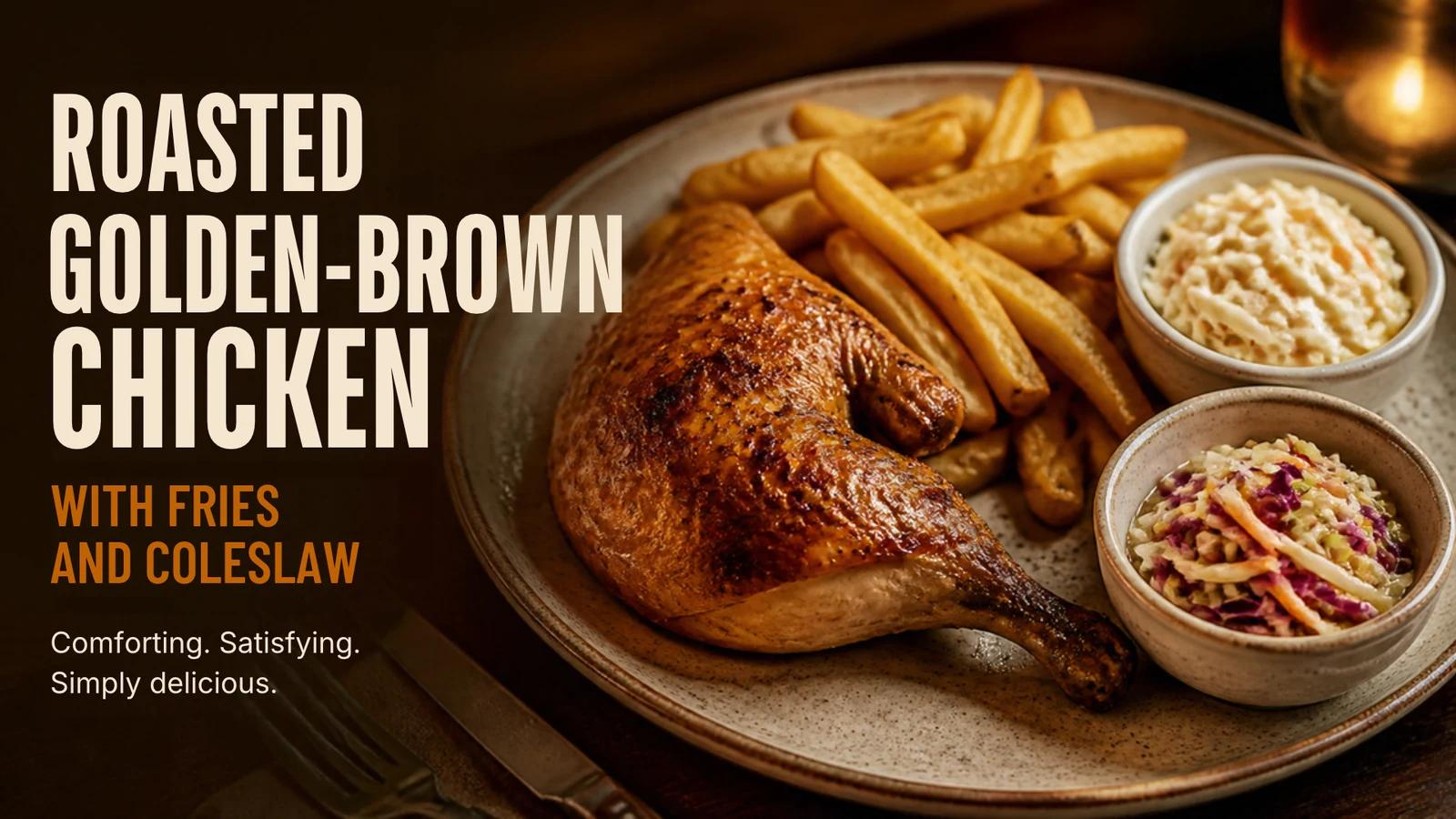
“Few dining disappointments are more universal in Quebec than peeling open a warm yellow St-Hubert delivery box, sinking your fork into a golden rotisserie chicken breast, and discovering chalky, stringy, bone-dry meat that can only be swallowed with a desperate dunk into a tub of BBQ sauce. While St-Hubert's signature rotisserie chicken has comforted generations since 1951, the infamous 'dry breast' (poitrine sèche) remains the #1 complaint across r/Quebec and r/montreal culinary forums. Is it the cooking technique, the commercial poultry breed, or something that happens after the chicken leaves the roasting spit? We investigated the biology of poultry muscle, spoke with former St-Hubert kitchen cooks, and uncovered the strict 60-minute holding lamp rule—plus the inventory secrets behind the discounted 'Roaster's Choice'—to show you exactly why it happens and how to guarantee a succulent, dripping meal every single time.”
1. The Meat Science: Why Poitrine (White) & Cuisse (Dark) React Differently to Fire
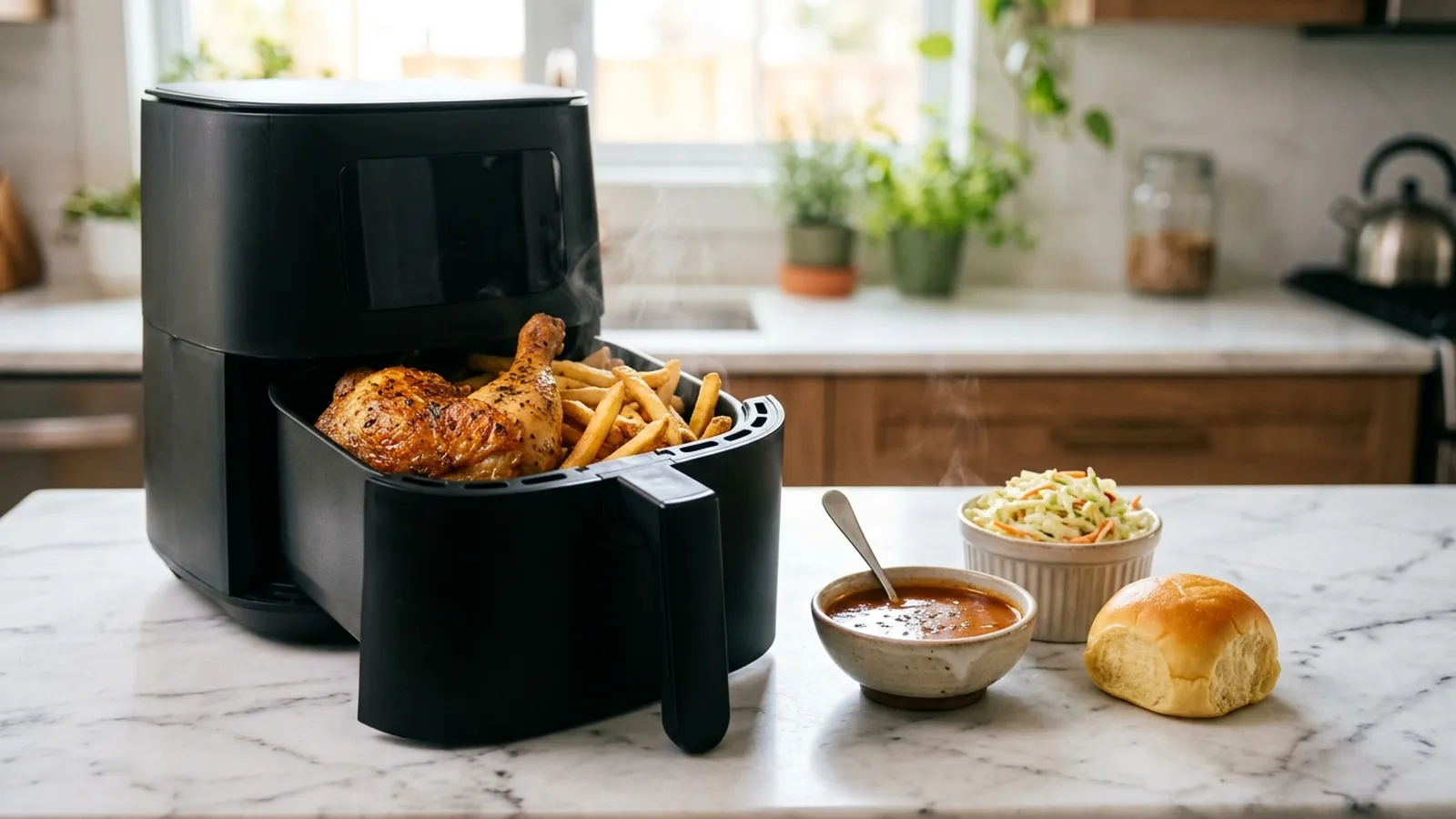
To understand why your St-Hubert rotisserie chicken breast is occasionally dry, you have to look past the branding and inspect the cellular anatomy of the bird. Chicken breast (pectoralis major) consists of fast-twitch muscle fibers designed for short bursts of explosive flight. These muscles have minimal vascularization, very few mitochondria, and astonishingly low intramuscular fat—typically between 1.8% and 2.8% by weight in Canadian Grade A commercial roasters.
In stark contrast, chicken legs and thighs (cuisse) consist of slow-twitch postural muscles rich in myoglobin, blood vessels, and heavy intramuscular fat reserves (ranging from 8.2% to 11.5%). Furthermore, dark meat cuts are wrapped in dense networks of connective tissue and collagen.
When a chicken slow-roasts on St-Hubert's commercial rotisserie spits for nearly three hours at 325°F to 350°F, heat does two completely opposing things to these two cuts. In the cuisse, collagen begins converting into rich, unctuous liquid gelatin around 160°F (71°C). This melted gelatin and rendered fat constantly self-baste the dark meat fibers from within. In the breast, however, there is virtually zero collagen to melt. Once the breast reaches an internal temperature of 165°F (74°C), the protein filaments contract like tightened ropes, physically wringing out cellular water. If the carved breast is consumed immediately, it remains delightfully tender; if it is subjected to further radiant dry heat, that lost moisture can never be regenerated naturally.
The Biochemical Culprit
White breast meat contracts its muscle fibers at 165°F (74°C), squeezing out water. Without the internal melted collagen reserves found in thighs and drumsticks, white meat relies entirely on external skin fat to retain juiciness.
2. The 60-Minute Warmer Lamp Rule: Inside the St-Hubert Kitchen 'Réchaud'
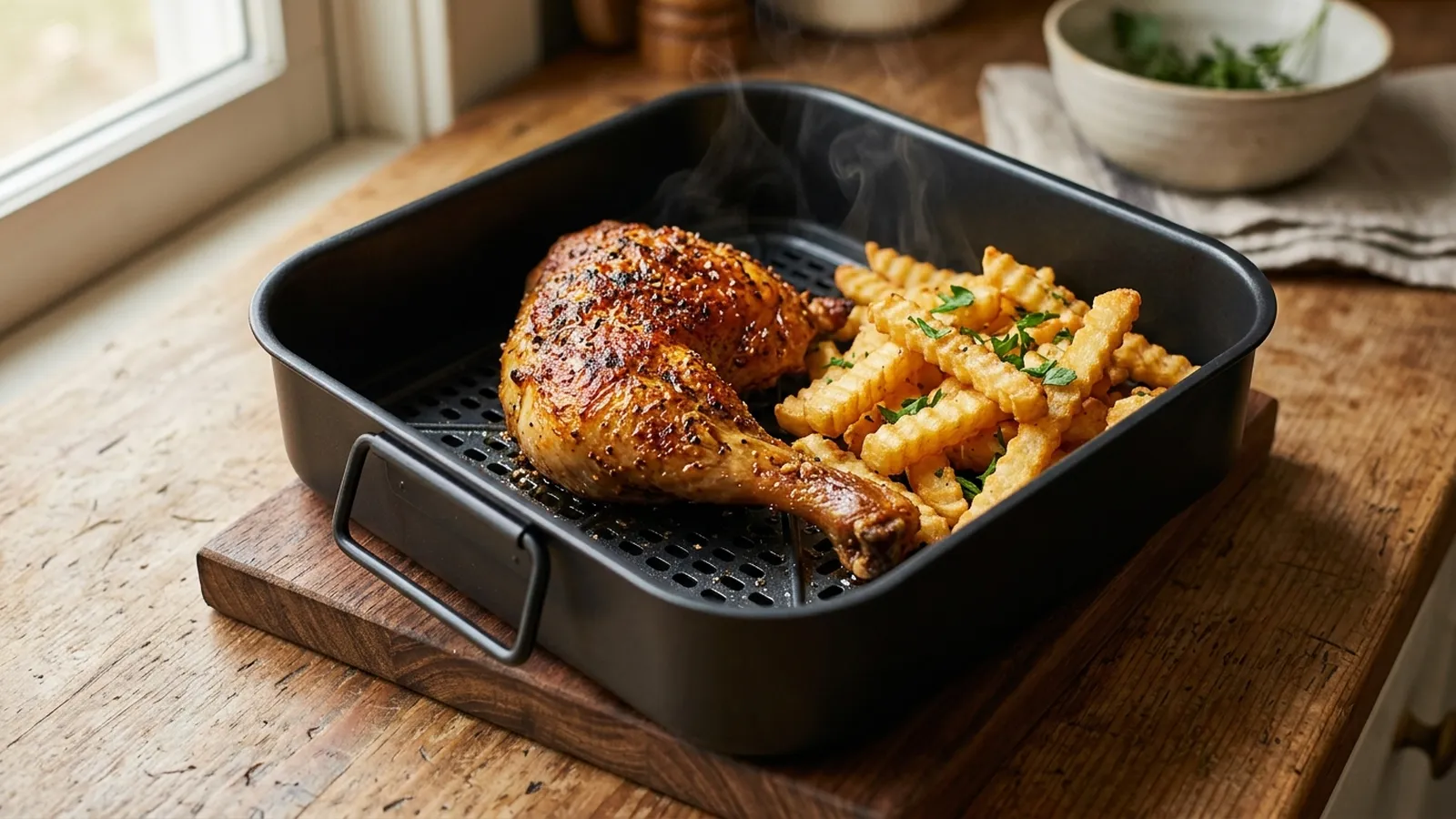
A common misconception among disgruntled customers on Reddit is that St-Hubert cooks 'overcook' their chicken on the rotisserie spits. That is almost never the case. St-Hubert's massive electric and gas rotisseries are computer-calibrated workhorses operated by experienced rôtisseurs who pull entire spits once the master thermometer reads an internal 180°F (82°C) at the thigh bone.
The real degradation happens after the bird leaves the spit and enters what line cooks call 'le réchaud'—the stainless steel warming station with infrared heat lamps and heated holding drawers. In commercial high-volume restaurants, you cannot carve a raw bird to order in 30 seconds; whole batches of roasted chickens must be staged to keep pace with hundreds of drive-thru, takeout, and delivery tickets.
According to verified former St-Hubert line cooks on r/Quebec, internal kitchen standards mandate that cooked poultry should not sit in the holding pass for more than 45 to 60 minutes. During that first 30 minutes, a carved chicken breast remains reasonably moist under mild radiant heat. But as the clock ticks past the 50-minute mark, the dry air currents from overhead infrared heat lamps mercilessly evaporate moisture from the exposed meat where the quarter was cleaved from the carcass. The outer skin stays warm and golden, but the meat underneath dehydrates into tight, chalky filaments.
3. The 'Choix du Rôtisseur' Mystery: Why You Almost Always Receive a Dry Breast
Every Quebecer browsing the St-Hubert dining room or delivery menu has noticed the 'Choix du Rôtisseur' (Roaster's Choice) meal. Priced $1.00 to $1.50 cheaper than a designated 'Quart Cuisse' or 'Quart Poitrine', it promises a delicious rotisserie quarter at the chef's discretion.
If you have ever ordered the Roaster's Choice and wondered why you received a breast instead of a leg nine times out of ten, kitchen insiders on Reddit revealed the open secret: Quebec dining demographics strongly favor dark meat. Families and everyday takeout customers overwhelmingly order thighs and drumsticks because they are juicier, saltier, and more forgiving.
This consumer preference creates a constant inventory bottleneck on the carving line: the legs sell out almost as fast as spits come off, leaving heating drawers disproportionately packed with unsold breast quarters. When a ticket chits through the kitchen printer for 'Choix du Rôtisseur', cooks do not toss a coin. They use the order to relieve inventory pressure and purge the warming drawer of breasts that are creeping toward their 60-minute expiration limit. By choosing the budget option, you are effectively volunteering to take the oldest cut in the kitchen.
Insider Kitchen Rule
Never order 'Choix du Rôtisseur' if you crave tender, dripping chicken. For a mere $1.25 price difference, ordering a specified 'Quart Cuisse' or 'Quart Poitrine' forces line cooks to prioritize fresh spit turnover.
4. 'La Sauce Couvre Tous les Péchés': The Quebec Cultural Coping Mechanism
There is a famous tongue-in-cheek saying shared by food lovers across Quebec: 'La sauce St-Hubert couvre tous les péchés' (St-Hubert BBQ sauce covers all sins). While originally a lighthearted compliment to the restaurant's iconic amber sauce, culinary historians and chefs point out that it reflects a very real functional necessity.
St-Hubert's original rotisserie sauce—invented in 1951 by founders René and Hélène Léger—is a masterclass in culinary balance. It combines tomato paste, sugar, molasses, vinegar, Worcestershire notes, and a distinctive spice bouquet anchored by cloves and cinnamon. The secret to its texture is cornstarch and vegetable oil, which create an emulsified, viscous glaze that clings tenaciously to meat.
When you tear off a dry, fibrous piece of rotisserie breast and dunk it into hot St-Hubert sauce, the dry muscle fibers act like miniature culinary sponges. The starch-thickened sauce fills the dehydrated interstitial spaces between protein strands, providing artificial lubricity, acidity, and moisture in the mouth. Millions of Canadians who claim to love St-Hubert chicken breast are, in reality, using the white meat as a delivery vessel for the world-famous sweet-and-sour BBQ gravy.
5. Timing Is Everything: The Golden Rush Hours vs The 'Rotisserie Graveyard'
The single greatest variable dictating whether your chicken breast arrives dripping with juice or dry as sandpaper is the exact minute your order hits the kitchen carving line. Rotisserie roasting is an artisanal batch process, not an on-demand fryer.
The Golden Rush Windows: Between 11:45 AM and 1:15 PM (lunch peak) and between 5:15 PM and 7:15 PM (dinner peak), dining rooms are packed and delivery chits print non-stop. In high-volume locations (like Laval, St-Jérôme, or Montreal's St-Denis), kitchen spits empty every 10 to 15 minutes. Chickens go straight from the spit to the cutting board, into your box, and onto the tray in under four minutes. Under these conditions, the chicken breast is spectacularly juicy, tender, and steaming.
The Rotisserie Graveyard Shift: Between 2:15 PM and 4:30 PM (the afternoon lull) and after 8:30 PM on weeknights, spit turnover grinds to a halt. Kitchens stop loading raw spits to prevent massive end-of-day waste. If you order a chicken breast at 3:15 PM on a Tuesday, you are almost guaranteed to receive a bird that has been basking under 250-watt infrared heat lamps for over an hour. If you then factor in a 25-minute Uber Eats or door-delivery ride inside a vented cardboard box, the breast suffers secondary steam dehydration before it ever touches your kitchen counter.
6. 5 Ordering Secrets & The 3-Minute Kitchen Broth Steam Revival
If you want to ensure your rotisserie dinner is a triumph rather than a dry disappointment, follow these five field-tested strategies recommended by seasoned Quebec rôtisseurs:
Strategy 1: Request 'Fraîchement Découpé' (Freshly Carved). Whether ordering in the dining room, at the Express counter, or through the drive-thru intercom, politely ask: 'Est-ce possible d'avoir une poitrine fraîchement coupée de la broche ?' (Is it possible to have a breast freshly cut from the spit?). If a fresh spit is resting on the carving block, cooks will gladly carve you a pristine quarter.
Strategy 2: Upgrade to the Double Leg Quarter (Deux Cuisses). If you prioritize tender, succulent meat above all else, stop ordering breast meat entirely. The St-Hubert 'Repas Deux Cuisses' provides two complete leg-and-thigh quarters packed with rich dark meat, crispy skin, and 4x more natural juiciness for only a couple of dollars more.
Strategy 3: Request Sauce à Part and Skin-Up Placement for Delivery. When ordering delivery, always request extra sauce cups on the side and make sure the delivery driver does not tilt the box. Trapped steam inside delivery containers turns skin rubbery while drying out the underlying meat.
Strategy 4: The 3-Minute Skillet Broth Steam Revival. If your delivered breast arrives dry or lukewarm, NEVER microwave it on full blast! Microwaving agitates water molecules and tightens protein fibers, turning chicken into rubber. Instead, place a non-stick skillet over low-medium heat, add 2 tablespoons of chicken broth or water, set the chicken quarter inside, and cover tightly with a lid for 3 minutes. The steam penetrates the white meat fibers, re-hydrating them completely without touching the crispy top skin.
Strategy 5: Repurpose Dry Leftovers into a Legendary Quebec Club Sandwich. If you find yourself with an irredeemably dry leftover breast, shred the meat finely. Mix it with 2 tablespoons of mayonnaise, freshly cracked black pepper, and a drop of lemon juice. Layer it between three slices of toasted white bread with crispy bacon, lettuce, and sliced tomato for an unbeatable homemade St-Hubert Club.
The Golden Reheating Rule
Never microwave cold rotisserie breast at 100% power. Use the 3-minute skillet steam hack with chicken broth to revive moisture without making meat rubbery.
7. Nutritional Comparison: Poitrine vs Cuisse (Is the Lean Protein Worth the Dryness?)
Many health-conscious and fitness-focused diners knowingly tolerate the dryness of St-Hubert's chicken breast because of its extraordinary nutritional profile. But is the trade-off in juiciness truly justified by the numbers?
Here is the verified laboratory breakdown comparing a standard St-Hubert Rotisserie Breast Quarter (Quart Poitrine, without skin) against a Rotisserie Leg Quarter (Quart Cuisse, without skin):
As the data demonstrates, opting for the breast delivers an impressive 54 grams of pure muscle-building protein with less than 5 grams of fat. However, that extreme leanness is precisely why the meat dries out so quickly under restaurant heat lamps. If you are tracking macros or cutting calories, the breast is an undisputed nutritional champion. But if you are eating for pure comfort, indulgence, and culinary pleasure, the leg quarter's modest 11 grams of healthy fat delivers 10 times the tenderness.
| Nutritional Metric | Quart Poitrine (Breast) | Quart Cuisse (Leg) | Difference / Culinary Impact |
|---|---|---|---|
| Calories (Skin Off) | 270 kcal | 250 kcal | Negligible 20 calorie difference |
| Protein Content | 54 g | 38 g | +16 g pure protein in breast (Fitness Winner) |
| Total Intramuscular Fat | 4.5 g (2.2%) | 11.2 g (9.4%) | Leg has 2.5x more fat (Moisture Winner) |
| Saturated Fat | 1.2 g | 3.1 g | Breast is significantly leaner for heart health |
| Collagen / Connective Tissue | Minimal (< 1.5%) | Abundant (~ 4.8%) | Leg melts into gelatin; breast stays dry |
| Sodium Level | 480 mg | 510 mg | Virtually identical light brining |
| Warmer Lamp Resilience | Low (Dries in 45 min) | High (Resilient for 90+ min) | Dark meat survives delivery; breast suffers |
8. Final Verdict: How to Enjoy St-Hubert Rotisserie at Its Peak
St-Hubert chicken breast does not have to be a chalky culinary tragedy. The infamous dryness is not caused by poor seasoning or careless chefs, but by the relentless physics of lean poultry muscle exposed to radiant heat lamps past the 45-minute mark. By avoiding the budget trap of the 'Choix du Rôtisseur', timing your orders during peak lunch and dinner rushes (12:00 PM and 6:00 PM), politely asking for freshly carved spit poultry, or simply embracing the luscious natural fat of the double leg quarter, you will never suffer through a dry rotisserie dinner again. And if life hands you a dry delivery breast, remember the golden rule: steam it with chicken broth, and let Quebec's greatest BBQ sauce cover the rest.
Frequently Asked Questions
Why is St-Hubert chicken breast drier than the chicken leg?
Chicken breast is comprised of fast-twitch pectoral muscle fibers with only 2% to 3% intramuscular fat and very low collagen. The leg quarter (thigh and drumstick) contains 8% to 10% fat and abundant connective tissue. During rotisserie roasting and subsequent holding under warming lamps, the collagen in dark meat melts into luscious gelatin that continuously bastes the meat from within, while white meat has no internal fat reservoir and dries out rapidly once surface moisture evaporates.
What is the secret behind St-Hubert's 'Roaster's Choice' (Choix du Rôtisseur)?
The Roaster's Choice gives you a $1.00 to $1.50 discount on a quarter-chicken meal in exchange for letting the kitchen choose your cut. Because Quebec diners overwhelmingly prefer juicy dark leg quarters, restaurant warmers regularly accumulate an oversupply of breasts. Kitchen staff use the Roaster's Choice as an inventory relief mechanism, prioritizing older breasts approaching the 60-minute holding threshold to avoid waste.
How long does cooked chicken stay in the St-Hubert warmer (réchaud)?
St-Hubert internal culinary guidelines recommend a maximum holding time of 45 to 60 minutes in the hot pass holding drawers. However, during slow mid-afternoon hours (2:00 PM to 4:30 PM) or late evenings, chickens may sit under radiant heating elements for 75 to 90 minutes or longer, which completely dehydrates white meat fibers.
How can I guarantee a juicy rotisserie chicken breast at St-Hubert?
Order during peak dining hours (11:45 AM–1:15 PM for lunch, or 5:30 PM–7:00 PM for dinner) when rotisseries are cleared every 10 to 15 minutes. At the dining room or drive-thru window, you can politely request a 'poitrine fraîchement découpée de la broche' (freshly cut from the spit). Alternatively, upgrading to a 'quart cuisse' (leg) or 'deux cuisses' (double leg) guarantees natural juiciness.
How do you fix a dry St-Hubert chicken breast at home?
Do not microwave it on high power, which tightens meat fibers and expels remaining juice. Instead, place the chicken breast in a skillet with 2 to 3 tablespoons of chicken broth or water, cover with a tight-fitting lid, and steam gently on low heat for 3 to 4 minutes. The trapped steam re-hydrates the white meat fibers without softening the skin.
Compare 2026 St-Hubert Dining Room Prices
Browse our quarterly verified prices for rotisserie chicken platters, baby back ribs, and Midi-Go lunch specials.
More Canadian Food Comparisons

St-Hubert Sauce vs Swiss Chalet Sauce: The Definitive 2026 Canadian Taste & Ingredient Test
Explore the culinary science, spices, clove vs tomato-herb balance, nutrition facts, and grocery prices between St-Hubert BBQ sauce and Swiss Chalet sauce.
St-Hubert vs Boston Pizza: Canadian Casual Dining & Family Showdown (2026)
Compare St-Hubert's Quebec rotisserie chicken and fall-off-the-bone ribs against Boston Pizza's gourmet pizzas, Cactus Cut potatoes, and sports bar vibe.