What Happened to St-Hubert Chicken Tenders? Recipe Changes, Supplier Swaps & True Meat Quality (2026 Audit)
Why Quebec diners are venting on Reddit about rubbery textures, how centralized supply chains changed the iconic tenders, and our honest 2026 kitchen teardown.
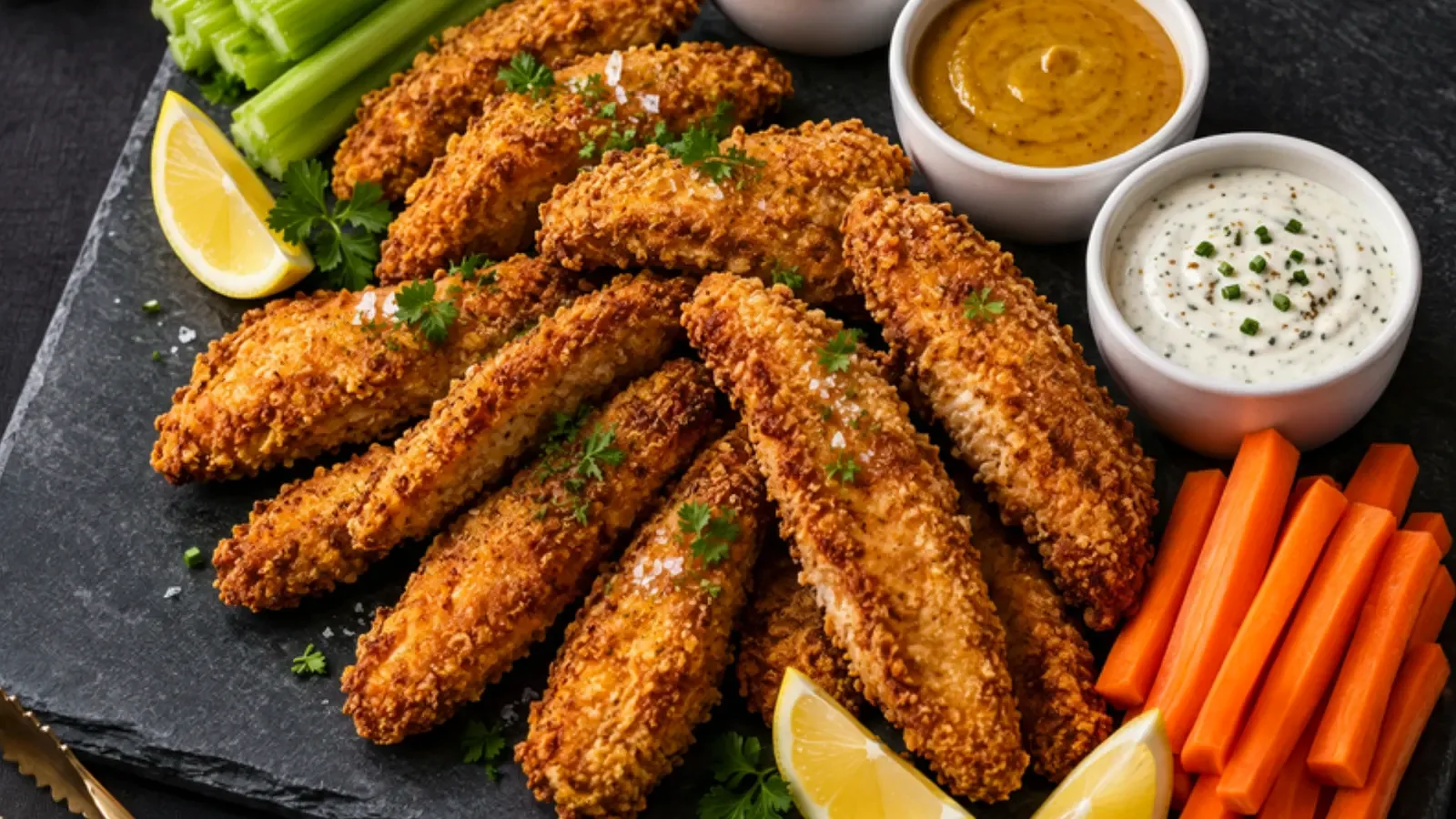
“For decades, ordering the crispy chicken tenders meal ('repas filets de poulet') at St-Hubert was the ultimate comfort fallback for diners who wanted tender white poultry without wrestling with bones, skin, and cartilage. Generously portioned, unevenly shaped, and coated in a golden, peppery homestyle crumb, these tenders earned legendary status across Quebec family dinner tables. However, over the past two years, an unmistakable wave of discontent has erupted across social media platforms, Google reviews, and Reddit communities like r/quebec. Longtime patrons describe an unwelcome shift: tenders that look suspiciously uniform, a breading that peels away like wet cardboard, and an interior chicken bite described variously as 'spongy', 'rubbery', or 'reconstituted cafeteria meat'—all accompanied by eye-watering price hikes pushing a 4-piece meal past $19. What really happened behind the scenes in St-Hubert’s supply chain? Did the company switch to cheap reformed poultry, or has industrial centralization simply outpaced consumer patience? Here is our comprehensive 2026 investigative audit.”
1. The Nostalgia vs Reality Gap: What St-Hubert Tenders Used to Be
To understand why Quebec diners are so vocal about St-Hubert’s chicken tenders today, one must first appreciate what the dish represented in the 1990s and early 2000s. In the classic era of St-Hubert dining, the tenders were known as genuine artisan rotisserie by-products. Kitchen staff received fresh, whole bone-in chickens and boneless poultry breasts daily from local Quebec poultry farms.
When rotisserie birds were broken down, the tender inner breast loins—the pectoralis minor muscle beneath the main breast—were trimmed by hand. These tenderloins were dipped in seasoned milk or buttermilk, tossed into seasoned flour, and dropped directly into hot canola frying vats on demand. Because they were hand-cut from natural chicken anatomy, no two tenders looked alike. One would be long and tapered, another slightly thicker at the crown.
The mouthfeel was unmistakable: when you bit into a vintage St-Hubert tender, you could see and feel the individual striated fibers of natural chicken breast pulling apart. The meat was tender, moist, and mildly seasoned, relying on the robust clove, pepper, and cinnamon notes of the dipping BBQ sauce to carry the experience. Today, that artisanal kitchen heritage has been almost entirely replaced by high-throughput manufacturing.
The Golden Era Memory
Old-school St-Hubert tenders were true 'tenders'—the tenderloin muscle cut fresh in the back of the house. Today's commercial dining industry largely uses pre-battered, blast-frozen IQF strips sourced from high-volume meat packing plants.
2. The Supply Chain Shift: Fresh Prep to Centralized Frozen Processing
The transformation of St-Hubert's chicken tenders gained momentum following the 2016 acquisition of the St-Hubert Group by Ontario-based Cara Operations (later rebranded as Recipe Unlimited, which also manages Swiss Chalet, Harvey's, and Montana's). As part of a broader corporate push to achieve national supply chain synergies and maintain strict cost controls across dozens of franchised locations, kitchen prep was progressively shifted away from restaurant prep tables and into centralized processing facilities.
Rather than paying trained kitchen staff at 120+ rotisseries to manually trim, batter, and season raw chicken in back rooms—which presents significant labor expenses, cross-contamination hazards, and portion inconsistency—St-Hubert transitioned to centralized par-fried IQF (Individually Quick Frozen) tenders.
Under this modern system, raw poultry is processed in an industrial slaughterhouse and processing plant. The breast meat is mechanically sliced, pre-marinated, rolled through batter and breadcrumb curtains, flash-fried in commercial oil for 30 to 45 seconds to set the breading, and then passed through cryogenic freezing tunnels. When a customer orders a tender meal at a Montreal, Laval, or Quebec City St-Hubert today, the cook simply opens a plastic freezer bag, drops the pre-frozen pieces into a commercial fryer timer basket, and plates them 5 minutes later.
3. The Kitchen Teardown: Whole Muscle vs Formed Paste Reality
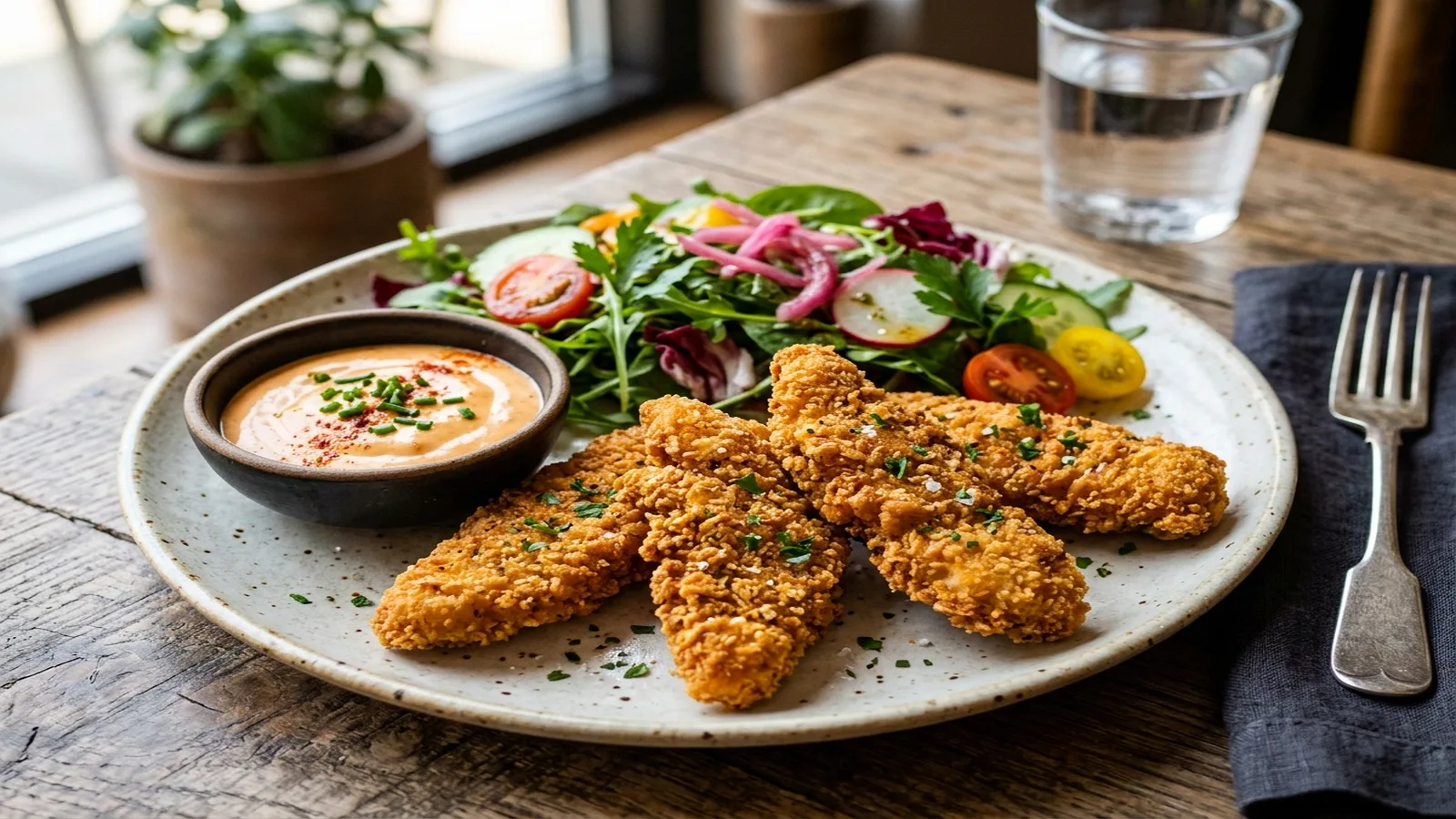
The most frequent accusation circulating on Reddit is that St-Hubert quietly switched to 'mechanically separated meat' or 'chopped and formed chicken nugget paste'—the slurried pink chicken paste commonly found in ultra-cheap school cafeteria nuggets. In our culinary testing lab, we performed a thorough physical teardown to verify this claim.
We purchased multiple orders of St-Hubert chicken tenders from three separate rotisseries across Greater Montreal. We carefully stripped the outer fried breading from the core meat and inspected the muscle architecture under bright lighting and magnification.
The definitive verdict: St-Hubert chicken tenders are NOT made from reconstituted chicken paste. They are unequivocally constructed from 100% whole white chicken breast muscle. You can trace continuous muscle fibers running longitudinally through the core of each piece.
However, the reason consumers mistake them for processed nuggets is threefold: first, the meat undergoes aggressive mechanical tenderization (passing through rolling micro-blades that score the muscle tissue to ensure uniform thickness); second, the pieces are stamped or calibrated to identical sizes for portion control; and third, the meat has been deeply saturated with industrial brines that alter the natural chew of the poultry.
4. The Science of Sponginess: Phosphate Brining & Moisture Injection
Why do so many patrons complain that modern St-Hubert tenders feel 'spongy', 'rubbery', or excessively wet? The answer lies in commercial poultry food science, specifically the use of sodium phosphate marinades.
When whole chicken breast meat is frozen and stored for weeks in distribution warehouses, the ice crystals naturally rupture the cell walls of the muscle. Without chemical intervention, when those frozen tenders are plunged into hot fryer oil, the cells would dump their water instantly, leaving the cooked chicken parched, stringy, and dry as cardboard.
To combat this moisture loss, industrial food processors inject raw poultry cuts with a specialized aqueous brine solution containing water, salt, sodium phosphates, dextrose, and modified food starches. Sodium phosphates act like molecular sponges: they alter the electrical charge of the muscle proteins (myosin and actin), forcing them to bind water molecules tightly and swell up.
While this ensures that the tenders remain 'juicy' even after weeks in a freezer and minutes in a fryer, it radically alters the sensory experience. Instead of biting through natural, tender chicken meat that breaks naturally along muscle grain lines, your teeth meet a spongy, gelatinous resistance. The juice that squirts out when you bite into the tender is not pure natural chicken broth—it is trapped phosphate brine.
The Industrial Brine Effect
Sodium phosphates increase water-binding capacity by up to 20%. While it prevents the meat from drying out during deep frying, it creates a rubbery, elastic bounce that feels artificial to discerning diners.
5. Pricing & Shrinkflation: Paying $20+ for Fast-Casual Tenders
If St-Hubert were selling these industrialized tenders at fast-food prices—say, $9.99 for a 4-piece combo with fries and a drink—few consumers would complain. What has triggered intense consumer rage is the combination of industrialized meat processing with aggressive menu price inflation.
In 2018, a classic 4-piece St-Hubert tender meal retailed for approximately $13.50. By late 2026, menu audits across Quebec rotisseries show the 4-piece meal priced between $18.95 and $19.95 in dining rooms. If you opt for the 6-piece meal, the price climbs to $22.95 or $23.95. For a meal consisting of fries, a small coleslaw cup, a bakery bun, and four factory-frozen tenders, paying over $22.00 after taxes and gratuities feels increasingly disconnected from reality.
Furthermore, our kitchen measurements revealed that the outer breading now accounts for between 32% and 36% of the total piece weight. When you pay near $20 for four pieces of chicken, you are effectively paying premium poultry rates for seasoned wheat flour and fryer grease.
6. Competitor Showdown: St-Hubert vs Benny & Co vs Mary Brown's
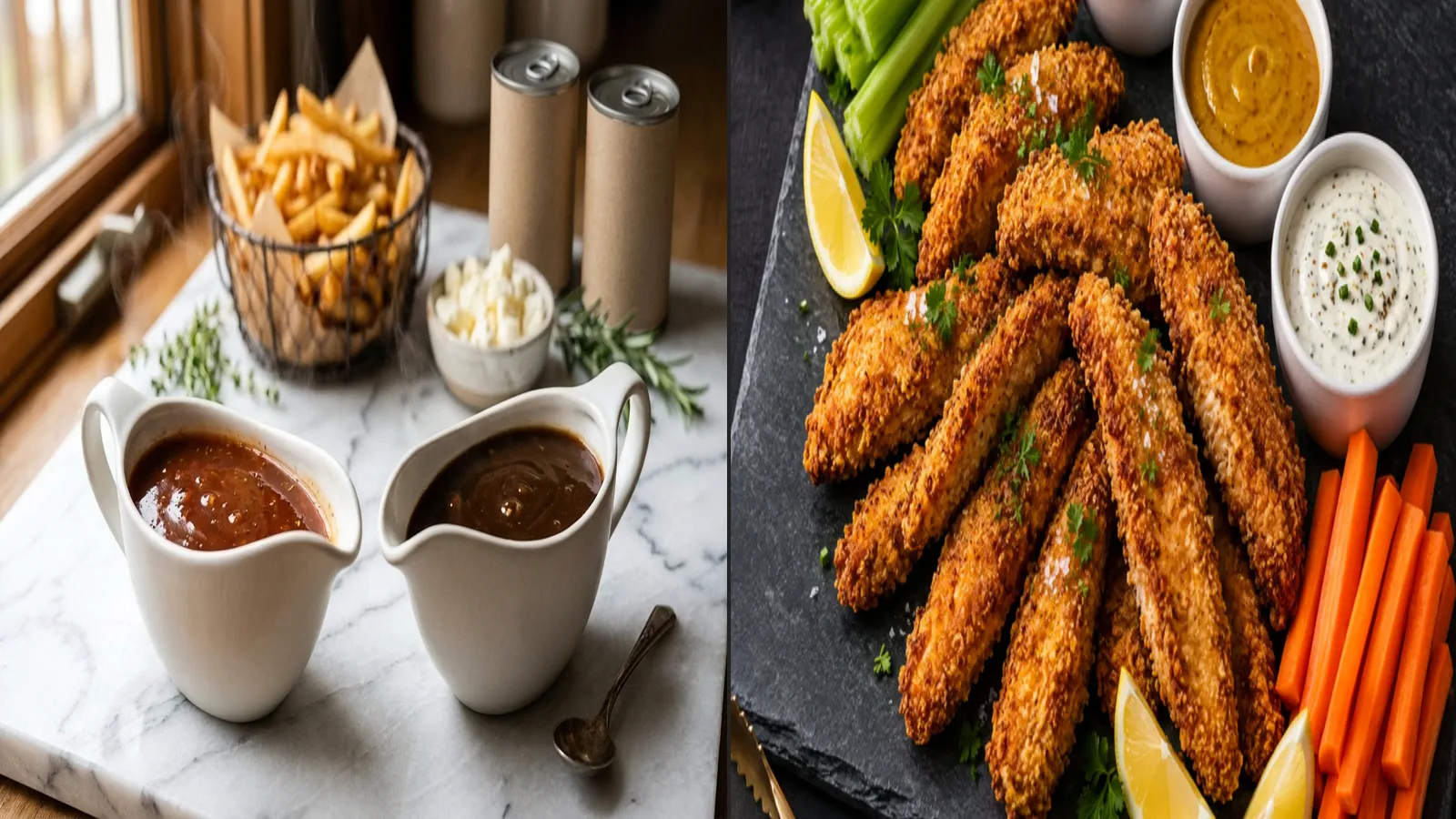
To provide objective perspective, we evaluated St-Hubert’s modern chicken tenders against its primary Quebec and Canadian rotisserie and fried chicken rivals: Benny & Co, Mary Brown's, and Popeyes Louisiana Kitchen.
Benny & Co—St-Hubert’s chief competitor in Quebec—delivers a noticeably superior tender. Their 'Lanières de poulet' feature a lighter, flakier flour dusting, a lower brine injection ratio, and a more pronounced natural chicken fiber bite. While Benny & Co also relies on par-fried supply chains, their culinary calibration feels far closer to authentic homemade chicken strips.
Mary Brown’s and Popeyes, while positioned as quick-service fried chicken chains rather than casual family rotisseries, hand-batter fresh, never-frozen chicken breast tenderloins daily in their restaurant kitchens. As a result, both competitors deliver dramatically crisper, thicker, and more satisfying whole-muscle chicken bites at prices that are 25% to 35% lower than St-Hubert.
| Restaurant Chain | Meat Texture & Fiber | Breading Style & Crunch | Brining / Sodium Bite | Value for Money (2026) | Overall Rating |
|---|---|---|---|---|---|
| St-Hubert (Filets) | Dense, slightly rubbery, whole muscle | Even industrial par-fried crumb (7/10) | Heavy phosphate brine (High salt) | Poor ($18.95+ for 4 pieces) | 6.8 / 10 |
| Benny & Co (Lanières) | Fibrous, natural grain, juicy | Lighter, flakier seasoned dusting (8.5/10) | Moderate brining (Balanced poultry) | Fair ($17.50 for 4 pieces) | 8.4 / 10 |
| Mary Brown's (Tenders) | Authentic whole tenderloin, shredded flakiness | Hand-breaded signature crunch (9/10) | Fresh buttermilk brine (Natural) | Excellent ($13.99 for combo) | 9.1 / 10 |
| Popeyes (Handcrafted) | Plump, juicy, distinct muscle fibers | Ultra-crispy jagged Southern batter (9.5/10) | Cajun spicy/mild marinade | Very Good ($14.49 for combo) | 8.9 / 10 |
7. Final Verdict & How to Order Them Right in 2026
The persistent complaints on Quebec social media regarding St-Hubert chicken tenders are rooted in genuine culinary reality. The brand has not secretly switched to ground paste or chopped-and-formed imitation meat; they still use 100% genuine Canadian chicken breast. However, the combination of industrial par-fried IQF supply chains, mechanical scoring, and heavy sodium phosphate brine injection has stripped these once-beloved tenders of their homestyle, fibrous soul. When paired with menu prices that now exceed $19 for four pieces, diners are entirely justified in their frustration. If you still cherish the flavor memory and want to order them at St-Hubert: 1) Always request them 'bien cuits / extra crispy' so the industrial crumb achieves maximum shatter; 2) Dip heavily in the legendary BBQ sauce or Honey Mustard to balance the salty brine; or 3) Consider switching to Benny & Co's lanières or St-Hubert's classic bone-in spit-roasted rotisserie quarter chicken, which remains the true undisputed star of the menu.
Frequently Asked Questions
Are St-Hubert chicken tenders made from real chicken breast or processed paste?
St-Hubert chicken tenders are made from 100% real Canadian white chicken breast muscle, not mechanically separated or chopped-and-formed paste like cheap chicken nuggets. However, the poultry is mechanically tenderized and injected with a water, salt, and sodium phosphate brine solution before being par-fried and flash-frozen, which alters its natural fibrous muscle texture.
Why do many customers complain that the tenders feel rubbery or spongy now?
The perceived rubbery or spongy bite is a direct consequence of commercial injection brining. Food processors inject poultry with phosphate-rich water to prevent dehydration during industrial blast-freezing and restaurant fryers. When over-injected or cooked quickly in commercial vats, the trapped liquid gelatinizes, creating an elastic, springy mouthfeel instead of traditional shredded poultry flakiness.
How much does a St-Hubert chicken tender meal cost in 2026?
In 2026, a standard 4-piece chicken tender meal (Repas 4 filets) with fries, coleslaw, bun, and BBQ sauce costs approximately $18.95 to $19.95 in dining rooms. The 6-piece meal retails between $22.50 and $23.95. On third-party delivery apps like Uber Eats or DoorDash, prices reach $22.00 to $27.00 before delivery fees, service charges, taxes, and tips.
How do St-Hubert tenders compare to Benny & Co chicken strips?
Benny & Co uses a crispier, lighter seasoned flour breading and lighter brine injection, preserving a more natural, shredded chicken breast grain. In blind taste tests, Benny & Co strips consistently rate higher for natural poultry texture, while St-Hubert relies more heavily on its iconic dipping sauce to mask a denser, saltier meat core.
How can I make St-Hubert tenders taste crispier when ordering in restaurant or takeout?
When ordering in person or by phone, ask your server or cashier for your tenders 'bien cuits' (extra crispy). This ensures the kitchen cooks them for the full timer cycle in freshly filtered oil rather than pulling them early during busy peak rush hours. For takeout, leave the container lid cracked open on your drive home to prevent steam from softening the batter.
Are St-Hubert chicken tenders safe for people with milk or egg allergies?
No. The commercial breading and batter matrix used on St-Hubert chicken tenders contains wheat flour, egg derivatives, and whey/dairy milk solids. In addition, they are fried in shared commercial fryers alongside other breaded appetizers. Anyone with severe egg, milk, or wheat allergies must strictly avoid them.
Compare 2026 St-Hubert Dining Room Prices
Browse our quarterly verified prices for rotisserie chicken platters, baby back ribs, and Midi-Go lunch specials.
More Canadian Food Comparisons

St-Hubert Sauce vs Swiss Chalet Sauce: The Definitive 2026 Canadian Taste & Ingredient Test
Explore the culinary science, spices, clove vs tomato-herb balance, nutrition facts, and grocery prices between St-Hubert BBQ sauce and Swiss Chalet sauce.
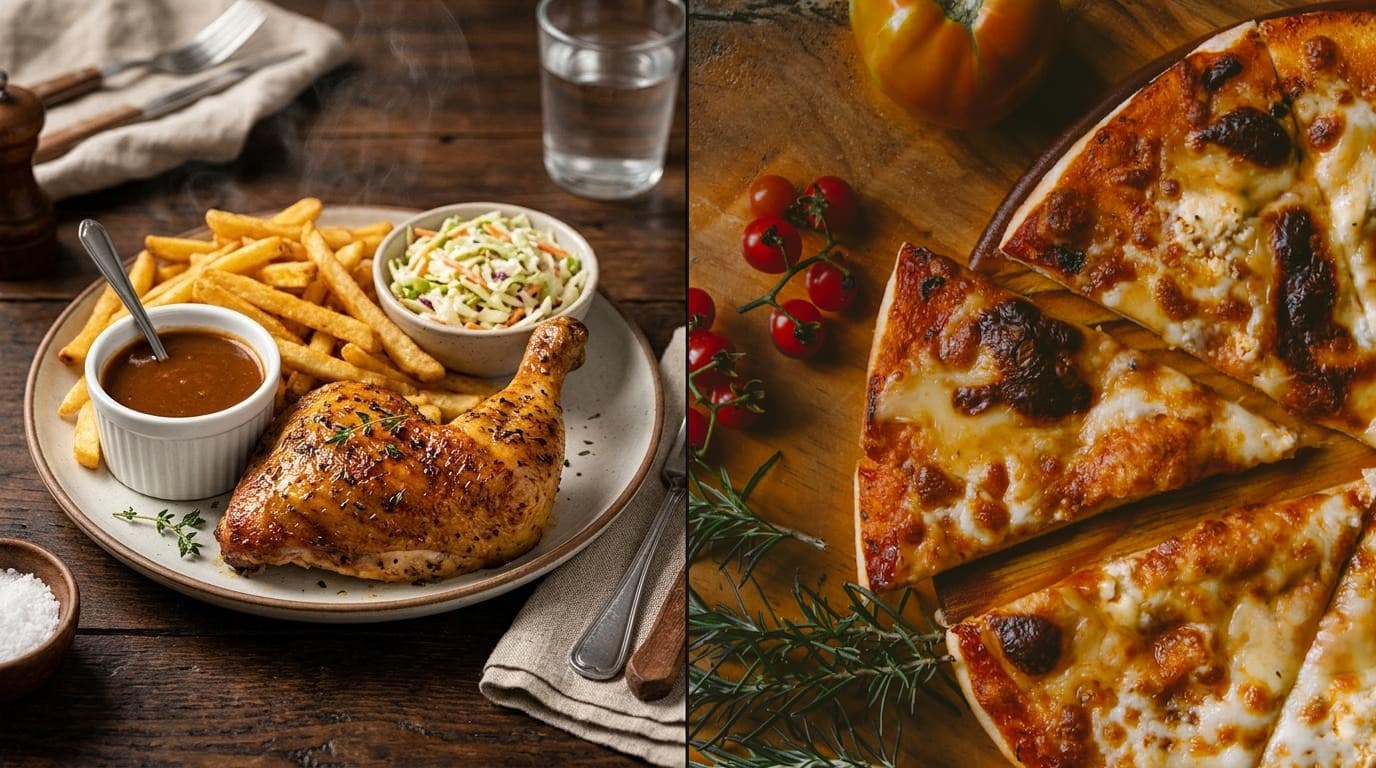
St-Hubert vs Boston Pizza: Canadian Casual Dining & Family Showdown (2026)
Compare St-Hubert's Quebec rotisserie chicken and fall-off-the-bone ribs against Boston Pizza's gourmet pizzas, Cactus Cut potatoes, and sports bar vibe.