St-Hubert vs Scores: The Great Quebec Rotisserie Battle (All-You-Can-Eat Salad Bar vs Iconic BBQ Sauce)
A head-to-head showdown between Quebec's two dining titans: comparing spit-roasted chicken quality, fall-off-the-bone ribs, the legendary Scores salad bar value, and St-Hubert's untouchable sauce legacy.
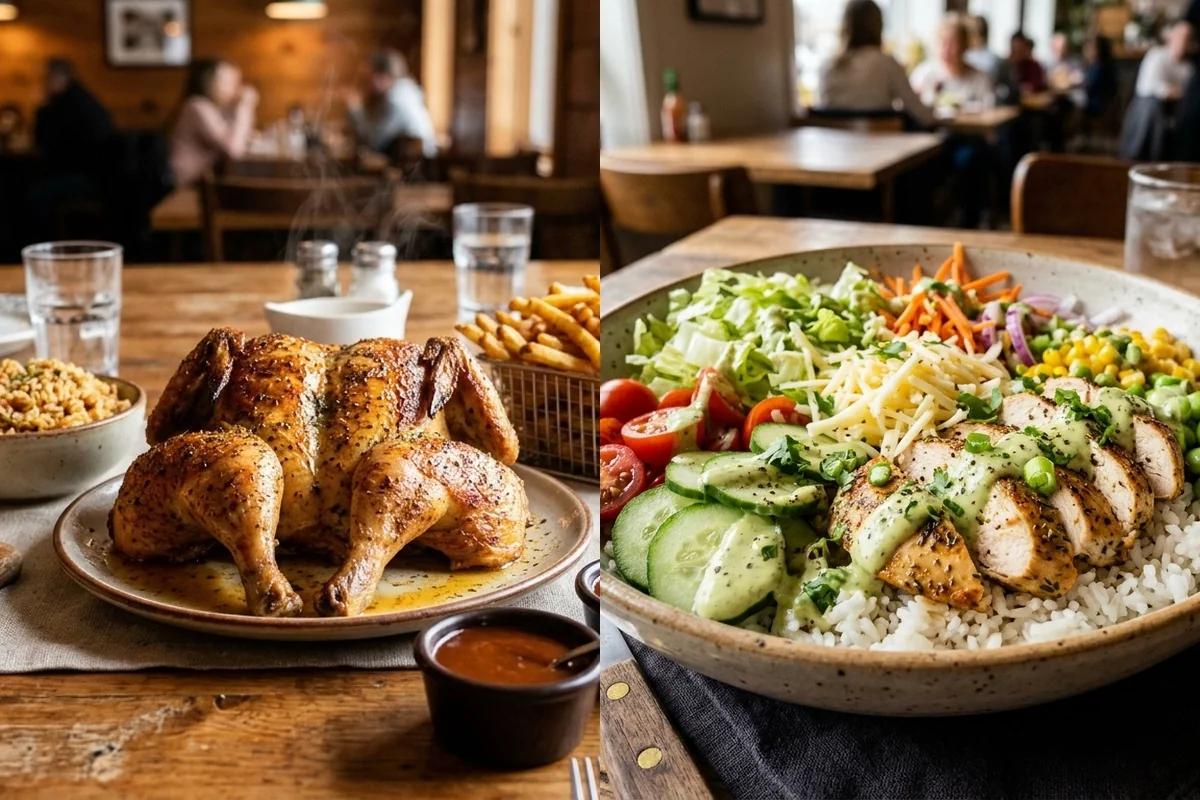
“In Quebec, rotisserie chicken is not merely fast food; it is an enduring cultural religion. For over seven decades, St-Hubert reigned supreme across the province as the undisputed king of slow-roasted poultry, yellow delivery cars, and legendary amber BBQ gravy. But in 1995, an audacious challenger emerged in Montreal to disrupt the status quo: Scores Rotisserie. Armed with the revolutionary concept of the 'Grand bar des délices'—an all-you-can-eat salad, hot soup, and fruit buffet included or bundled with dinners—Scores created a fiercely loyal following among hungry families. Today, with both chains competing across Quebec dining rooms, drive-thrus, and apps, customers are torn: Should you choose Scores for its lavish unlimited salad bar and ultra-tender ribs, or stay faithful to St-Hubert's artisanal spit-roasting, crispy skin, and world-famous dipping sauce? We conducted a comprehensive culinary, nutritional, and financial audit across both chains to crown the ultimate Quebec rôtisserie champion.”
1. Origins & History: 75 Years of St-Hubert Heritage vs Scores' 1995 Buffet Revolution
To understand the rivalry between St-Hubert and Scores, you have to appreciate the cultural timeline of dining out in Quebec. St-Hubert was founded in 1951 on Saint-Hubert Street in Montreal by René and Hélène Léger. The couple introduced the revolutionary concept of free, fast rotisserie chicken delivery via a fleet of Volkswagen Beetles equipped with custom heating elements. Over 75 years, St-Hubert grew into a national powerhouse with over 120 locations, embedding its jingle ('Pout-pout-pout, St-Hubert B-B-Q!') into Quebec folklore.
By the early 1990s, however, St-Hubert's near-monopoly on casual rotisserie dining had made the brand slightly complacent in the eyes of younger families. Recognizing an opportunity, Scores Rotisserie opened its first restaurant on Saint-Laurent Boulevard in Montreal in 1995. Scores introduced an American-style casual dining vibe paired with a game-changing value proposition: the 'Grand bar des délices'. Instead of receiving a single pre-packaged cup of coleslaw, guests were invited to fill their plates with endless fresh vegetables, composed pastas, piping-hot soups, and fresh fruit.
Today, Scores operates roughly 35 to 40 locations primarily across Greater Montreal, the South Shore, Laval, and Quebec City under the umbrella of MTY Food Group, while St-Hubert operates under Recipe Unlimited. The rivalry represents a classic battle: established heritage and sauce loyalty versus modern buffet abundance and value.
Corporate Titans
St-Hubert is backed by Recipe Unlimited (Swiss Chalet, Harvey's), while Scores is anchored by Montreal-based MTY Food Group (Bâton Rouge, Toujours Mikes). Both chains represent heavyweight Canadian hospitality power.
2. Rotisserie Chicken Quality: Spit-Roasted Crunch vs Basted Juiciness
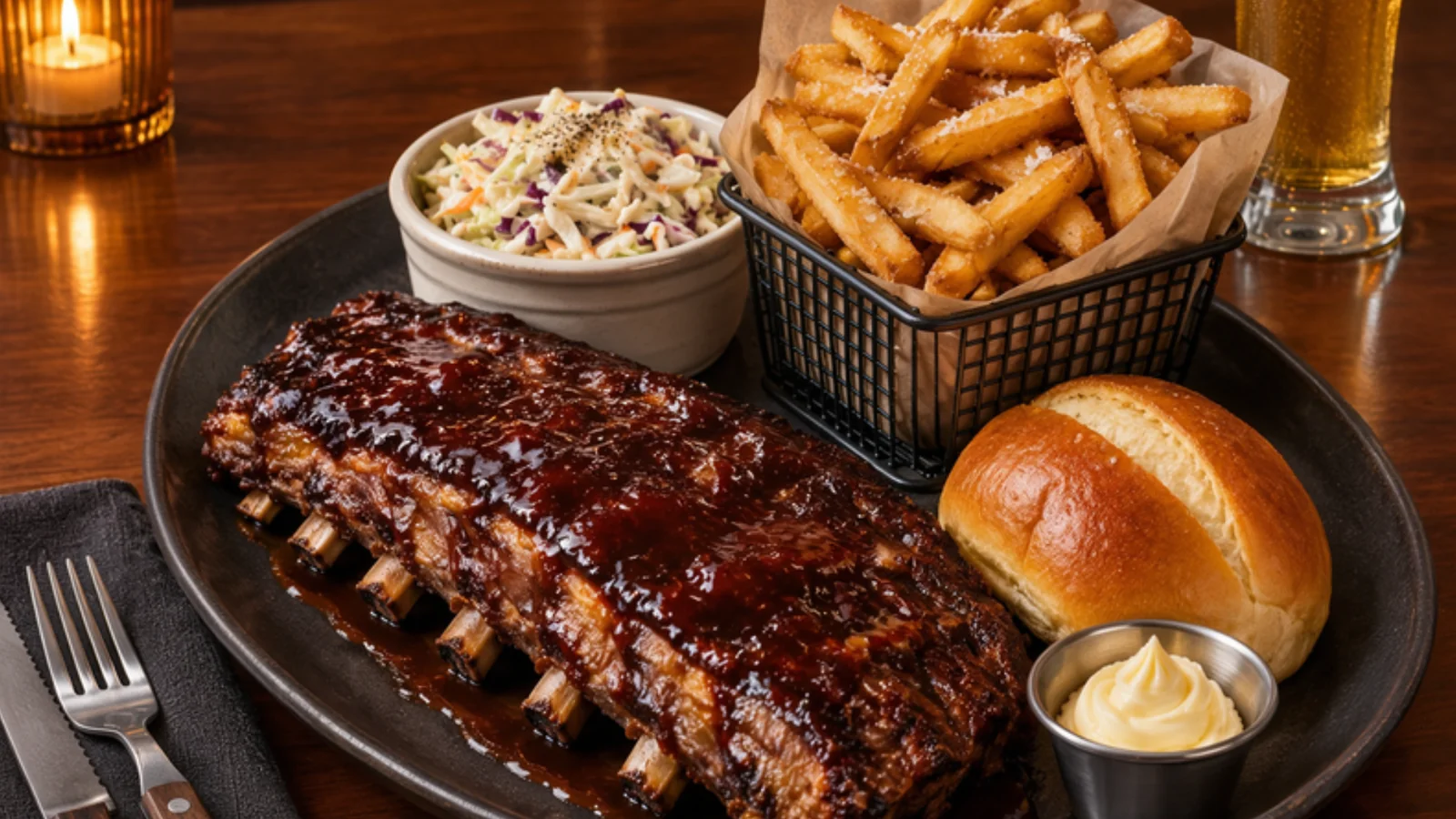
At the core of both restaurants is a whole chicken roasted on rotational heat. Yet, their culinary methodologies produce two noticeably distinct dining experiences.
St-Hubert relies on authentic horizontal spit-roasting (la rôtissoire à broche). Whole Quebec grain-fed chickens are seasoned with a dry exterior rub containing paprika, celery seed, black pepper, and herbs. Over nearly three hours of slow rotation, excess fat renders out completely, resulting in a dark, blistered, amber skin with distinct smoky rotisserie notes. The meat has a firm, clean, natural poultry bite. However, because white meat has virtually no intramuscular fat, St-Hubert's chicken breast can dry out if it sits under holding heat lamps past the 45-minute mark.
Scores approaches chicken with an emphasis on moisture retention. Scores utilizes commercial vertical rotisserie ovens and applies a light, herbed baste during the roasting cycle. This continuous moisture basting keeps Scores' chicken breast significantly juicier and more forgiving than St-Hubert's, even during mid-afternoon off-peak hours. The trade-off is the skin: Scores' skin tends to be softer, more pliable, and less crisp than St-Hubert's blistered exterior.
Verdict on the Bird: If you crave crispy, deeply caramelized rotisserie skin and firm traditional meat, St-Hubert takes the prize. If your priority is a moist, tender, succulent chicken breast that never feels stringy, Scores wins the juiciness test.
3. The Sauce Showdown: St-Hubert's Amber Legend vs Scores' Savory Gravy
No discussion of Quebec rotisserie is complete without addressing the sauce. In French Canada, the sauce is not a condiment; it is the emotional heartbeat of the meal.
St-Hubert's signature BBQ sauce is an untouchable cultural icon. Formulated in 1951 by founders René and Hélène Léger, it is instantly recognizable by its translucent amber-brown hue, glossy cornstarch emulsion, and complex sweet-and-sour bouquet. The upfront sweetness of brown sugar and tomato paste is immediately balanced by tangy cider vinegar, followed by a warm, aromatic finish of cloves, cinnamon, and Worcestershire notes. It clings tenaciously to fries, coats the chicken, and acts as the ultimate dipping pool for warm dinner rolls.
Scores, by contrast, takes a much more conventional diner approach. Scores' primary poultry sauce (Sauce brune Scores) is a savory, chicken-stock-and-veal gravy seasoned with cracked black pepper, simmered onions, and thyme. It is darker, richer, and decidedly less sweet than St-Hubert's. Scores also offers a tangy BBQ sauce and an excellent cracked peppercorn sauce (*sauce poivre vert*).
The Verdict: While Scores' savory brown gravy is technically delicious and appeals to diners who dislike sweet sauces, St-Hubert's sauce is an inimitable Quebec masterpiece. For pure nostalgic indulgence and unmatched dipping pleasure, St-Hubert wins this round in a landslide.
The Sauce Factor
Scores' brown gravy is savory and pepper-forward, but St-Hubert's sweet, tangy clove-infused amber BBQ sauce remains the gold standard of Canadian comfort food.
4. The 'Grand Bar des Délices': Scores' Unstoppable Value Weapon
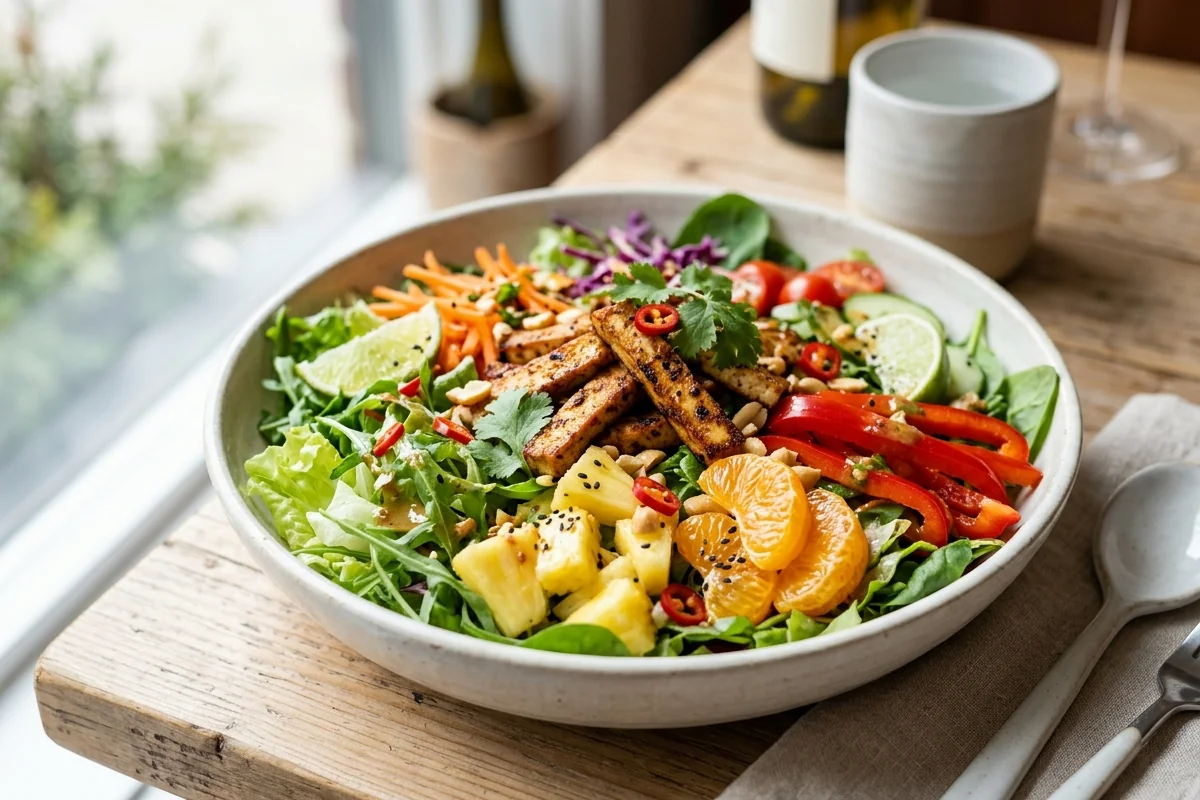
If St-Hubert owns the sauce, Scores holds the single most devastating competitive weapon in casual dining: the legendary 'Grand bar des délices'.
Walk into any Scores dining room at lunch or dinner, and you will see a sprawling, gleaming central buffet station featuring over 40 fresh, all-you-can-eat components. The bar includes:
1. Two Hot Daily Soups: From rich chicken noodle and homestyle vegetable to cream of broccoli and Friday clam chowder, served with warm croutons and crackers.
2. Fresh Greens & Toppings: Crisp romaine, baby spinach, grated carrots, sliced cucumbers, cherry tomatoes, beets, chickpeas, sunflower seeds, and six homemade dressings.
3. Gourmet Prepared Salads: Greek penne pasta salad, creamy dill potato salad, sweet-and-sour coleslaw, Asian crunchy noodle salad, and marinated three-bean medley.
4. Warm Bakery & Fruit: Freshly toasted garlic herb bread sticks, soft dinner rolls, fresh-sliced watermelon, pineapple, honeydew, cantaloupe, and chilled puddings.
The Financial Value: When dining in at Scores, you can upgrade any chicken or rib plate to include the unlimited salad bar for merely $5.00 to $7.00 CAD (or order the salad bar as a standalone all-you-can-eat meal for ~$16.95).
At St-Hubert, your meal comes strictly with a tiny plastic cup of coleslaw and fries. If you want a small side garden salad at St-Hubert, you must pay $4.75 extra; a bowl of chicken noodle soup is another $4.95. To assemble the variety that Scores gives you unlimited access to would cost over $25.00 in à la carte sides at St-Hubert. For families with hungry teenagers or health-conscious diners craving vibrant vegetables, Scores completely demolishes St-Hubert in sit-down dining value.
5. Ribs & Combos: The Fall-Off-The-Bone Tenderness Test
Quebec rôtisseries are just as famous for their slow-cooked pork back ribs (côtes levées) as they are for rotisserie chicken. Both chains offer popular 'Chicken & Ribs' combination plates.
St-Hubert Ribs: St-Hubert braises its pork back ribs low and slow before brushing them with their signature original or chipotle BBQ glaze and finishing them under high-heat broilers. The meat is tender and easily tears away with your teeth, but it retains a noticeable 'chew'—a slight resistance that traditional barbecue purists appreciate. The glaze caramelizes nicely on the charred edges.
Scores Ribs: Scores takes tenderness to an extreme. Their pork back ribs are slow-cooked in apple-juice-infused aromatic broth until the connective tissues completely dissolve. When you lift a bone with a fork, the meat slides clean off without any knife required. Finished with their sweet honey-bourbon or classic BBQ glaze, Scores ribs are exceptionally juicy, melting, and sticky.
Verdict on Ribs: Scores takes the victory here. For everyday casual diners who measure ribs by how easily they fall off the bone, Scores' ultra-tender braising process is consistently superior to St-Hubert's firmer rib cuts.
6. Pricing, Portions & The Delivery Reality: Who Wins Your Dollar?
To determine which restaurant delivers the better economic return on your hard-earned dollars, we have to split the experience into two completely different arenas: Dine-In vs Delivery.
Dine-In Winner: Scores. When dining in the restaurant, a quarter chicken meal at Scores costs approximately $18.25. Adding the unlimited soup, salad, garlic bread, and fruit bar brings the total to roughly $23.50. You walk away completely stuffed, having eaten multiple courses of fresh food.
At St-Hubert, a quarter chicken meal in the dining room costs roughly $18.95 and includes only chicken, fries, a tiny coleslaw, and a bun. If you order an appetizer soup and a side salad, your bill quickly climbs past $28.00 with substantially less total food. For sit-down meals, Scores provides unmatched bang for your buck.
Takeout & Delivery Winner: St-Hubert. The dynamic completely flips the moment you order food to go. Scores' greatest asset—the salad bar—cannot be replicated for delivery. Ordering a single small salad for takeout at Scores costs $8.00+, and their delivery orders are typically fulfilled through third-party gig apps like Uber Eats and DoorDash, which add steep service fees and menu markups.
St-Hubert, on the other hand, is the undisputed master of delivery logistics. With its proprietary heated delivery fleet, custom-vented cardboard containers that protect chicken crispness, and seamless direct app ordering, St-Hubert delivers a significantly superior hot takeout meal right to your doorstep.
7. Comprehensive Benchmark Table: St-Hubert vs Scores Side-by-Side
Here is the definitive side-by-side benchmark comparing St-Hubert and Scores across every critical culinary, operational, and financial metric:
As the benchmark illustrates, neither chain sweeps the board; rather, each excels in distinct culinary domains.
| Feature / Metric | St-Hubert Rôtisserie | Scores Rôtisserie | Advantage / Winner |
|---|---|---|---|
| Year Founded | 1951 (Montreal) | 1995 (Montreal) | St-Hubert (75-year heritage) |
| Total Locations | 120+ across QC, ON, NB | ~35-40 across Quebec | St-Hubert (Massive footprint) |
| Chicken Cooking Style | Slow spit-roasting (broche) | Vertical basting rotisserie | Tie (Crispy skin vs Juiciness) |
| Chicken Skin Crunch | Crispy, charred, golden | Softer, lightly basted | St-Hubert (Crispier skin) |
| Breast Meat Moisture | Can dry out after 45 min | Consistently moist and tender | Scores (Juicier breast meat) |
| Signature Sauce | Iconic sweet-tangy amber BBQ | Savory brown stock gravy | St-Hubert (Legendary sauce) |
| Salad Bar Experience | None (Pre-packaged coleslaw) | Unlimited 'Grand bar des délices' | Scores (Massive blowout win) |
| Ribs Tenderness | Meaty with traditional chew | Ultra-tender fall-off-the-bone | Scores (Superior tenderness) |
| Dine-In Value | Standard restaurant pricing | Incredible value with salad bar | Scores (Best sit-down deal) |
| Delivery & Takeout | Dedicated heated car fleet | Outsourced gig apps (No salad bar) | St-Hubert (Unrivaled delivery) |
| Kids' Experience | Animal box, toys, car themes | Kids eat free/discount salad bar | Tie (Nostalgia vs Food volume) |
8. Final Verdict: Which Quebec Rôtisserie Should You Choose?
The ultimate victor in the St-Hubert vs Scores showdown depends entirely on where you plan to eat. If you are sitting down in a dining room with your family or friends, Scores is the superior choice: its legendary 'Grand bar des délices' turns an ordinary chicken dinner into an all-you-can-eat feast of fresh soups, crisp gourmet salads, warm garlic bread, and fresh fruits for just a modest $5 add-on, while its ribs offer melt-in-your-mouth tenderness. However, if you are ordering takeout, pulling into a drive-thru, or sitting on your couch on a freezing snowy night waiting for delivery, St-Hubert is the undisputed champion: its 75-year-old spit-roasting craftsmanship produces unmatched crispy skin, its proprietary heated delivery fleet ensures food arrives hot, and its world-famous amber BBQ sauce remains a transcendent culinary treasure that Scores simply cannot touch.
Frequently Asked Questions
Does St-Hubert have an all-you-can-eat salad bar like Scores?
No. While some legacy St-Hubert locations experimentally tested salad bars in decades past, modern St-Hubert restaurants do not feature a salad bar. St-Hubert sides are strictly portioned (creamy or traditional vinegar coleslaw, fries, or a side garden salad for an extra charge). Scores' 'Grand bar des délices' remains its unique signature attraction.
Are St-Hubert and Scores owned by the same company?
No. St-Hubert is owned by Recipe Unlimited (formerly Cara Operations, which also owns Swiss Chalet, Harvey's, and Montana's). Scores is an independent Canadian franchise network operated under the MTY Food Group umbrella (which also operates brands like Baton Rouge, Tiki-Ming, and Thai Express). They are direct, fierce corporate competitors.
Which restaurant has better rotisserie chicken: St-Hubert or Scores?
For crispy skin, deep spit-roasted flavor, and authentic dry spice rub, St-Hubert wins. For lean white meat tenderness, Scores often wins because their chickens undergo a light basting process during roasting, preventing the breast from drying out as quickly as St-Hubert's breasts under heating warmers.
Is Scores cheaper than St-Hubert?
Base menu prices for a quarter chicken meal are very similar (both hovering around $17.50 to $19.50 CAD). However, Scores offers substantially higher overall food value for dine-in guests because you can upgrade to include unlimited soups, salads, garlic bread, and fruits for roughly $5.00, whereas buying equivalent sides at St-Hubert would cost $15+ extra.
Which chain is better for takeout and delivery?
St-Hubert is vastly superior for delivery. St-Hubert operates its own dedicated fleet of heated delivery vehicles with customized thermal packaging, ensuring fries and chicken stay warm. Furthermore, Scores' greatest selling feature—the all-you-can-eat salad bar—cannot be replicated in a takeout container or delivery bag.
Compare 2026 St-Hubert Dining Room Prices
Browse our quarterly verified prices for rotisserie chicken platters, baby back ribs, and Midi-Go lunch specials.
More Canadian Food Comparisons

St-Hubert Sauce vs Swiss Chalet Sauce: The Definitive 2026 Canadian Taste & Ingredient Test
Explore the culinary science, spices, clove vs tomato-herb balance, nutrition facts, and grocery prices between St-Hubert BBQ sauce and Swiss Chalet sauce.
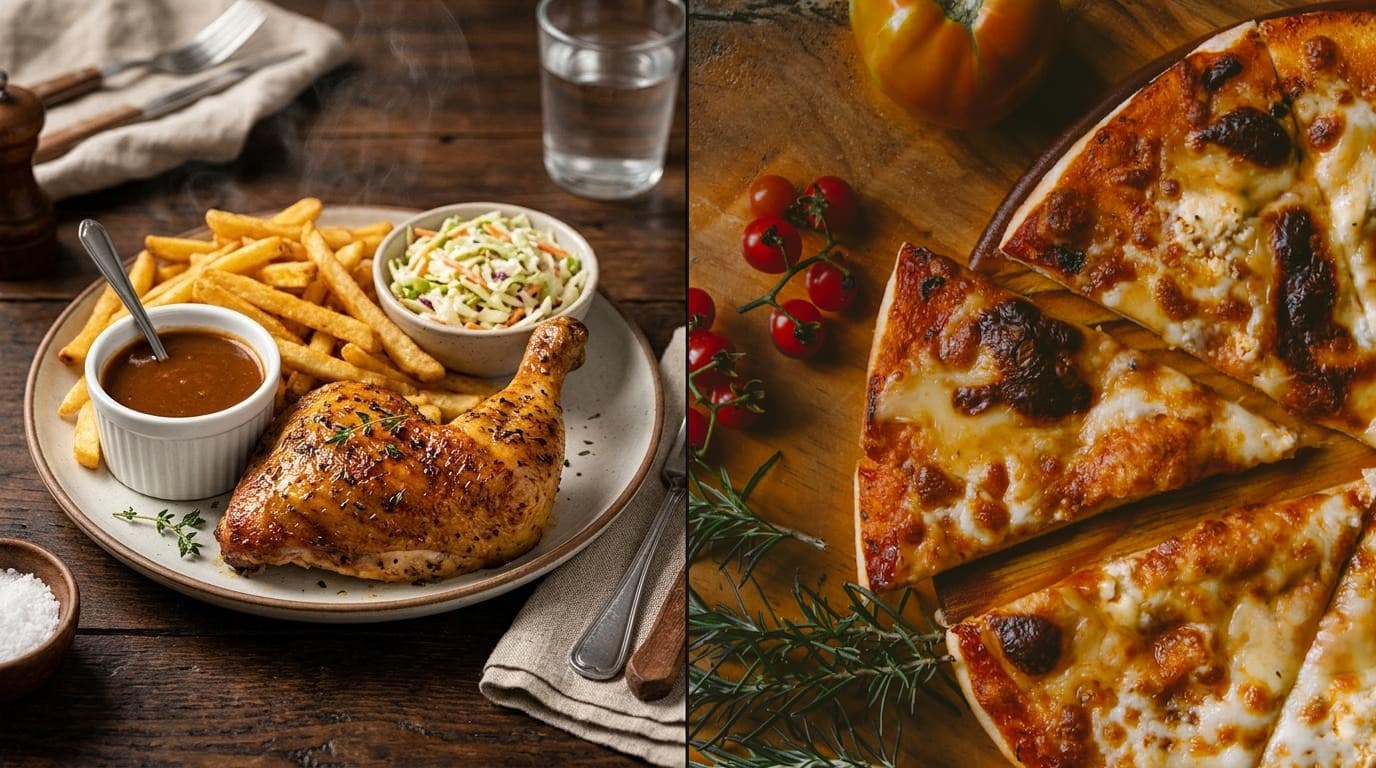
St-Hubert vs Boston Pizza: Canadian Casual Dining & Family Showdown (2026)
Compare St-Hubert's Quebec rotisserie chicken and fall-off-the-bone ribs against Boston Pizza's gourmet pizzas, Cactus Cut potatoes, and sports bar vibe.