St-Hubert BBQ Sauce vs Poutine Sauce (Sauce Brune): Differences, Ingredients & Taste Test
Demystifying Quebec's rotisserie sauce confusion: why St-Hubert BBQ sauce isn't American barbecue sauce, ingredient breakdown, grocery can comparison, and why Reddit prefers BBQ sauce for homemade poutine.
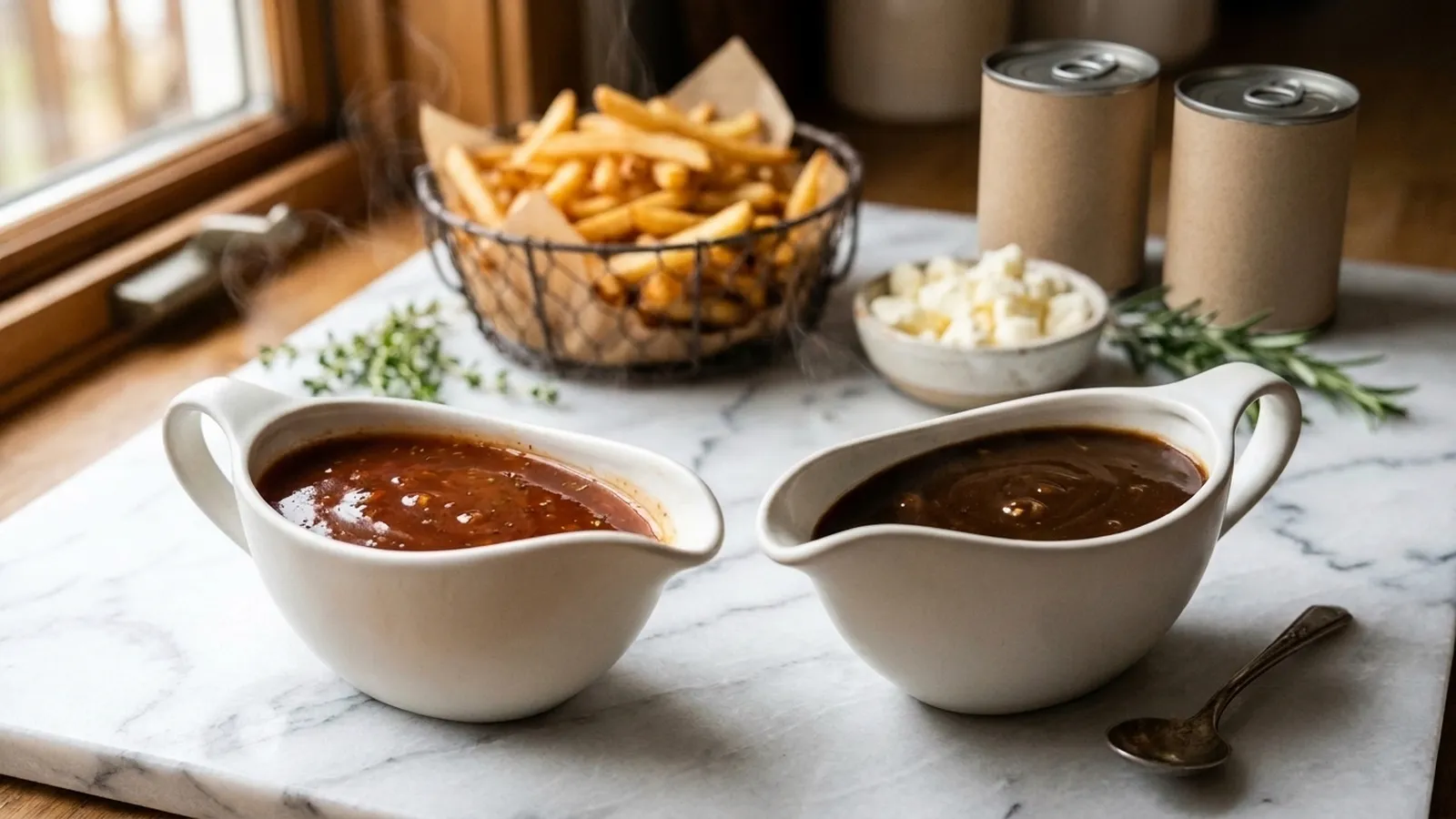
“Stand inside the canned gravy aisle of any IGA, Metro, Maxi, or Walmart in Quebec or eastern Ontario, and you will inevitably spot a puzzled shopper staring at the shelf. In their hands are two iconic yellow St-Hubert cans: on the left, the world-famous 'Sauce BBQ'; on the right, the tantalizing 'Sauce Poutine' (Sauce Brune). For tourists and newcomers to Canada, the word 'BBQ' conjures images of sweet, smoky, molasses-laden American rib sauce. For Quebecers, however, the choice between these two cans is serious culinary business. Which sauce should you use for homemade poutine? How do their secret spices, sodium levels, and viscosities differ? And why does a massive community on Reddit swear that buying the BBQ sauce can is the ultimate secret to restaurant-quality poutine? Here is your definitive taste-test and grocery comparison.”
1. The Great Quebec Sauce Misunderstanding: Why 'BBQ' Doesn't Mean Barbecue
To understand the St-Hubert sauce aisle, you first have to decode Quebec culinary vernacular. In the United States and anglophone Canada, 'barbecue sauce' almost exclusively refers to a thick, sweet, ketchup- or molasses-based grilling glaze infused with liquid smoke, designed for brushing onto ribs or pulled pork.
In French-speaking Quebec, however, spit-roasted rotisserie chicken has historically been known simply as *poulet BBQ*. When founders Hélène and René Léger opened their first rotisserie on Rue Saint-Hubert in Montreal in 1951, the savory, seasoned poultry gravy served alongside the roasted chicken was naturally christened Sauce BBQ.
St-Hubert BBQ sauce is not barbecue sauce in the American sense; it is an aromatic, mahogany-hued poultry dipping gravy with subtle holiday spices and a delicate cider tang. When St-Hubert later introduced a dedicated 'Sauce Poutine' (sauce brune), it created decades of confusion for shoppers trying to decide which can belongs on their homemade fries.
2. Side-by-Side Ingredient Breakdown: Cloves & Tomatoes vs Beef & Roux
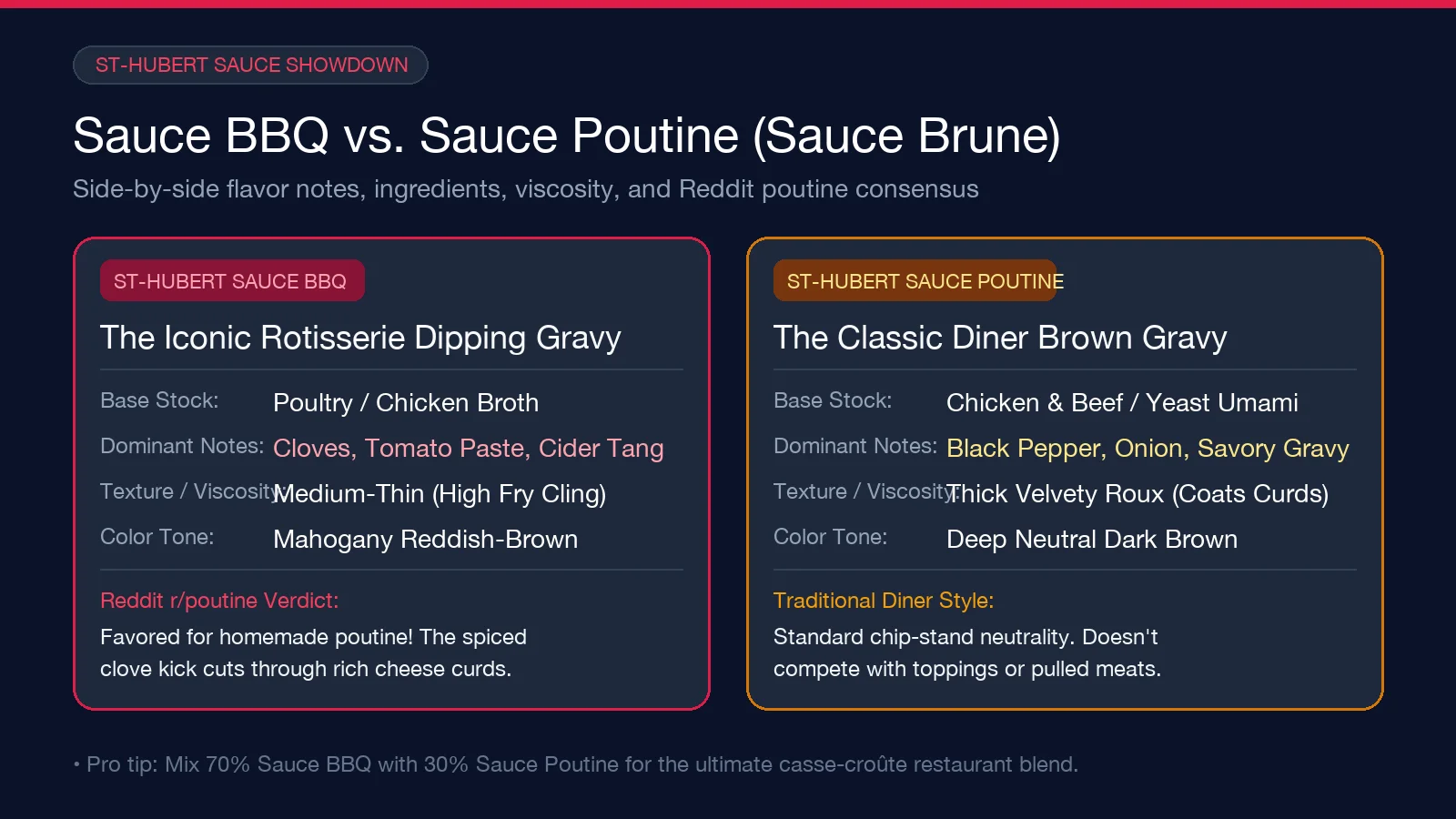
Examining the ingredient labels of both 398ml cans reveals the fundamental culinary differences between these two Quebec staples:
• The Sauce BBQ Profile: Built upon a concentrated chicken broth and rendered chicken fat foundation, this sauce gets its signature mahogany-reddish color from concentrated tomato paste. Its legendary spice blend features ground cloves, allspice, cinnamon, celery seed, onion powder, and a gentle splash of apple cider vinegar. The resulting profile is complex, aromatic, slightly sweet, and tangy.
• The Sauce Poutine (Sauce Brune) Profile: Formulated to mimic classic Quebec greasy-spoon diner gravy, Sauce Poutine uses a dual chicken and beef/yeast extract stock base. It contains no cloves, no cinnamon, and minimal tomato. Instead, it relies on roasted onion, garlic, cracked black pepper, and hydrolyzed vegetable proteins to deliver a deep, savory, umami-rich brown gravy flavour.
In short: Sauce BBQ is spiced, aromatic, and tangy; Sauce Poutine is savory, peppery, and earthy.
The Secret Clove Signature
The clove and cinnamon note in St-Hubert Sauce BBQ is what makes it instantly recognizable to millions of Canadians. That warm, festive aromatics balance the natural gaminess of slow-roasted chicken and cut through heavy animal fats.
3. Viscosity, Color & Fry-Clinging Texture: Which Holds Up Better?
Texture and viscosity play a massive role in how each sauce interacts with potatoes, cheese, and poultry:
• Sauce BBQ (Medium-Thin Dipping Viscosity): Engineered primarily for dipping, St-Hubert BBQ sauce has a lighter body. When you dip a hot, crispy french fry into a warm ramekin of BBQ sauce, a thin, glossy film clings to the potato without clumping. When poured over a plate, it flows rapidly between chicken pieces.
• Sauce Poutine (Thick Velvety Roux): Formulated specifically for poutine bowls, this sauce contains a higher ratio of modified cornstarch and wheat starch. It pours like heavy cream, forming a thick, velvety blanket over cheese curds. Crucially, its density prevents it from immediately sinking to the bottom of the dish, keeping cheese curds warm and slowly coaxing them into that coveted stretchy melt.
4. The Poutine Showdown: Why Reddit r/poutine Swears by BBQ Sauce
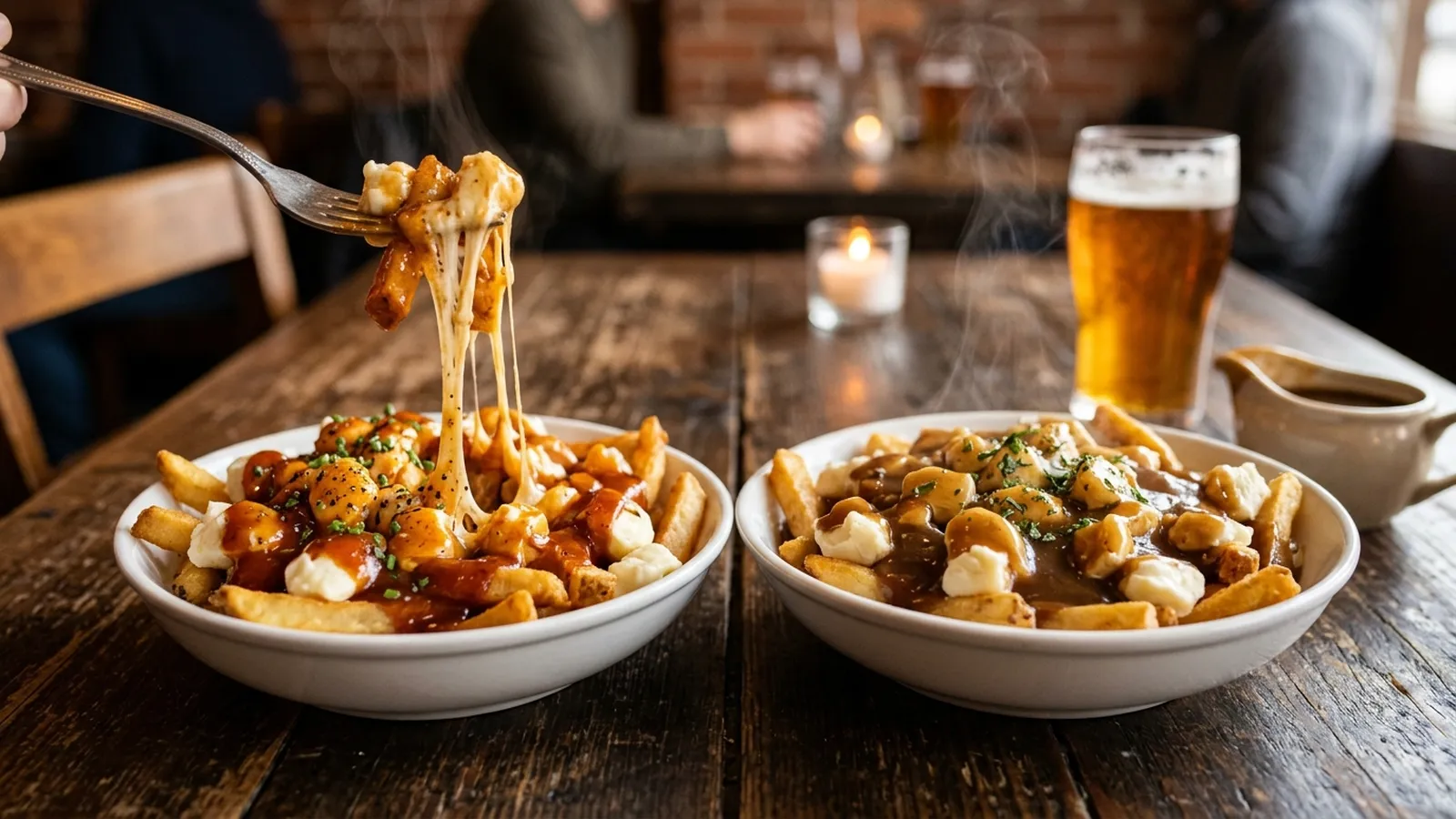
If St-Hubert literally manufactures a product called 'Sauce Poutine,' why do thousands of poutine purists on r/poutine, r/quebec, and r/montreal insist that St-Hubert Sauce BBQ makes the superior poutine?
The answer lies in food chemistry and flavor fatigue:
A traditional poutine consists of deep-fried potatoes (pure starch and frying oil) and fresh cheddar cheese curds (pure milk fat and moisture). If you blanket that combination with a heavy, neutral, salty brown gravy like Sauce Poutine, every bite is overwhelmingly rich and fatty. After five bites, flavor fatigue sets in.
St-Hubert Sauce BBQ, on the other hand, contains tomato acidity, cider vinegar tang, and warm cloves. That acidity acts like a palate cleanser, cutting straight through the heavy dairy fat of the cheese curds and the oily crunch of the fries. The resulting bite is lively, nostalgic, and vastly more dynamic.
The Casse-Croûte Heritage
Many legendary rural Quebec chip stands (casse-croûtes) in the Mauricie, Centre-du-Québec, and Beauce regions use rotisserie chicken dipping gravy rather than neutral brown gravy for their poutine. Using St-Hubert BBQ sauce at home replicates that exact nostalgic roadside diner taste.
5. Supermarket Formats: 398ml Ready-to-Serve Cans vs Powder Sachets
When shopping at Canadian grocery stores, both sauces are available in multiple formats, each suited for different cooking scenarios:
• The 398ml Ready-to-Heat Can: The gold standard for home use. Ready in 2 minutes on the stovetop or in a microwave-safe ceramic bowl. Contains real chicken fat and concentrated broth, delivering the truest restaurant taste and flawless sheen.
• The 52g / 60g Dry Powder Sachet: Highly economical and pantry-stable. Requires whisking with cold water and simmering for 3 minutes. While slightly less rich in natural poultry fats, dry sachets allow home cooks to customize the viscosity: use 15% less water for an extra-thick poutine gravy.
• Certified Gluten-Free Sachets: For diners with celiac disease, St-Hubert offers certified gluten-free powder packets with a green banner, replacing wheat flour with corn and potato starches without sacrificing the iconic clove spice profile.
6. Complete Nutritional & Culinary Matrix: BBQ vs Poutine vs Hot Chicken Sauce
To help you choose the right sauce for your next meal or dietary plan, here is our side-by-side test-kitchen matrix comparing all three famous St-Hubert grocery gravies:
| Feature / Metric | St-Hubert Sauce BBQ (Can) | St-Hubert Sauce Poutine (Can) | St-Hubert Sauce Hot Chicken (Can) |
|---|---|---|---|
| Primary Stock Base | Concentrated Poultry / Chicken Fat | Chicken & Beef / Yeast Umami | Light Chicken Broth & Tomato |
| Dominant Flavours | Cloves, Cinnamon, Tomato, Cider Tang | Black Pepper, Onion, Savory Brown Gravy | Sweet Paprika, Onion, Mild Poultry |
| Color Hue | Mahogany Reddish-Brown | Deep Dark Earthy Brown | Warm Golden-Amber |
| Viscosity Level | Medium-Thin (3 / 5) | Thick & Velvety (4.5 / 5) | Light & Pourable (2.5 / 5) |
| Calories per 60ml (1/4 cup) | 35 kcal | 40 kcal | 30 kcal |
| Sodium per 60ml | 480 mg (21% DV) | 540 mg (23% DV) | 450 mg (20% DV) |
| Best Used For | Rotisserie dipping, fries, zesty poutine | Traditional diner poutine, mashed potatoes | Open-faced hot chicken sandwiches, peas |
| Reddit r/poutine Score | 9.6 / 10 (Cult Favorite) | 8.4 / 10 (Classic Neutral) | 7.2 / 10 (Too Thin for Poutine) |
7. The Ultimate Casse-Croûte Secret: The 70/30 Hybrid Sauce Hack
Can't decide between the spiced tang of Sauce BBQ and the luscious, velvety thickness of Sauce Poutine? You don't have to choose.
Quebec culinary insiders and seasoned casse-croûte operators have long utilized the 70/30 Hybrid Sauce Technique to create the holy grail of homemade poutine gravy:
How to Prepare the 70/30 Hybrid Blend:
• In a small saucepan, combine 70% St-Hubert Sauce BBQ with 30% St-Hubert Sauce Poutine (or mix one full can of BBQ sauce with 1/3 can of Poutine sauce).
• Bring to a gentle simmer over medium-low heat for 3 minutes, whisking thoroughly.
Why It Works: The Sauce Poutine provides the structural starch backbone, deep beefy umami, and luscious cling that holds onto crispy fries and insulates cheese curds. Meanwhile, the Sauce BBQ delivers the unforgettable aromatic clove perfume and bright cider tang that keeps your taste buds energized from the first bite to the last scrap.
Try this blend once, and you will never make homemade poutine with a single sauce can again.
Final Verdict: Which St-Hubert Sauce Belongs in Your Pantry?
If you are dipping rotisserie chicken, french fries, and chicken tenders, or if you love complex Quebec casse-croûte poutines with a spiced clove and cider kick, St-Hubert Sauce BBQ remains the unrivaled king. If you prefer a thick, comforting diner-style dark gravy that blankets cheese curds without overpowering them, St-Hubert Sauce Poutine delivers classic chip-stand satisfaction. For the ultimate restaurant experience at home, blending both sauces together in a 70/30 ratio provides the perfect balance of viscosity and aromatic spice.
Frequently Asked Questions
Is St-Hubert BBQ sauce the same as American barbecue sauce?
No, not at all! In Quebec, spit-roasted chicken is called 'poulet BBQ', and its accompanying spiced brown chicken dipping gravy is called 'sauce BBQ'. It has no relation to sweet, sticky, smoky molasses- or ketchup-based American BBQ sauces like Bull's-Eye or Sweet Baby Ray's.
Why does Reddit r/poutine recommend St-Hubert BBQ sauce over Poutine sauce?
Enthusiasts on r/poutine and r/quebec find that traditional brown poutine sauce can be one-dimensional and overly salty. St-Hubert BBQ sauce's subtle clove, cinnamon, and tomato-cider tang provides crucial acidity that cuts through heavy cheese curds and greasy fries, replicating beloved rural casse-croûte flavours.
Which sauce is thicker, BBQ or Poutine?
St-Hubert Poutine Sauce is noticeably thicker. It utilizes a higher concentration of modified cornstarch and wheat flour roux to create a velvety blanket that suspends cheese curds without immediately sinking to the bottom of the bowl. St-Hubert BBQ sauce is thinner, engineered specifically for dipping.
Can I mix St-Hubert BBQ sauce and Poutine sauce together?
Yes! Many Quebec chip stands and home cooks swear by the '50/50 blend' (or 70% BBQ and 30% Poutine sauce). This hybrid combines the rich velvety thickness and beefy depth of poutine sauce with the intoxicating clove and spiced aromatics of BBQ sauce.
Do canned St-Hubert sauces contain real chicken broth?
Yes. St-Hubert ready-to-heat 398ml cans list chicken fat, concentrated poultry broth, and hydrolyzed plant proteins among their core ingredients, providing authentic restaurant stock flavor compared to purely artificial gravy mixes.
Are St-Hubert BBQ and Poutine sauces gluten-free?
Standard St-Hubert canned sauces and dry powder pouches contain wheat flour and are not gluten-free. However, St-Hubert produces certified Gluten-Free (Sans Gluten) powdered sachets clearly labeled in green packaging in Quebec grocery stores.
Compare 2026 St-Hubert Dining Room Prices
Browse our quarterly verified prices for rotisserie chicken platters, baby back ribs, and Midi-Go lunch specials.
More Canadian Food Comparisons

St-Hubert Sauce vs Swiss Chalet Sauce: The Definitive 2026 Canadian Taste & Ingredient Test
Explore the culinary science, spices, clove vs tomato-herb balance, nutrition facts, and grocery prices between St-Hubert BBQ sauce and Swiss Chalet sauce.
St-Hubert vs Boston Pizza: Canadian Casual Dining & Family Showdown (2026)
Compare St-Hubert's Quebec rotisserie chicken and fall-off-the-bone ribs against Boston Pizza's gourmet pizzas, Cactus Cut potatoes, and sports bar vibe.