Why You Should ALWAYS Order St-Hubert Poutine 'Sauce à Part' (Delivery Texture Hack & Customization Secrets)
How requesting your St-Hubert poutine gravy on the side stops soggy fries, preserves squeaky cheese curds, and unlocks restaurant-grade perfection at home.
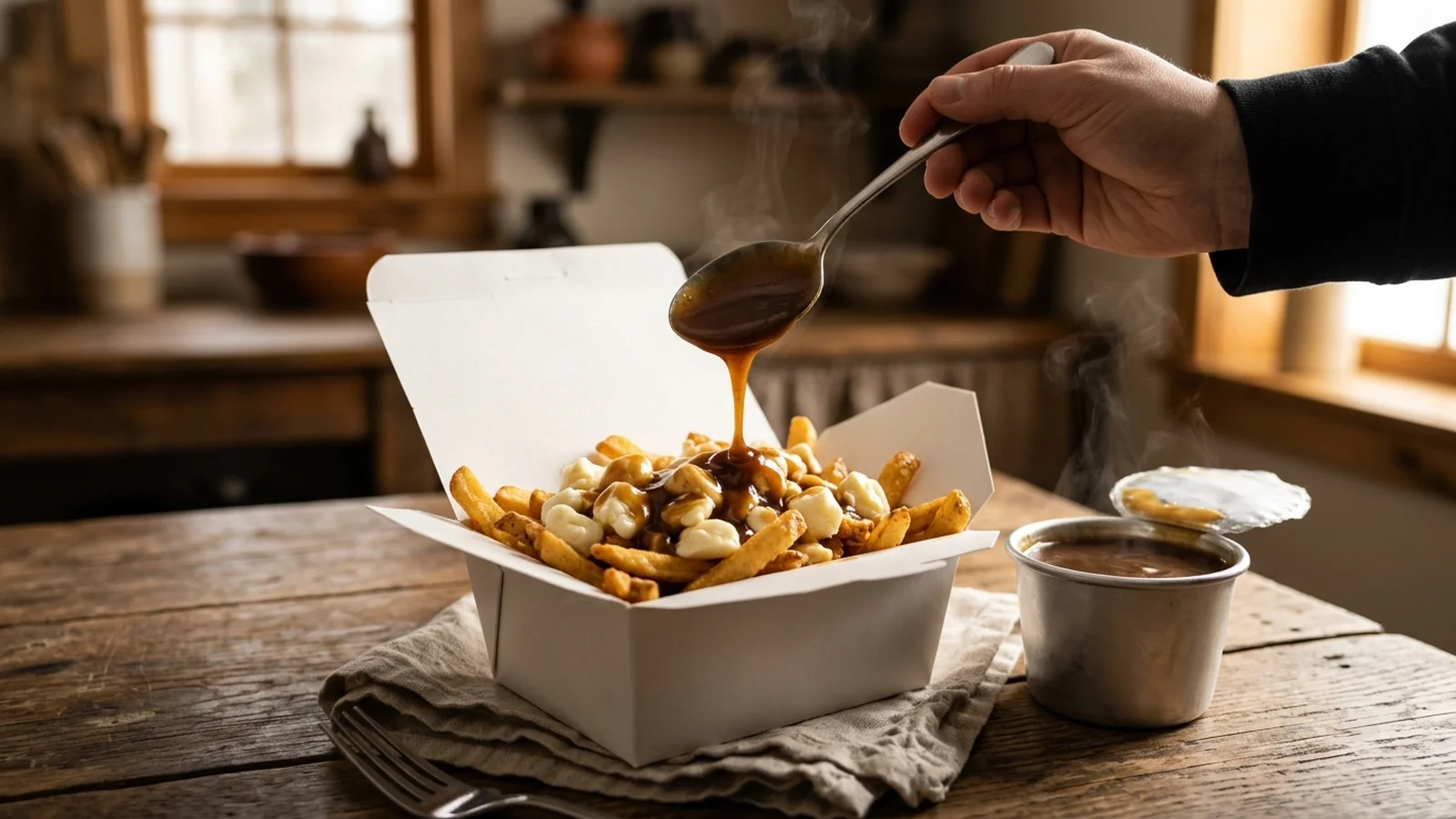
“There are few culinary disappointments in Quebec worse than anticipating a comforting, piping-hot St-Hubert poutine, only to open the delivery bag and discover a soggy cardboard box filled with limp, waterlogged potato mush and melted, lifeless cheese sludge. If this has ever happened to you, rest assured: the problem isn't St-Hubert's recipe. The culprit is thermodynamic physics during delivery transit. Across r/poutine and r/quebec, seasoned rotisserie veterans share one non-negotiable golden rule: always order your St-Hubert poutine 'sauce à part' (gravy on the side). Here is the scientific breakdown of why pre-poured delivery poutine fails, how to request sauce on the side across all ordering channels, and the 2-minute air fryer assembly ritual that recreates dining-room perfection on your kitchen table.”
1. The Science of Soggy Poutine: Why 30 Minutes in a Box Ruins Fries
To understand why takeout poutine deteriorates so quickly, consider the physics of hot food packaging. When fresh french fries leave St-Hubert's deep fryers at roughly 180°C (350°F), their exterior starch forms a rigid, crispy cellular crust surrounding a fluffy, steamed potato interior. In a dine-in rotisserie dining room, poutine is assembled and served immediately to your table; you consume it within 5 to 10 minutes while that starch crust is still resilient enough to repel hot liquid.
However, during home delivery, the scenario is completely reversed. When kitchen staff pour 85°C (185°F) savory brown gravy over fries and seal the container inside a cardboard clamshell and an insulated delivery thermal bag, three destructive processes occur simultaneously:
1. Condensation Rain: Boiling sauce releases intense water vapor. Unable to escape the sealed container, steam hits the cooler top lid, condenses into liquid water droplets, and rains back down onto the fries, washing away crispness.
2. Rapid Starch Hydrolysis: The crispy outer shell of the potato absorbs the boiling gravy like a sponge. Within 12 to 15 minutes, the crisp cellular structure collapses, converting golden french fries into a gelatinous potato puree.
3. Heat Dissipation and Clumping: As the gravy gradually cools from 85°C down to 50°C during transit, starches and gelatin thicken, gluing the fries into a solid, unappetizing block.
Ordering 'sauce à part' instantly neutralizes all three problems. With dry fries packed alone with fresh curds, moisture circulation drops dramatically, allowing the potatoes to maintain their textural integrity throughout the entire driver transit time.
The 15-Minute Threshold Rule
Culinary testing proves that french fries submerged in gravy reach irreversible sogginess at approximately 14 minutes. Since average St-Hubert delivery transit times range from 22 to 38 minutes during peak dinner hours, pre-poured poutine is guaranteed to arrive waterlogged. 'Sauce à part' is the only physical countermeasure.
2. How to Request 'Sauce à Part' on App, Web, Drive-Thru & Phone
The most frustrating part for many customers is simply knowing how to instruct the restaurant. St-Hubert's staff prepares thousands of takeout orders daily, and requesting sauce on the side is considered a completely standard, cost-free operational modification. Here is how to order it correctly depending on your ordering channel:
St-Hubert Mobile App & Website: When navigating the menu, select your poutine of choice (Classique, BBQ, Poutine aux lanières, or Buffalo). On the item configuration screen, scroll down to the sauce selection section. If a 'Sauce à part' toggle button is displayed, switch it on. If not visible, use the text field titled 'Instructions spéciales' (Special Instructions) and write: 'Sauce à part SVP / Gravy on the side please'.
Third-Party Delivery (Uber Eats, DoorDash, Skip): Third-party menus frequently update their interface. Look for an optional modifier titled 'Sauce sur le côté / Sauce on the side'. If no button is present, locate the 'Special Instructions' box for that specific item and enter 'Sauce à part SVP'. Note: do not write it in the driver delivery notes, as drivers cannot open sealed food bags; it must be written in the restaurant food prep notes.
Drive-Thru & Counter Takeout: When speaking at the drive-thru speaker or placing a takeout order at the cash register, state clearly: 'Je voudrais une grande poutine classique avec la sauce à part, s'il vous plaît.'
Phone Ordering (1-844-343-0343): Simply inform the telephone dispatcher that you require your poutine gravy packaged in a separate container. The call center software has a dedicated modifier key that prints 'SAUCE A PART' in bold red on the kitchen expediter ticket.
Zero Surcharge Policy
St-Hubert never charges an extra fee for 'sauce à part'. The restaurant simply diverts your allotted gravy into an insulated 4 oz or 8 oz food-grade container with a secure snap-on lid instead of pouring it over the fries.
3. The 2-Minute Kitchen Revival: Air Fryer Flash & The Pouring Ritual
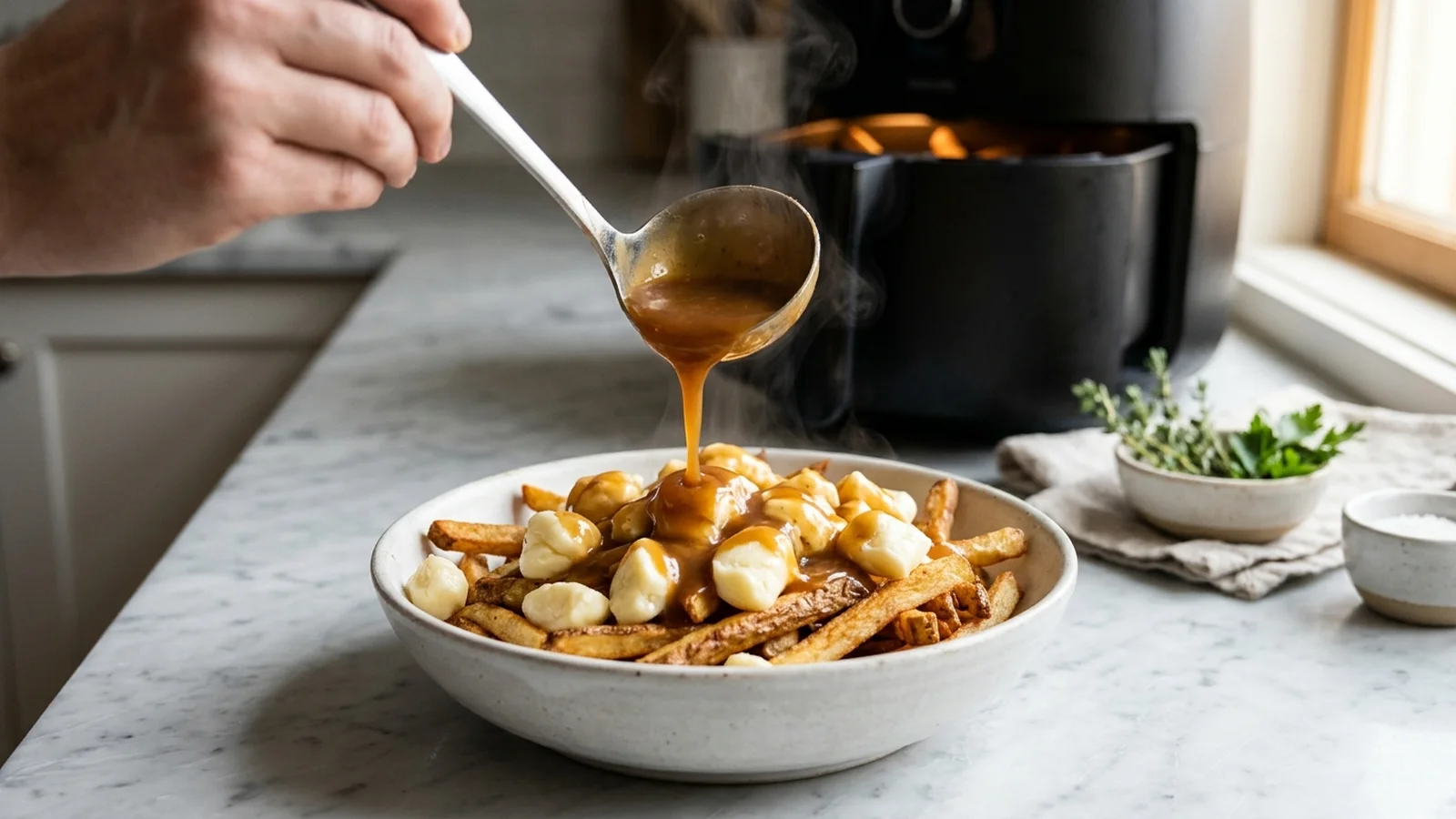
Receiving your poutine with sauce on the side is only half the battle; the real magic happens in your kitchen. Because your fries traveled dry, they haven't absorbed any liquid. Even if they cooled slightly during transit, you can restore them to piping-hot, fryer-fresh crispiness in exactly two minutes.
The 2-Minute Air Fryer Restoration Protocol:
Step 1: Check the curds. If the restaurant packaged your cheese curds in a separate plastic baggie (which frequently happens upon request), set them aside on your counter at room temperature. If the curds are already nestled on top of the fries in the cardboard container, gently scoop the top layer of curds into a small bowl, or leave them if you like extra melted edges.
Step 2: Flash the fries. Preheat your air fryer to 400°F (200°C). Dump the dry fries directly into the air fryer basket and air fry for 2 to 3 minutes. This flashes off any trapped surface moisture and reactivates the exterior crunch without drying out the potato interior.
Step 3: Boil the sauce. Pop the lid off the thermal gravy cup and microwave it on high for 20 to 25 seconds until small bubbling ripples appear on the surface. (Alternatively, warm it in a tiny butter warmer saucepan over medium heat for 60 seconds).
Step 4: The Ceremonial Pour. Transfer the blisteringly hot, crispy fries into a wide ceramic bowl. Scatter the squeaky room-temperature cheese curds evenly across the fries. Immediately pour the bubbling hot gravy across the top in an even spiral pattern. The thermal shock causes the curd exteriors to glisten and soften while leaving the interior core squeaky, resting on a bed of audibly crunchy fries.
4. Preserving the 'Squick-Squick': Cheddar Curd Chemistry & Heat Control
For any proud Quebecer, a poutine without squeak (*le fameux squick-squick*) is an unforgivable sacrilege. But what actually produces that iconic squeak, and why does standard delivery destroy it?
Cheddar cheese curds are unpressed, fresh cheese solids formed during the early stages of cheddar production. When teeth bite into a fresh curd, the intact, tightly coiled network of milk protein fibers (specifically casein micelles) rubs against tooth enamel, generating microscopic vibrations that produce an audible squeaking frequency.
However, casein protein networks are highly sensitive to prolonged heat exposure:
When submerged under 80°C gravy inside a sealed delivery bag for half an hour, the sustained heat denatures the casein proteins. The tightly bound protein bundles break apart and liquefy, fusing the curds into an oily, elastic pool identical to pizza mozzarella. The squeak is permanently lost.
By requesting 'sauce à part', the curds remain at a gentle holding temperature during transit. When you pour the fresh boiling gravy at the kitchen table, the sauce heats the outer 1 millimeter of the cheese curd, creating that glossy, tender melt on the surface while preserving the firm, unheated protein matrix at the core. You get the best of both worlds: a luscious melted exterior and an unmistakably squeaky bite.
The Refrigerator Mistake
Never place fresh Quebec cheese curds in the refrigerator! Cold temperatures break the protein bonds and eliminate the squeak. Keep leftover curds at controlled room temperature (under 24 hours) or consume immediately.
5. The Sauce Swap: Classic Poutine Sauce vs Legendary BBQ Sauce
When you order a poutine at St-Hubert, most diners assume there is only one sauce option. In reality, St-Hubert maintains two distinct, legendary sauces, and understanding the difference unlocks an entirely new dimension of flavor:
1. Sauce Poutine (Sauce Brune): The default sauce for all standard poutines. It is a rich, savory brown gravy formulated with beef and poultry stock, seasoned with black pepper, garlic powder, and onion salt. It has a glossy, viscous consistency designed specifically to coat potato starch without tasting overwhelmingly sweet.
2. Sauce BBQ Traditionnelle: St-Hubert's founding recipe dating back to 1951. It is an amber-toned, tangy rotisserie sauce built upon tomato puree, cider vinegar, brown sugar, and a proprietary spice blend featuring subtle undertones of cinnamon and clove.
The 'Sauce Mixte' Secret: If you order your poutine 'sauce à part', you can ask the staff for a half-and-half combination ('Sauce mixte'). Combining equal parts savory brown poutine gravy with sweet, tangy St-Hubert BBQ sauce creates a complex sweet-savory profile reminiscent of legendary Montreal greasy-spoon diners. If your local franchise won't mix them in one container, simply order an extra 4 oz cup of BBQ sauce for $1.75 and blend them yourself at home.
6. Casse-Croûte Secret Upgrades: Crispy Tenders, Extra Curds & Sauteed Onions
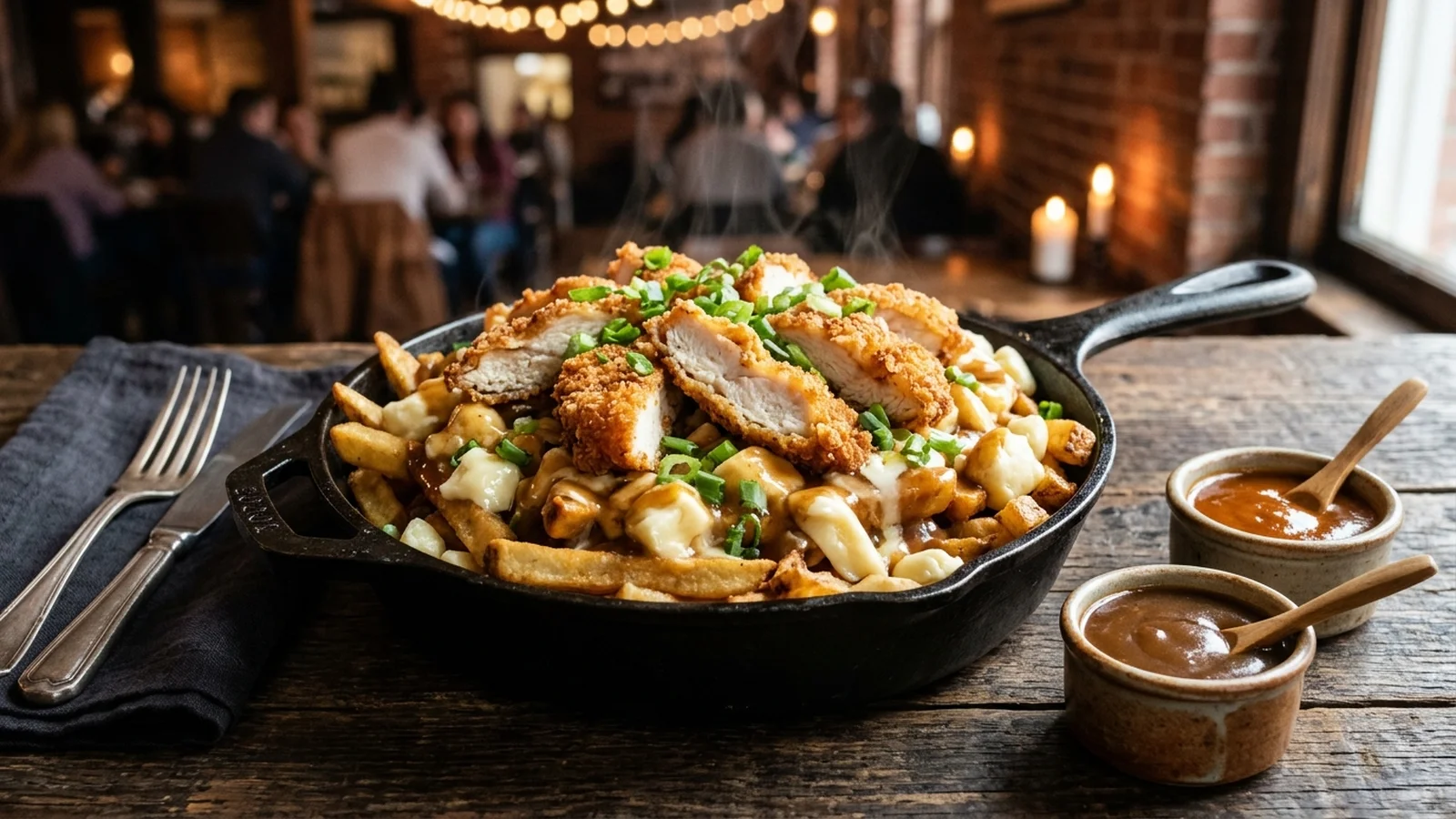
Once you master the 'sauce à part' ordering method, you can start exploring advanced menu customizations that transform a simple rotisserie side dish into an unforgettable feast. Here are the top three upgrades celebrated on Reddit food communities:
1. The Crispy Tenders Hack (Poutine aux lanières croustillantes): Instead of ordering standard rotisserie pulled chicken (which can become stringy when reheated), order a side of 3 Crispy Chicken Breast Tenders (*Lanières de poulet croustillantes*). Cut them into bite-sized nuggets, toss them into the air fryer alongside your fries for the final 60 seconds, and layer them over the cheese before pouring your sauce. The seasoned, crunchy breading absorbs the gravy without losing structural integrity.
2. The Double Cheese Curd Cushion: In a standard poutine, cheese curds are layered primarily across the top. Request 'Extra Fromage en Grains' ($3.25 to $4.00 depending on location). Place half the curds at the bottom of your serving bowl, add the hot air-fried fries, top with the remaining curds, and pour the gravy. This guarantees equal curd distribution from the first forkful to the final bite.
3. Sauteed Onions & Bacon (Style Casse-Croûte): When ordering in the dining room or drive-thru, ask to add sauteed onions (*oignons sautés*) and bacon bits. The gentle sweetness of caramelized onions cuts through the salty richness of the brown gravy, balancing the meal beautifully.
7. Standard Delivery vs 'Sauce à Part': Side-by-Side Quality Audit
To quantify the dramatic difference between standard delivery and the 'sauce à part' restoration method, our editorial team conducted a standardized 30-minute delivery simulation test measuring temperature, crispiness, curd elasticity, and overall satisfaction score:
| Quality Metric | Standard Delivery (Pre-Poured) | 'Sauce à Part' Delivery + Air Fryer | Real-World Difference |
|---|---|---|---|
| Fry Crunch & Texture | Soggy, limp, starch puree (1.5 / 10) | Shattering crisp exterior, fluffy core (9.4 / 10) | +7.9 points; completely eliminates sogginess |
| Cheese Curd 'Squick' | Melted, stringy, zero squeak (3.0 / 10) | Warm exterior, firm squeaky core (9.2 / 10) | +6.2 points; retains original casein elasticity |
| Serving Temperature | Lukewarm 48°C - 52°C throughout | Boiling 82°C gravy over 75°C fries | Proper steaming hot restaurant presentation |
| Reheating Flexibility | Nearly impossible; creates greasy mush | Fries & sauce reheat independently in 2 mins | Zero degradation if eaten 1 hour later |
| Extra Cost & Effort | $0.00 extra cost; 0 minutes prep | $0.00 extra cost; 2 minutes air fryer prep | Free hack requiring minimal kitchen effort |
9. Final Verdict: Never Settle for Soggy Poutine Again
Ordering a St-Hubert poutine for home delivery should never feel like playing Russian roulette with potato texture. By understanding the thermodynamic realities of takeout packaging and enforcing the simple 'sauce à part' rule, you eliminate the single biggest flaw of fast-food delivery. With zero extra fees charged by St-Hubert and only two minutes of effortless air fryer heating at home, you transform what would have been a lukewarm, soggy disappointment into a restaurant-caliber masterwork boasting audibly crispy fries, piping-hot savory gravy, and gloriously squeaky Quebec cheese curds.
Frequently Asked Questions
Does St-Hubert charge an extra fee to order poutine sauce on the side ('sauce à part')?
No, St-Hubert does not charge any extra fee for requesting your poutine sauce on the side ('sauce à part'). The kitchen simply ladles your standard portion of sauce into a secure, heat-resistant plastic container with a tight lid instead of pouring it directly over the fries and cheese.
How do I request 'sauce à part' on the St-Hubert mobile app or website?
When adding any poutine (Classic, BBQ, Buffalo, or Crispy Tenders) to your cart on the St-Hubert app or st-hubert.com, click on the item customization options. Under the sauce selection or 'Special Instructions' (Instructions spéciales) box, select or type 'Sauce à part'. You can also request it directly over the phone (1-844-343-0343) or at the drive-thru intercom.
Can I request 'sauce à part' on Uber Eats, DoorDash, or SkipTheDishes?
Yes. On third-party delivery apps, open the St-Hubert poutine item page and look for the 'Sauce Preparation' options. If there is no specific radio button, type 'Sauce à part SVP / Gravy on the side please' in the item's 'Special Instructions' notes field. St-Hubert rotisserie packing stations routinely fulfill this request.
What is the best way to assemble and reheat St-Hubert poutine at home?
Preheat your air fryer to 400°F (200°C) and flash the fries for 2 to 3 minutes to restore shattering crispiness. Meanwhile, remove the lid of the sauce container and microwave it for 20 to 25 seconds until bubbling hot. Pour the piping hot sauce directly over the crispy fries and squeaky cheese curds right before your first bite.
Can I swap the classic brown poutine sauce for St-Hubert's famous BBQ sauce?
Yes! St-Hubert allows you to choose between their classic brown Poutine Sauce (rich, savory, beef-and-chicken broth gravy) and their iconic sweet-and-tangy Rotisserie BBQ Sauce. You can even request 'Sauce mixte' (half BBQ, half poutine sauce) for a distinctive casse-croûte flavor profile.
Why do cheese curds lose their squeak in regular delivery poutine?
Cheese curds squeak because fresh, intact casein protein networks rub against tooth enamel. When cheese curds sit submerged under 85°C gravy inside a closed thermal delivery bag for 30 minutes, the intense sustained heat denatures the proteins and melts them into soft, stringy cheese. Keeping the sauce separate prevents premature melting.
Compare 2026 St-Hubert Dining Room Prices
Browse our quarterly verified prices for rotisserie chicken platters, baby back ribs, and Midi-Go lunch specials.
More Canadian Food Comparisons

St-Hubert Sauce vs Swiss Chalet Sauce: The Definitive 2026 Canadian Taste & Ingredient Test
Explore the culinary science, spices, clove vs tomato-herb balance, nutrition facts, and grocery prices between St-Hubert BBQ sauce and Swiss Chalet sauce.
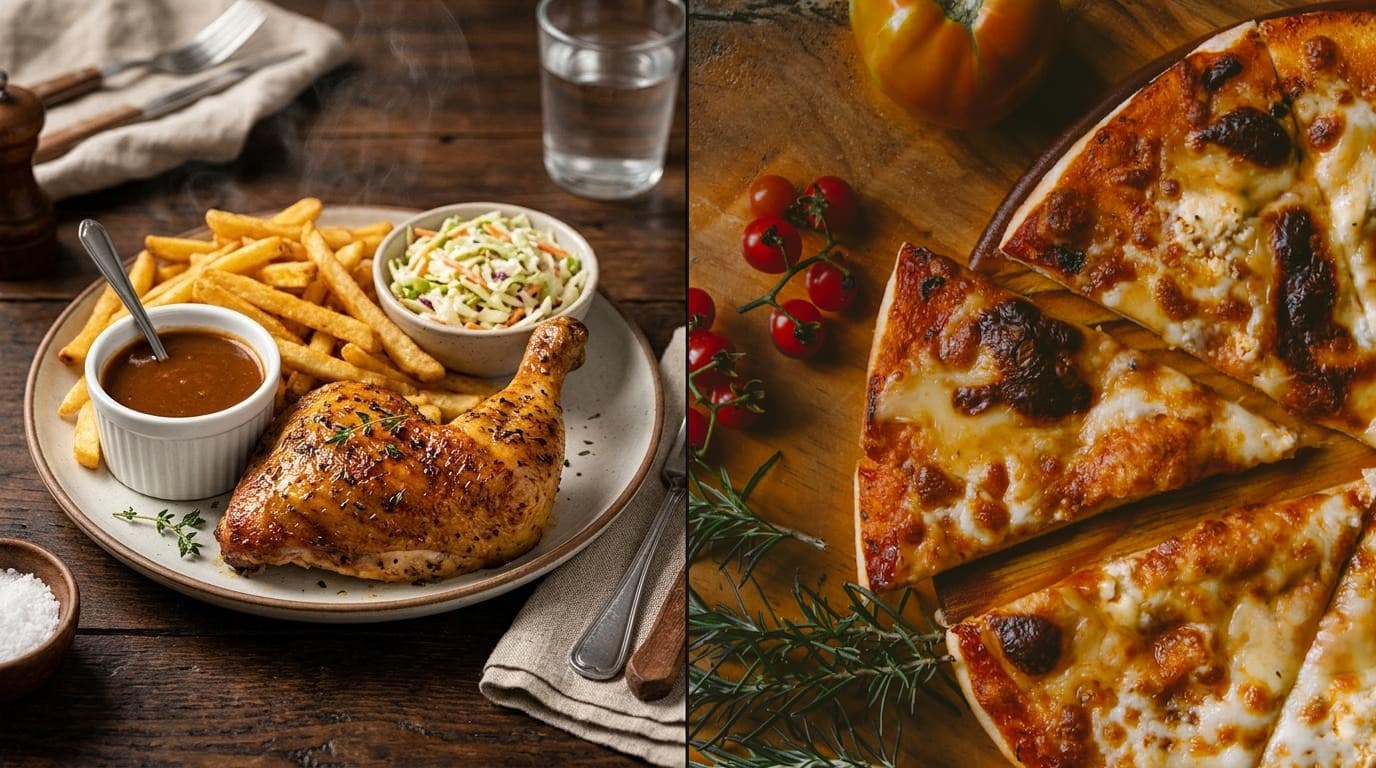
St-Hubert vs Boston Pizza: Canadian Casual Dining & Family Showdown (2026)
Compare St-Hubert's Quebec rotisserie chicken and fall-off-the-bone ribs against Boston Pizza's gourmet pizzas, Cactus Cut potatoes, and sports bar vibe.