St-Hubert Frozen Supermarket Poutine Review: Microwave Disaster vs Air Fryer Cooking Hacks
Why following the box microwave instructions ruins Quebec’s national dish, the science of frozen cheese curd rubberization, and the 5-step air fryer hack that rescues your $7 dinner.
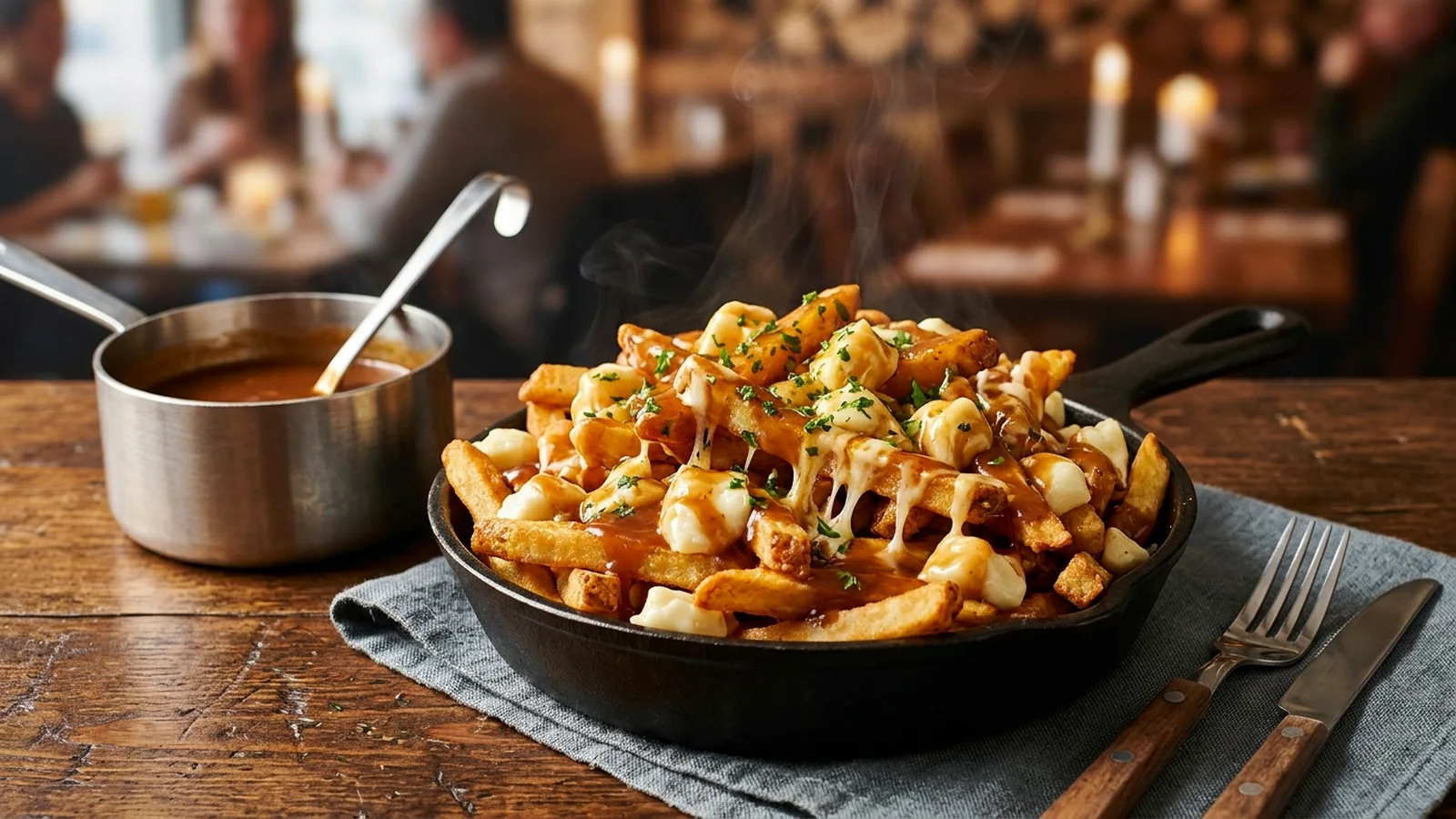
“In the frozen food aisles of Quebec supermarkets, few boxed products promise as much instant comfort as St-Hubert's branded frozen poutine. Featuring the iconic yellow rotisserie rooster and appetizing imagery of crispy golden fries drowned in rich brown gravy and squeaky cheese curds, the $6.99 to $8.49 box seems like a weeknight miracle. Yet across Canadian Reddit communities like r/poutine and r/quebec, the product is notorious for polarizing reviews: some call it an ingenious budget dinner, while others brand it an outright culinary crime. Why such extreme division? The answer comes down to a single catastrophic mistake: following the default microwave cooking instructions on the back of the box. In this rigorous culinary review, we break down the molecular chemistry of frozen cheese curds, explain why microwaves destroy poutine, and reveal the 5-step air fryer technique that transforms a frozen grocery box into authentic casse-croûte perfection.”
1. The Supermarket Freezer Promise: St-Hubert Boxed Poutine at $6.99
Walk into any Maxi, IGA, Metro, Provigo, Super C, or Walmart in Quebec, and you will find St-Hubert's frozen poutine standing prominently in the single-serve frozen meal section. Retailing between $6.99 and $8.49 for a 360g to 650g box, it represents an accessible, cost-effective alternative to ordering restaurant delivery (which typically exceeds $18 to $22 after delivery fees, tips, and taxes).
What is actually inside the box?
Unlike cheap generic frozen poutines that mix all ingredients into a single frozen slurry, St-Hubert provides three individually packaged components inside the cardboard carton:
1. A sealed bag of par-fried, coated frozen french fries cut in a classic medium-thick rotisserie style.
2. A sealed clear plastic pouch containing authentic Quebec white cheddar cheese curds (*fromage en grains québécois*).
3. A sealed pouch of frozen St-Hubert brown poutine sauce, formulated with beef and poultry stock seasonings.
The components themselves are of surprisingly high quality. The cheese is genuine Quebec curd, and the sauce is produced according to St-Hubert's proprietary grocery formula. The fundamental problem lies entirely in how the packaging instructs the consumer to cook them.
The Packaging Trap
The packaging prominently advertises: 'Ready in 5 minutes in the microwave!' While technically true, this 5-minute microwave method yields the worst possible textural outcome in Canadian gastronomy.
2. The Microwave Disaster: Why Following Box Instructions Ruins Poutine
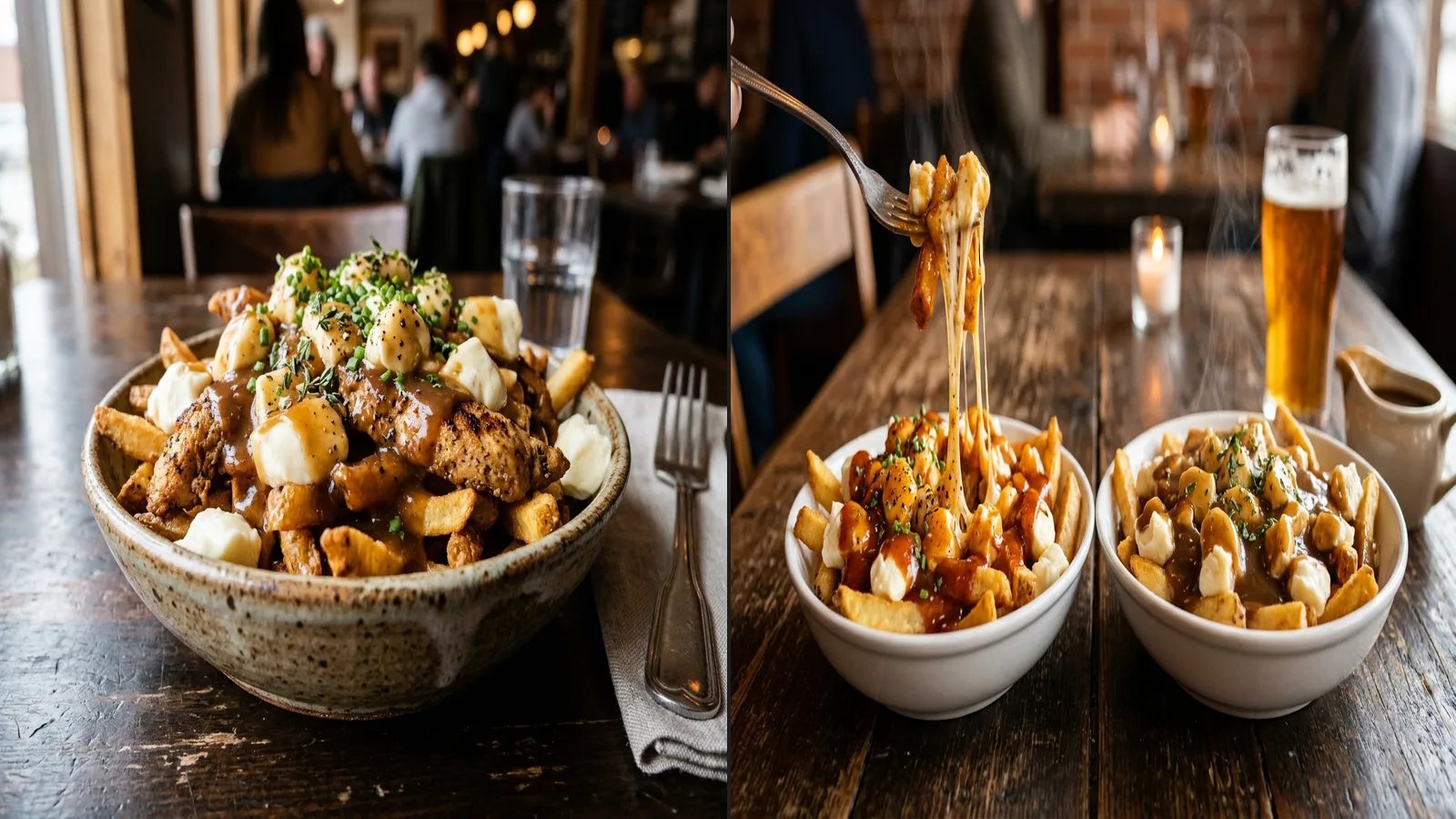
The back of the box instructs consumers to place the frozen fries in the provided cardboard tray, scatter the frozen cheese curds over top, snip open the frozen sauce pouch to drizzle on top, and microwave on High for 4 to 5 minutes.
Executing these instructions triggers three catastrophic thermodynamic failures:
1. The Plastic Curd Effect: Microwaves work by agitating water molecules, generating rapid, intense friction heat. The frozen curds thaw unevenly, releasing their internal moisture as watery whey puddles while the dairy fats separate. Within three minutes, the curds melt into a rubbery, chewing-gum-like sheet of plastic cheese that adheres to the cardboard tray. The iconic 'squick-squick' is completely eradicated.
2. Potato Porridge: French fries require dry, convection heat to crisp. Trapped underneath a blanket of melting frozen sauce and sweating cheese curds inside a cardboard tray, the frozen fries are effectively steamed under high moisture. Instead of developing a golden crust, the potato starches absorb water, collapsing into a lukewarm, mushy puree.
3. Inconsistent Thermal Pockets: Because microwaves heat unevenly, the center of the poutine often remains lukewarm (around 45°C) while the sauce around the edges boils into blistering lava.
The result is a culinary disaster that gives frozen poutines an undeservedly terrible reputation.
3. The Science of Frozen Curds: Casein Crystallization & Thawing Rules
To rescue frozen poutine, you must understand the dairy chemistry of cheese curds. A fresh cheese curd squeaks because intact, elastic networks of casein milk proteins rub against tooth enamel. However, when cheese is frozen at -18°C (0°F), microscopic water droplets expand into ice crystals, puncturing the delicate protein matrix.
If you expose these frost-punctured curds to sudden, violent heat (such as a 1,000-watt microwave magnetron or a hot 400°F oven air blast), the damaged protein walls instantly rupture. The moisture boils off, milk fats weep out as grease, and the curds fuse into rubber.
The Golden Rule of Frozen Curds: Frozen cheese curds must NEVER be cooked directly! They must be thawed gently at room temperature. When thawed at ambient room temperature (around 20°C / 68°F), the protein matrix reabsorbs moisture naturally. When piping-hot boiling sauce is poured over them at the very last second, only the outer surface melts gently while the core remains firm, tender, and squeaky.
The Ambient Thawing Principle
Never microwave or bake frozen cheese curds! Thaw them gently on your kitchen counter for 10 minutes while your fries cook. The boiling gravy will provide all the gentle thermal energy needed to warm them to eating temperature.
4. The 5-Step Air Fryer Miracle: How to Achieve Casse-Croûte Crunch
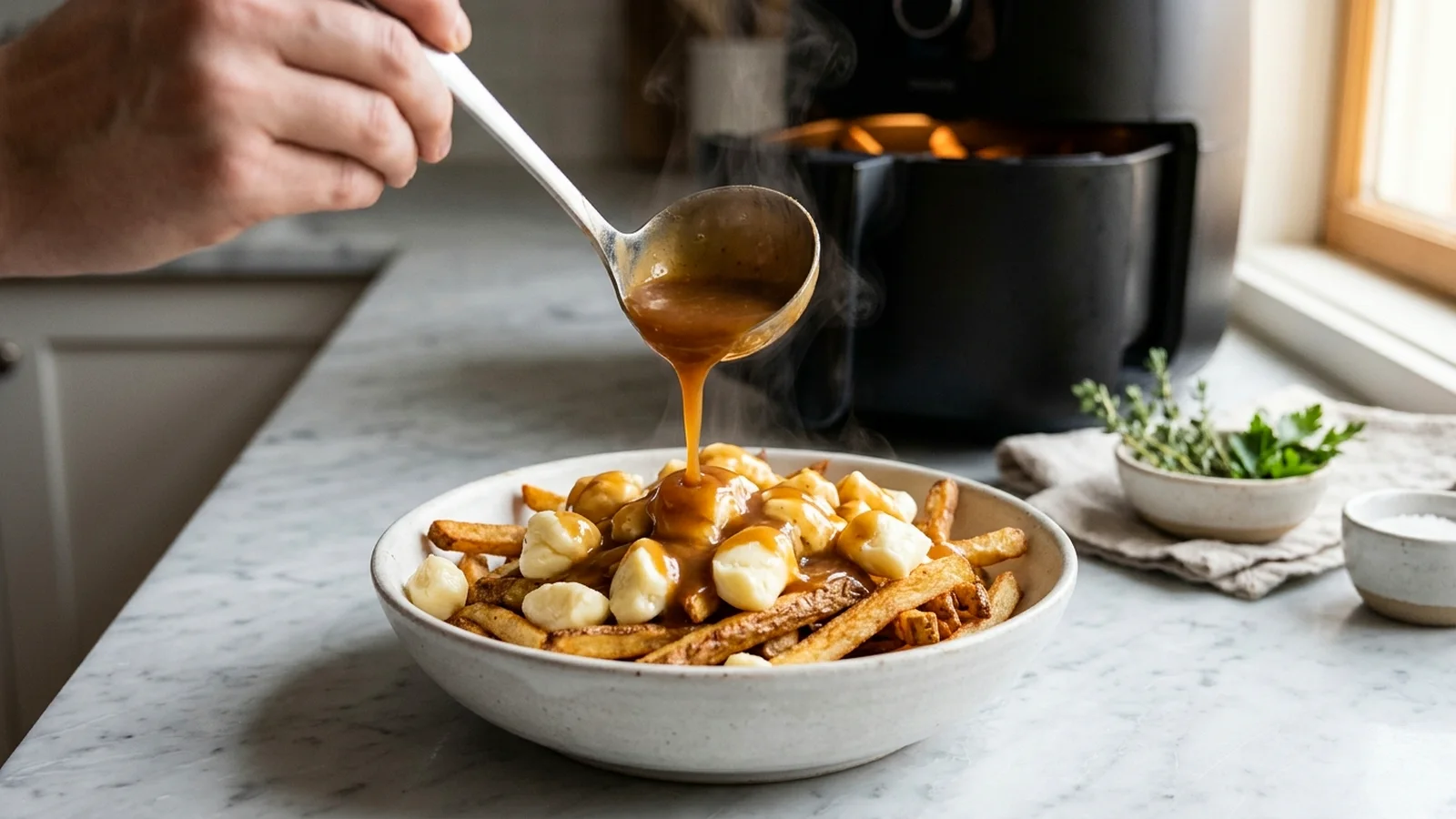
By decoupling the three frozen components and preparing each according to its unique physical properties, you can transform a $7 supermarket box into a poutine that rivals your local rotisserie. Here is the foolproof 5-step method:
Step 1: The Sauce Bath (Time: 0:00): Fill a small bowl with hot tap water. Submerge the sealed, frozen plastic sauce pouch in the water. Within 5 minutes, the gravy will thaw from a frozen block into a smooth, pourable liquid.
Step 2: Temper the Curds (Time: 0:01): Open the cheese curd packet and spread the frozen curds across a flat plate on your kitchen counter. Allow them to sit at room temperature while the fries cook. They will thaw gently without weeping grease.
Step 3: The Air Fryer Flash (Time: 0:02 - 0:08): Preheat your air fryer to 400°F (200°C). Dump the frozen fries directly into the air fryer basket in a loose, even layer. Air fry for 6 to 8 minutes. At the 4-minute mark, give the basket an energetic shake. The rapid convective airflow flash-evaporates surface frost and produces golden, blistered, audibly crunchy fries.
Step 4: Boil the Sauce (Time: 0:08): Snip open the thawed sauce pouch and empty it into a small ceramic ramekin or microwave-safe mug. Microwave on High for 25 to 30 seconds until boiling ripples appear on the surface.
Step 5: The Grand Assembly (Time: 0:09): Dump the blisteringly hot, crunchy fries into a wide ceramic bowl. Scatter the tempered cheese curds evenly across the fries. Immediately pour the bubbling hot gravy across the top. Serve immediately and enjoy shattering crunch with warm, glistening curds.
5. Taste Test Showdown: Microwave vs Air Fryer vs Fresh Rôtisserie
Our culinary evaluation team conducted a direct blind comparison evaluating St-Hubert frozen poutine prepared via the manufacturer's microwave method against our 5-step air fryer hack, benchmarked against a fresh dining-room rotisserie poutine:
| Preparation Method | Fry Crispiness Score | Cheese Curd Texture | Gravy Heat & Flavor | Total Effort & Time | Overall Score |
|---|---|---|---|---|---|
| Box Microwave Method | Soggy, waterlogged mush (1.8 / 10) | Rubbery, plastic melt, zero squeak (2.5 / 10) | Uneven hot & cold spots (4.0 / 10) | 5 mins, 1 dirty cardboard tray | 2.8 / 10 (Culinary Disaster) |
| The 5-Step Air Fryer Hack | Shattering golden crunch (9.2 / 10) | Soft exterior, firm squeaky core (8.5 / 10) | Piping hot, velvety gloss (9.0 / 10) | 9 mins, minimal cleanup | 8.9 / 10 (Miraculous Transformation) |
| Fresh St-Hubert Dining Room | Crispy double-blanched (9.0 / 10) | Fresh daily curds, maximum squeak (9.5 / 10) | Fresh rotisserie kettle gravy (9.2 / 10) | Dine-in travel & tipping required | 9.2 / 10 (Gold Standard Benchmark) |
6. Pro Casse-Croûte Upgrades: Turning a Frozen Box into a Gourmet Feast
Once you master the air fryer cooking protocol, you can use these three simple supermarket upgrades to elevate your $7 box into a gourmet casse-croûte feast:
1. The Rotisserie Chicken Shred: If you have leftover roast chicken in your fridge, shred a half-cup of chicken meat, toss it in a skillet with a teaspoon of butter for 60 seconds, and layer it over the fries before pouring your sauce.
2. The Sauce BBQ Secret Kick: St-Hubert's frozen poutine sauce is rich and savory. Stir 1 tablespoon of classic bottled St-Hubert BBQ sauce into the warm gravy before pouring. The hint of cider vinegar and cinnamon replicates the beloved sweet-and-savory flavor profile of iconic Quebec snack bars.
3. Fresh Curd Booster: While St-Hubert's frozen curds perform admirably when thawed gently, grabbing a small $2.50 bag of fresh, never-frozen room-temperature cheese curds from the deli counter and mixing them in creates an authentic 100% squeak that fools even the most discerning poutine connoisseurs.
8. Final Verdict: A Frozen Box Worth Buying—With One Condition
St-Hubert's frozen supermarket poutine is not a flawed product; it is a quality product burdened by disastrous manufacturer microwave instructions. When subjected to the microwave, it rightfully earns its reputation as a soggy, rubbery disappointment. However, when you decouple the ingredients and deploy an air fryer at 400°F for eight minutes alongside ambiently thawed curds and boiling gravy, it undergoes an astonishing metamorphosis. For under $8, you achieve a crunchy, comforting, authentic Quebec poutine that rivals fast-food rotisserie takeout at less than half the price.
Frequently Asked Questions
Why does the cheese turn rubbery when microwaving frozen St-Hubert poutine?
Freezing damages the delicate casein protein structure of cheddar cheese curds. When blasted with aggressive microwave radiation, the damaged curds rapidly expel their internal whey moisture and milk fats, causing the proteins to collapse and fuse into an elastic, chewy plastic-like film.
How long should I cook St-Hubert frozen poutine fries in an air fryer?
Cook the frozen fries in a preheated air fryer at 400°F (200°C) for 6 to 8 minutes. Shake the basket vigorously at the 4-minute mark to ensure even heat circulation and maximum blistered crispiness.
How do I cook frozen St-Hubert poutine in a conventional oven if I don't have an air fryer?
Preheat your oven to 425°F (220°C) with a heavy baking sheet inside. Spread the frozen fries in a single layer on the scorching hot sheet and bake for 14 to 18 minutes until golden and crispy. Heat the gravy and temper the curds separately before pouring.
Is St-Hubert frozen grocery poutine the exact same recipe as the restaurant?
The ingredients are very close: it uses genuine St-Hubert brown poutine sauce recipe and real Quebec cheddar curds. However, the fries are par-cooked and frozen with vegetable oil to enable home baking, which behaves differently from fresh double-blanched rotisserie fries.
Can you re-freeze leftover cooked poutine?
No. Once poutine has been assembled with gravy and cheese curds, re-freezing it will result in an unpalatable, separated mass of gelatinized potato mush and grainy cheese. Consume within the same meal.
What is the best way to upgrade a box of frozen St-Hubert poutine?
Stir 1 tablespoon of classic St-Hubert BBQ sauce into the poutine gravy for extra sweet-tangy depth, top with sliced pan-fried bacon or leftover rotisserie chicken, and garnish with fresh sliced green onions.
Compare 2026 St-Hubert Dining Room Prices
Browse our quarterly verified prices for rotisserie chicken platters, baby back ribs, and Midi-Go lunch specials.
More Canadian Food Comparisons

St-Hubert Sauce vs Swiss Chalet Sauce: The Definitive 2026 Canadian Taste & Ingredient Test
Explore the culinary science, spices, clove vs tomato-herb balance, nutrition facts, and grocery prices between St-Hubert BBQ sauce and Swiss Chalet sauce.
St-Hubert vs Boston Pizza: Canadian Casual Dining & Family Showdown (2026)
Compare St-Hubert's Quebec rotisserie chicken and fall-off-the-bone ribs against Boston Pizza's gourmet pizzas, Cactus Cut potatoes, and sports bar vibe.