St-Hubert Frozen Supermarket Chicken Wings Review: Air Fryer vs Oven, Sauce Quality & Meat Ratio (2026 Test)
Why following the box oven instructions results in soggy, greasy chicken wings, the secret two-stage air fryer crisping technique, and our honest taste audit of the $15.99 supermarket box.
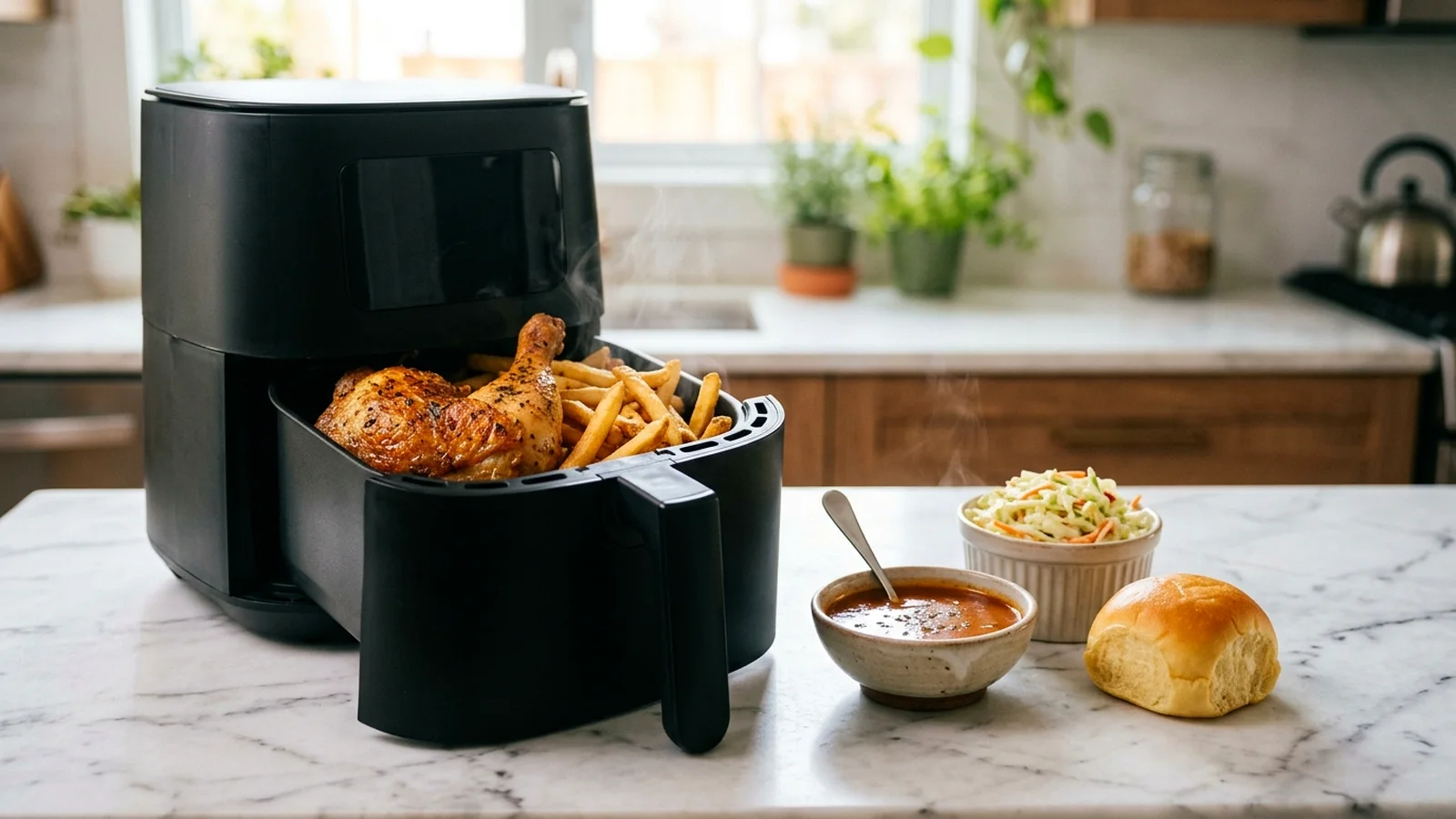
“Walking down the frozen food aisle in any Quebec supermarket—whether it is Maxi, IGA, Metro, or Super C—you are bound to spot the distinctive yellow and red boxes of St-Hubert frozen chicken wings. Promising the legendary rotisserie taste and savory barbecue glaze that Quebecers have savored since 1951, these supermarket boxes appear to be the ultimate game-night lifesaver. However, head to Canadian Reddit or food forums, and you will find an avalanche of disappointment: complaints about rubbery, pale skin, wings swimming in greasy puddles, and barbecue sauce that turned into bitter charred black crust. The problem is not necessarily the meat—it is the fundamentally flawed oven baking instructions printed on the back of the box. As Quebec food critics and home cooks know, baking frozen wings on a flat cookie sheet is a recipe for culinary sadness. Here is our rigorous 2026 supermarket review, an honest meat-to-bone ratio audit, and the foolproof 5-step air fryer technique that transforms a $15.99 grocery box into crackling, restaurant-grade poultry gold.”
1. Supermarket Formats, Availability & Pricing Reality
St-Hubert’s retail grocery division, operated under the banner of St-Hubert Retail, represents one of the largest food manufacturing footprints in Quebec. Manufactured in Boisbriand, Quebec, their frozen chicken wing lineup is stocked in virtually every major Canadian grocery chain across Eastern Canada, including Maxi, Provigo, IGA, Metro, Super C, Walmart Supercentres, and select Costco Canada warehouses.
The standard retail packaging is a 600g cardboard box containing individually quick-frozen (IQF) seasoned chicken wings alongside a separate, sealed plastic pouch of St-Hubert signature barbecue dipping and glazing sauce. In major supermarkets, the regular retail price typically hovers between $14.99 and $16.99 depending on the banner (with discount grocers like Maxi and Super C sitting at the lower end, while premium banners like IGA and Metro occupy the higher end). However, St-Hubert frozen wings frequently headline weekly flyers at promotional discount prices between $10.99 and $12.99, making them a staple purchase during the NHL hockey season, the Grey Cup, and Super Bowl weekend.
In addition to the classic Barbecue flavor, St-Hubert also retails a 'Buffalo Piquante' variety (featuring a spicy cayenne-vinegar glaze packet) and occasional seasonal club-pack variants (850g to 1kg) found at Costco. For the purposes of this test, we evaluated the standard 600g Barbecue box, which remains the quintessential benchmark for Quebec casual dining.
Flyer Shopping Strategy
Never pay the full $16.99 retail price for a 600g box. Because chicken wings are a flagship promotional driver for grocers during sports seasons, check apps like Reebee or Flipp every Wednesday evening. When St-Hubert wings drop to $11.99 at Maxi or Super C, stock up 3 to 4 boxes in your chest freezer.
2. The Meat-to-Bone Ratio, Wing Size & Sauce Pouch Audit
The biggest consumer anxiety when purchasing frozen supermarket poultry is the dreaded 'pigeon wing' syndrome—paying for a box that yields tiny, emaciated bones wrapped in thick, artificial breading with negligible white meat. To assess real culinary value, we defrosted and weighed multiple boxes in our test kitchen.
In our 600g sample box, we counted exactly 15 pieces: 8 drumettes and 7 flat wingettes. Total gross frozen weight with packaging was 618 grams. The frozen sauce pouch accounted for 115 grams, leaving approximately 495 grams of seasoned chicken wings. This averages out to roughly 33 grams per raw wing piece. While these are not the massive jumbo roaster wings you might encounter at high-end gastropubs, they are substantially meatier and better-calibrated than generic private-label discount brands.
Crucially, St-Hubert does not submerge its wings in heavy, soggy tempura batter. Instead, the raw chicken skin is dusted with a light seasoning blend of wheat flour, salt, garlic powder, onion powder, and poultry spices. This thin coating serves two functions: it prevents moisture loss during blast-freezing, and it creates microscopic surface roughness that grips sauce once cooked. The included sauce pouch is not a cheap corn-syrup substitute; it is the genuine, tangy, clove-scented St-Hubert barbecue sauce produced in their Boisbriand sauce plant.
The meat quality itself is respectable: tender, moist Canadian poultry with intact connective joints and zero freezer burn off-flavors. When cooked correctly, the meat pulls cleanly from the bone without rubbery resistance or grey marrow discoloration.
3. The Oven Disaster: Why Box Directions Produce Soggy Wings
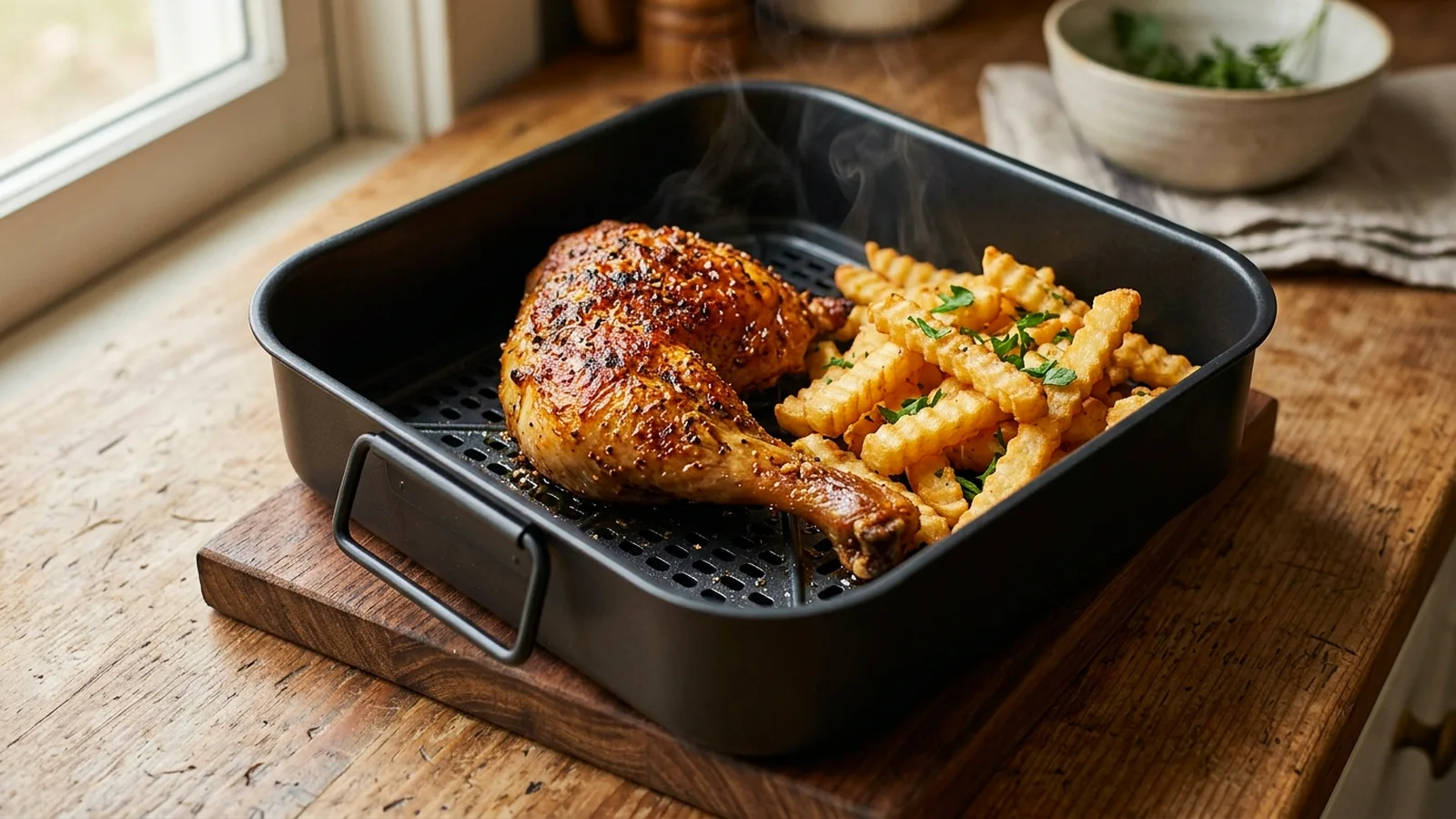
If you read the preparation instructions on the back of the St-Hubert box, you will be instructed to preheat your conventional oven to 425°F (218°C), place the frozen wings on a baking sheet lined with aluminum foil or parchment paper, and bake for 30 to 35 minutes, turning once halfway through.
This conventional oven method is where disaster strikes for 90% of home consumers. Chicken wings naturally possess a high concentration of subcutaneous fat beneath their skin. During a 30-minute oven bake, this fat renders into liquid grease. On a flat baking sheet, the melted poultry grease has nowhere to drain. Instead of roasting in dry radiant heat, the bottom half of the wings sits in a hot pool of liquid chicken oil and evaporated ice moisture.
The result is a culinary tragedy: pale, rubbery, flabby chicken skin that feels waterlogged rather than crisp. To make matters worse, many consumers make the fatal mistake of pouring the included sauce pouch over the wings halfway through baking. Because St-Hubert barbecue sauce contains sugar, brown sugar, and molasses, exposing the sauce to 425°F oven heat for 15 minutes causes the sugars to burn past caramelization into bitter black carbon long before the interior meat reaches a safe 165°F (74°C).
The Aluminum Foil Trap
Never bake frozen chicken wings directly on foil-lined sheets without a wire roasting rack. Trapped poultry grease creates a moisture barrier that guarantees rubbery skin. Convection airflow is mandatory for crispy skin.
4. The 5-Step Air Fryer Masterclass: From Frozen to Crackling
To achieve chicken wings that rival the fresh-from-the-fryer crunch of a St-Hubert dining room or sports bar, you must abandon the conventional oven and deploy a countertop air fryer. An air fryer is essentially a supercharged, compact convection oven that circulates dry heat at gale-force speeds while allowing rendered fat to drain harmlessly into the lower collection basin.
Here is the precise 5-step method developed and validated in our kitchen testing:
Step 1: Prep the Sauce Packet (Warm Water Bath). While the air fryer is heating, submerge the sealed plastic sauce pouch in a small bowl filled with hot tap water for 5 minutes. Do not microwave the plastic pouch. The hot water liquefies the cold, congealed barbecue sauce into a smooth, pourable glaze.
Step 2: Dry Frozen Placement (No Sauce, No Oil). Dump the frozen wings directly from the box into the air fryer basket in an even, single layer. Do not crowd or stack them; if cooking a double batch, cook in two separate rounds. Do not add oil or cooking spray—the wings have ample natural poultry fat to fry themselves.
Step 3: The Fat-Rendering Phase (380°F / 195°C for 14 Minutes). Air fry at 380°F for 14 minutes. At the 7-minute mark, pull the basket out and give it an aggressive shake to turn the pieces over. During this stage, the gentle heat thaws the poultry core, renders the sub-skin fat, and expels internal moisture.
Step 4: The Blistering Crunch Blast (400°F / 205°C for 4 Minutes). Crank the temperature dial to 400°F (or maximum high heat) and cook for an additional 3 to 4 minutes. Watch closely through the viewing window or check at 3 minutes: the skin will begin to blister, bubble, and turn a rich, mahogany golden brown with an audible crackle when tapped with kitchen tongs.
Step 5: The 90-Second Restaurant Glaze Hack. Transfer the blistering wings into a large stainless steel bowl. Pour three-quarters of the warm BBQ sauce over the hot wings and toss vigorously until every drumette and flat is completely coated in a glossy red-brown sheen. Return the sauced wings into the hot air fryer basket for exactly 90 to 120 seconds at 390°F (200°C). This brief flash of heat bakes the sauce into the nooks of the crispy skin, caramelizing the sugars without scorching them. Serve immediately with fresh celery sticks and remaining sauce on the side.
The 90-Second Rule
Do not leave sauced wings in the air fryer for more than 2 minutes! Once BBQ sauce is applied, the high concentration of brown sugar and tomato paste will begin to blacken rapidly. 90 seconds is the golden window for sticky, shiny, caramelized perfection.
5. Head-to-Head Showdown: Air Fryer vs Conventional Oven
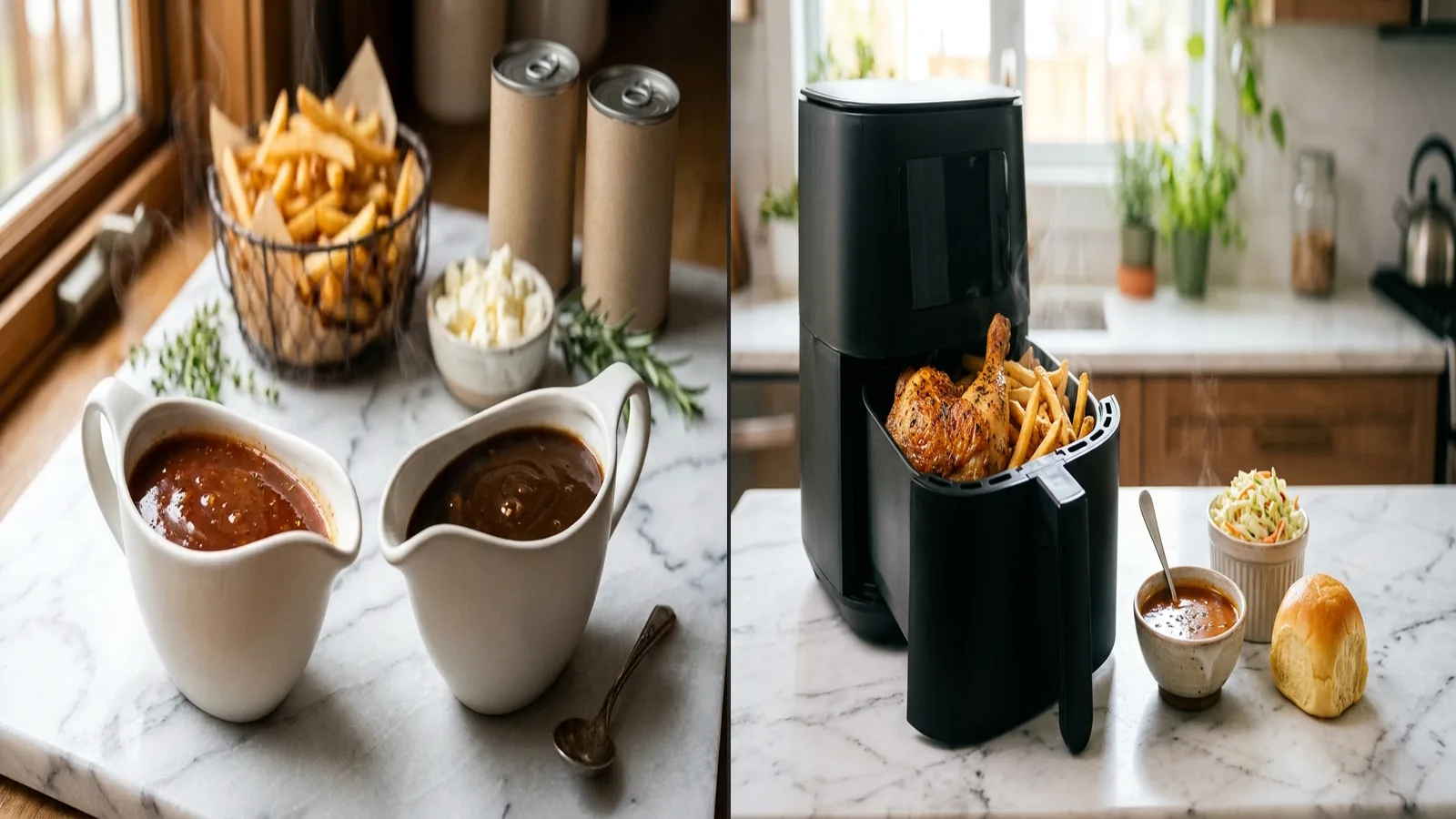
To clearly illustrate the dramatic sensory difference between preparation methods, our review team prepared two identical 600g boxes of St-Hubert BBQ wings side by side: one followed the exact manufacturer oven directions on a parchment-lined baking sheet, while the other utilized our 5-step air fryer technique.
The air fryer obliterated the conventional oven across every culinary benchmark. The oven-baked wings took nearly 45 minutes from preheat to plate, yielded greasy, flaccid skin that tore easily, and produced a pool of yellowish rendered poultry fat that pooled on the baking sheet. In contrast, the air fryer wings completed in under 20 minutes, shed their excess fat into the collection drawer, and maintained a resounding crunch that held up even after 15 minutes on the serving platter.
| Metric / Evaluation Criteria | Air Fryer Method (Our Hack) | Conventional Oven (Box Directions) | Winner |
|---|---|---|---|
| Total Prep & Cook Time | 18–20 minutes (No preheating required) | 35–45 minutes (+ 10 min oven preheat) | Air Fryer (50% faster) |
| Skin Crispiness & Texture | Blistered, crackling, ultra-crispy (10/10) | Soft, flabby, waterlogged bottom (4/10) | Air Fryer (Decisive win) |
| Grease Retention & Health | Excess fat drips away into collection pan | Wings bake and soak in rendered poultry fat | Air Fryer (Less oily) |
| Sauce Glazing Quality | Sticky, caramelized restaurant shine (90s) | Sauce runs off or burns if baked on sheet | Air Fryer (Sticky glaze) |
| Kitchen Clean-Up Effort | Single non-stick basket rinse (2 minutes) | Greasy baking sheet, burnt parchment & foil | Air Fryer (Zero hassle) |
| Overall Sensory Rating | 9.1 / 10 (Indistinguishable from dining room) | 5.4 / 10 (Disappointing supermarket snack) | Air Fryer (Undisputed) |
6. Value Breakdown: Supermarket Box vs St-Hubert Restaurant Delivery
Beyond culinary crunch and cooking techniques, the financial equation is where St-Hubert supermarket wings truly shine. With restaurant menu inflation impacting family budgets across Canada, how much are you actually saving by cooking supermarket wings at home?
At a St-Hubert rotisserie dining room or through direct online delivery, an order of 12 chicken wings served as a meal with coleslaw, fries, and sauce retails for approximately $22.95 to $24.50. Once you add Quebec provincial sales taxes (14.975%), standard delivery fees ($3.99 to $4.99), and a customary 15% tip for the driver, your 12-wing dinner routinely surpasses $32.00 to $34.00—costing roughly $2.70 to $2.85 per individual chicken wing.
By comparison, purchasing a 600g box at your local grocery store yields 14 to 16 wings for a regular price of $15.99 (or $11.99 on circular sale). That translates to approximately $1.06 per wing at full price, or an astonishing $0.80 per wing on sale. For a family or group watching a sporting event, preparing two grocery store boxes in an air fryer delivers ~30 restaurant-grade wings for just $24.00 to $30.00 total—saving over 60% compared to ordering restaurant takeout.
7. Final Verdict & Jean-Luc's Casse-Croûte Grade
St-Hubert Frozen Supermarket Chicken Wings are one of the most underrated gems in the Canadian grocery freezer aisle—provided you ignore the flawed baking instructions on the back of the box. The raw poultry calibration is genuinely high quality, the meat pulls tender and juicy from the bone, and the included sauce pouch delivers the authentic, nostalgic clove-and-smoke profile of St-Hubert's legendary rotisserie sauce. When subjected to a flat oven sheet, they flounder as a soggy, greasy disappointment. But when unleashed in an air fryer with our two-stage 18-minute crisping and 90-second caramelization technique, they transform into blistered, sticky, crackling wings that easily rival what comes out of a commercial deep fryer. At $11.99 to $15.99 a box, they represent one of the best budget dining hacks in Quebec.
Frequently Asked Questions
Can I cook St-Hubert frozen chicken wings straight from the freezer without thawing?
Yes, absolutely. In fact, you should never thaw frozen chicken wings before air frying. Cooking them directly from frozen allows the intense convection heat to evaporate outer ice crystals rapidly, rendering the subcutaneous fat and blistering the skin while keeping the interior meat juicy and tender.
Why do St-Hubert frozen chicken wings turn soggy when baked in the oven?
Baking sheets trap rendered chicken fat and escaping ice moisture beneath the wings. Instead of roasting in dry heat, the wings essentially steam and fry in their own grease puddle. Unless you bake them on an elevated wire cooling rack, the bottom skin remains limp, rubbery, and pale.
When should I add the included St-Hubert BBQ sauce packet?
Never add the sauce before or during the main cooking cycle. St-Hubert's authentic BBQ sauce contains high amounts of brown sugar, molasses, and tomato paste, which burn at 350°F+. Always air-fry the wings un-sauced until crispy, toss them in the warm sauce in a bowl, and air-fry for only 90 seconds at the end to caramelize the glaze.
How many chicken wings are inside a standard 600g St-Hubert grocery box?
A standard 600g box typically contains between 14 and 16 pieces, consisting of roughly equal parts drumettes and flat wingettes (flats). This portion comfortably serves two adults as a meal with sides or four adults as a game-day appetizer.
Are St-Hubert supermarket frozen chicken wings gluten-free?
No. St-Hubert frozen chicken wings feature a light wheat flour and starch dusting that helps the skin crisp and provides grip for the BBQ sauce. Furthermore, the BBQ sauce packet contains modified corn and wheat starches. Individuals with celiac disease should strictly avoid them.
How does the grocery store box price compare to ordering wings at the restaurant?
A 600g supermarket box costs between $14.99 and $16.99 (or $11.99 on sale) for ~15 wings, representing roughly $1.06 per wing. In contrast, ordering a 12-wing platter via St-Hubert delivery costs $22.95 before taxes, delivery fees, and driver tips—exceeding $32 total ($2.67 per wing). The grocery box saves you over 60%.
Compare 2026 St-Hubert Dining Room Prices
Browse our quarterly verified prices for rotisserie chicken platters, baby back ribs, and Midi-Go lunch specials.
More Canadian Food Comparisons

St-Hubert Sauce vs Swiss Chalet Sauce: The Definitive 2026 Canadian Taste & Ingredient Test
Explore the culinary science, spices, clove vs tomato-herb balance, nutrition facts, and grocery prices between St-Hubert BBQ sauce and Swiss Chalet sauce.
St-Hubert vs Boston Pizza: Canadian Casual Dining & Family Showdown (2026)
Compare St-Hubert's Quebec rotisserie chicken and fall-off-the-bone ribs against Boston Pizza's gourmet pizzas, Cactus Cut potatoes, and sports bar vibe.