St-Hubert Canned Sauce vs Powdered Sachet: The Ultimate 2026 Grocery Taste Test & Comparison
We tested the 398ml ready-to-heat can against the dry mix packet. Which one delivers authentic rotisserie flavor, better fry cling, and best value?
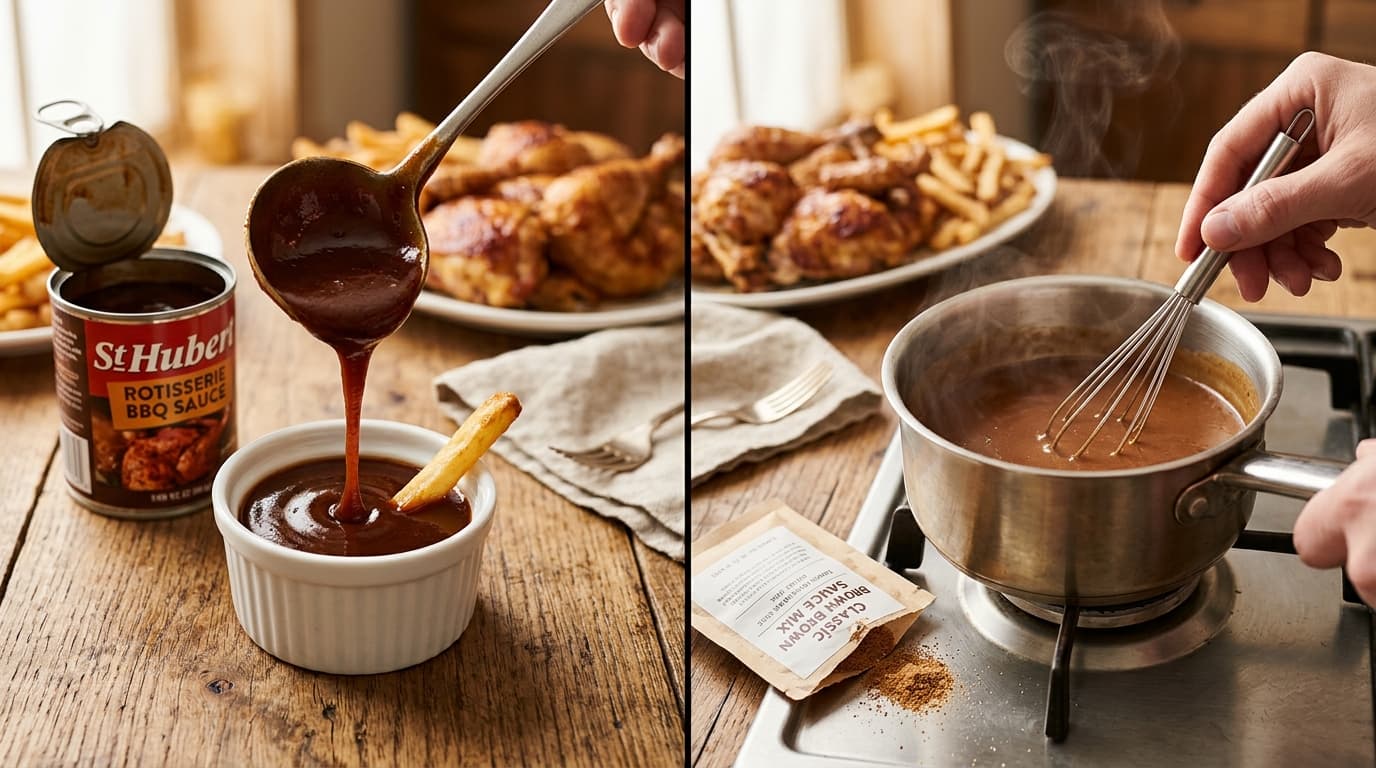
“In Canadian supermarket condiment and gravy aisles—from Maxi, IGA, and Metro in Quebec to Walmart and Loblaws nationwide—shoppers inevitably face a classic culinary dilemma: should you grab the familiar yellow St-Hubert 398ml can, or reach for the ultra-cheap dry powder packet hanging on the rack? Both promise the iconic, sweet-spiced Montreal rotisserie dipping experience at home. But does the convenience of the can justify double the cost per milliliter, and can a 52g powder packet truly compete in a blind taste test? We bought both, tested them side-by-side, and measured every metric.”
1. Format Overview: The 398ml Can vs The 52g Dry Sachet
Both products originate from St-Hubert's state-of-the-art food manufacturing complex in Boisbriand, Quebec, yet they are engineered for fundamentally different kitchen scenarios:
• The Ready-to-Heat Can (398ml / 14 oz): Fully prepared, liquid sauce sealed in a metal can. It requires zero culinary skill—simply pop the pull-tab, pour into a microwave-safe bowl or small saucepan, and heat for 2 to 3 minutes.
• The Dehydrated Powder Packet (52g / 57g): A dry, seasoned starch blend. Preparing it requires whisking the powder with 625ml (2.5 cups) of cold water in a saucepan, bringing it to a rolling boil over medium-high heat, and simmering for 3 to 5 minutes until the starches gelatinize and thicken.
Quick Yield Fact
One powder packet yields ~600ml of finished sauce, whereas one standard can yields 398ml. You get over 50% more volume from a single packet of powder!
2. Blind Taste Test: Flavor Depth, Cloves & Fry Cling
We conducted a blind sensory test using identical portions of hot French fries and roasted chicken breast:
• The Canned Sauce (Score: 9.3 / 10): From the very first dip, the canned sauce asserts its superiority in mouthfeel. It is thick, glossy, and velvety. Because the tomato paste, chicken broth, and ground cloves have matured together in a liquid emulsion under pressure, the flavor is integrated, rounded, and deep. It coats a french fry like a luxurious lacquer (cling rating 9/10).
• The Powdered Mix (Score: 7.9 / 10): When prepared strictly with tap water as instructed on the pouch, the powder sauce is noticeably more translucent. The initial taste delivers the signature St-Hubert clove-cinnamon profile, but the finish has a distinct cornstarch graininess and a slight hydrolyzed vegetable protein 'bouillon cube' aftertaste. Its fry cling rating is 7.5/10—it tends to drip off the potato faster unless cooked down extra long.
3. Preparation Time & Kitchen Convenience
When weeknight dinner chaos strikes, convenience matters:
• Canned Convenience: Maximum convenience. No pots to wash if microwaved in a bowl. Ideal for solo diners, quick lunches, or last-minute poutine toppings.
• Powder Convenience: Requires a saucepan, a wire whisk, measuring 2.5 cups of water, and continuous stirring for 5 minutes to prevent scorching the bottom of the pot. Starch lumps will form if you add hot water instead of cold water.
| Metric | Canned St-Hubert (398ml) | Powdered Sachet (52g) |
|---|---|---|
| Prep Time Required | 2 minutes (Microwave) / 3 min (Stove) | 5 to 7 minutes (Continuous whisking) |
| Pantry Storage Space | Bulky, heavy metal can (~480g weight) | Paper-thin, ultra-lightweight (52g) |
| Kitchen Tools Needed | Can opener (or pull tab) + bowl | Saucepan, wire whisk, measuring cup |
| Lump Risk | 0% (Completely smooth liquid) | Moderate (Requires brisk cold whisking) |
| Shelf Life | 2 to 3 years pantry stable | 18 to 24 months dry storage |
4. Ingredients, Sodium & Preservatives Audit
How do the formulas compare from an ingredient and health perspective?
• Canned Ingredients: Water, tomato paste, glucose-fructose, modified cornstarch, salt, chicken fat, vinegar, dehydrated onions and garlic, spices (clove, cinnamon), natural flavors, caramel color. Sodium sits at ~570mg per 60ml serving.
• Powdered Ingredients: Modified cornstarch, corn syrup solids, salt, dehydrated vegetables, hydrolyzed soy and corn protein, sugar, yeast extract, spices, dextrose, caramel color, vegetable oil, disodium inosinate and guanylate (flavor enhancers). Sodium is slightly higher at ~610mg per 60ml prepared serving.
The canned version relies more on real tomato paste and chicken fat, while the powder utilizes hydrolyzed plant proteins and yeast extracts to simulate savory poultry depth in dry form.
5. 2026 Price Breakdown: Cost per Milliliter
For budget-conscious shoppers feeding large families, the math tells a dramatic story across Canadian grocery stores:
| Format | Average Retail Price (2026) | Finished Volume | Cost per 100ml |
|---|---|---|---|
| St-Hubert Canned Sauce (398ml) | $2.99 - $3.49 CAD | 398 ml | $0.75 - $0.88 / 100ml |
| St-Hubert Powder Sachet (52g) | $1.49 - $1.89 CAD | 625 ml (prepared) | $0.24 - $0.30 / 100ml |
| Costco / Multi-Pack Cans (4x398ml) | $9.99 CAD | 1,592 ml | $0.63 / 100ml |
| Grocery 3-Pack Sachets (3x52g) | $3.99 CAD | 1,875 ml | $0.21 / 100ml (Ultimate Value) |
6. Chef Hacks: How to Make the Powder Packet Taste Like the Can
If you love the unbeatable economics of the powder packet but want the luxurious mouthfeel of the can, apply these three simple restaurant hacks:
Hack 1: The Broth Swap: Replace 1 cup of the tap water with 1 cup of low-sodium chicken broth. This instantly injects genuine poultry richness that dry hydrolyzed protein lacks.
Hack 2: The Cold Butter Glaze (Monter au Beurre): Once the sauce has thickened and you take it off the heat, vigorously whisk in 1 teaspoon (5g) of cold unsalted butter. As the fat emulsifies with the cornstarch, the sauce gains the glossy sheen and velvety body of the canned version.
Hack 3: The Clove & Cider Boost: Add a tiny pinch (1/16 tsp) of fresh ground clove and 1/2 tsp of apple cider vinegar right before serving. It restores the bright, aromatic top notes that get dulled in dehydrated processing.
7. The Final Grocery Verdict: Which Should You Buy?
• Buy the Canned Sauce if: You want the true 100% authentic St-Hubert restaurant taste without compromise, you value 2-minute zero-mess convenience, or you are making a quick dinner for 1 to 2 people.
• Buy the Powder Sachet if: You are on a budget, feeding a hungry family of 4+, packing supplies for camping or RV trips, living outside Quebec where shipping cans is costly, or willing to spend 5 minutes on the stove with our broth and butter upgrade hacks.
The Final Scorecard: Canned vs Powdered St-Hubert Sauce
The Canned Sauce wins on authentic flavor and mouthfeel (9.3 / 10), while the Powdered Sachet is the undisputed champion of value and volume (9.6 / 10 on value). For everyday family dinners, upgrading the powder mix with broth and butter delivers the best of both worlds.
Frequently Asked Questions
Does St-Hubert canned sauce taste the same as the restaurant dining room sauce?
Yes, it is remarkably close. The 398ml canned sauce is manufactured at the official St-Hubert commissaries in Boisbriand, Quebec using the exact proprietary spice and tomato blend used in restaurant dining rooms. Warming it gently on the stovetop produces virtually identical flavor and viscosity.
Why is the powdered St-Hubert sauce packet so much cheaper?
The dry powdered mix eliminates water weight and shipping costs, requiring simpler paper/foil packaging and no heavy metal canning. Because consumers add their own water and provide the cooking energy at home, manufacturing and distribution costs are dramatically lower.
How much sauce does one St-Hubert powder packet make?
A standard 52g or 57g St-Hubert sauce packet calls for 625ml (about 2.5 cups) of cold water. This yields roughly 600ml of finished sauce—giving you about 50% more sauce than a standard 398ml can.
Can I substitute water with chicken broth when making the powder mix?
Yes! In fact, culinary experts strongly recommend substituting half or all of the cold water with low-sodium chicken broth. It completely masks the dry starch aftertaste and elevates the powdered mix to restaurant-quality richness.
Which format has less sodium: canned or powder?
Both are relatively high in sodium. The canned sauce contains approximately 560mg to 590mg of sodium per 60ml serving, while the powdered mix averages 580mg to 620mg per 60ml when prepared according to package directions with plain tap water.
Compare 2026 St-Hubert Dining Room Prices
Browse our quarterly verified prices for rotisserie chicken platters, baby back ribs, and Midi-Go lunch specials.
More Canadian Food Comparisons

St-Hubert Sauce vs Swiss Chalet Sauce: The Definitive 2026 Canadian Taste & Ingredient Test
Explore the culinary science, spices, clove vs tomato-herb balance, nutrition facts, and grocery prices between St-Hubert BBQ sauce and Swiss Chalet sauce.

St-Hubert vs Boston Pizza: Canadian Casual Dining & Family Showdown (2026)
Compare St-Hubert's Quebec rotisserie chicken and fall-off-the-bone ribs against Boston Pizza's gourmet pizzas, Cactus Cut potatoes, and sports bar vibe.