How to Reheat St-Hubert Chicken & Fries: Air Fryer, Oven & Microwave Guide
The definitive test-kitchen guide to reheating leftover St-Hubert rotisserie chicken, restoring soggy takeout fries to crispy perfection, melting poutine curds, and safely reheating signature BBQ gravy.
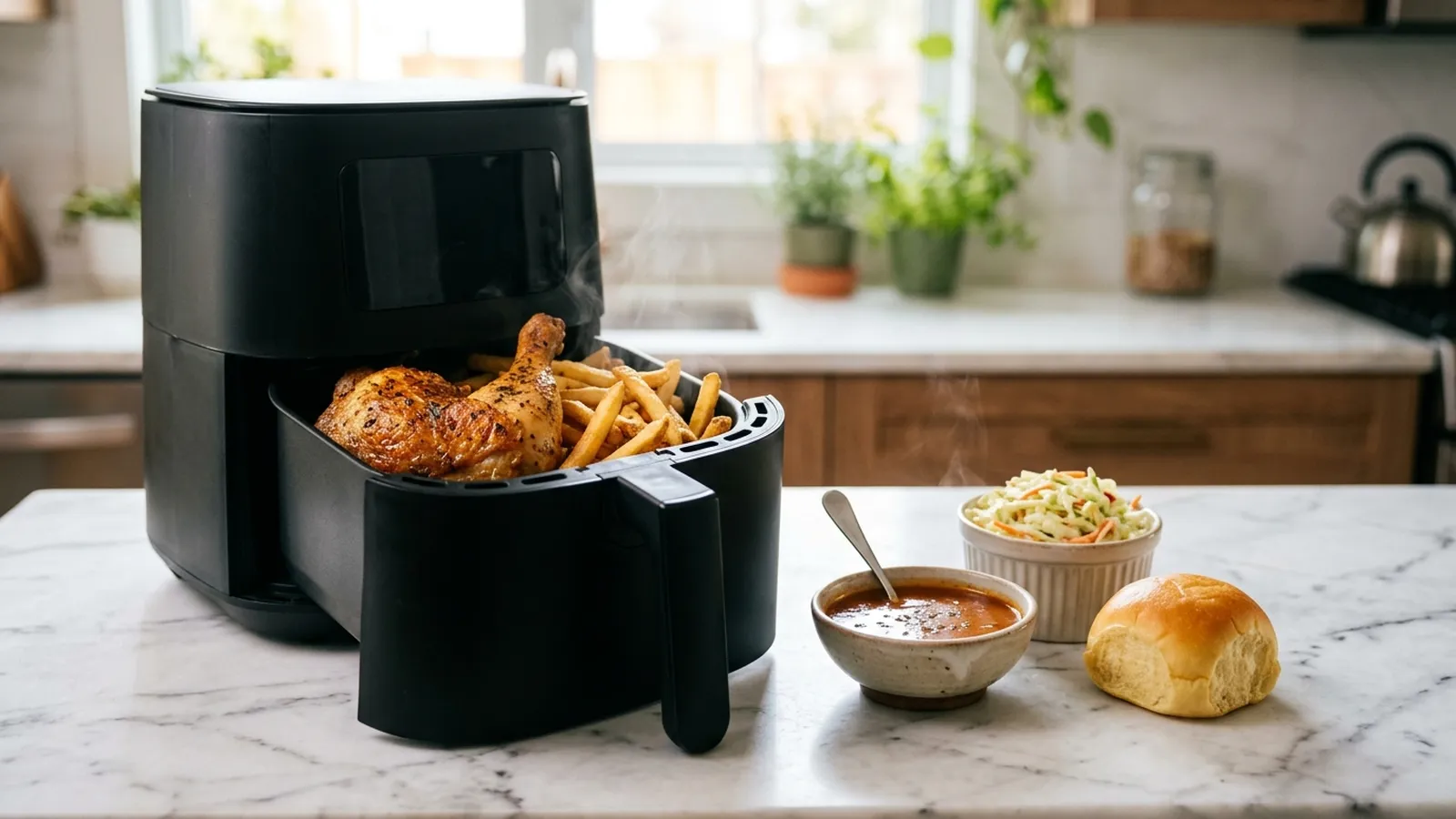
“Every Quebecer knows the heartbreak: you order a delicious St-Hubert rotisserie chicken dinner, but by the time the delivery driver rings your doorbell—or by the time you unpack your leftovers the next evening—the once-golden french fries have transformed into limp, damp sponges, and the aromatic roasted chicken skin has gone completely soft. Millions of diners instinctively toss their meal into the microwave, only to end up with rubbery chicken breast, mushy fries, and separated sauce. Fortunately, using modern test-kitchen techniques, you can easily resurrect your St-Hubert dinner back to restaurant-fresh perfection. Here is our comprehensive 2026 guide to reheating St-Hubert chicken, fries, poutine, and BBQ sauce using an air fryer, conventional oven, or microwave.”
1. The Physics of Takeout: Why St-Hubert Fries & Chicken Skin Go Limp
Before firing up your kitchen appliances, it helps to understand why St-Hubert takeout degrades so quickly during the commute from the rotisserie to your dining table.
Freshly roasted chicken and freshly fried potatoes emit enormous volumes of water vapor as they cool. When packed inside St-Hubert's classic cardboard boxes or plastic delivery bags, that hot steam becomes trapped in a micro-sauna. The moisture condenses on the surface of the food, re-hydrating the crisp outer starch layer of the french fries and softening the rendered chicken fat on the skin.
By the time 20 to 30 minutes pass, the crispy exterior has surrendered to humidity. Reheating your meal is not just about raising its temperature; it is an active dehumidification process. You must evaporate that trapped surface water without overcooking or desiccating the delicate poultry meat underneath.
2. The Air Fryer Method: The Undisputed Reheating Champion
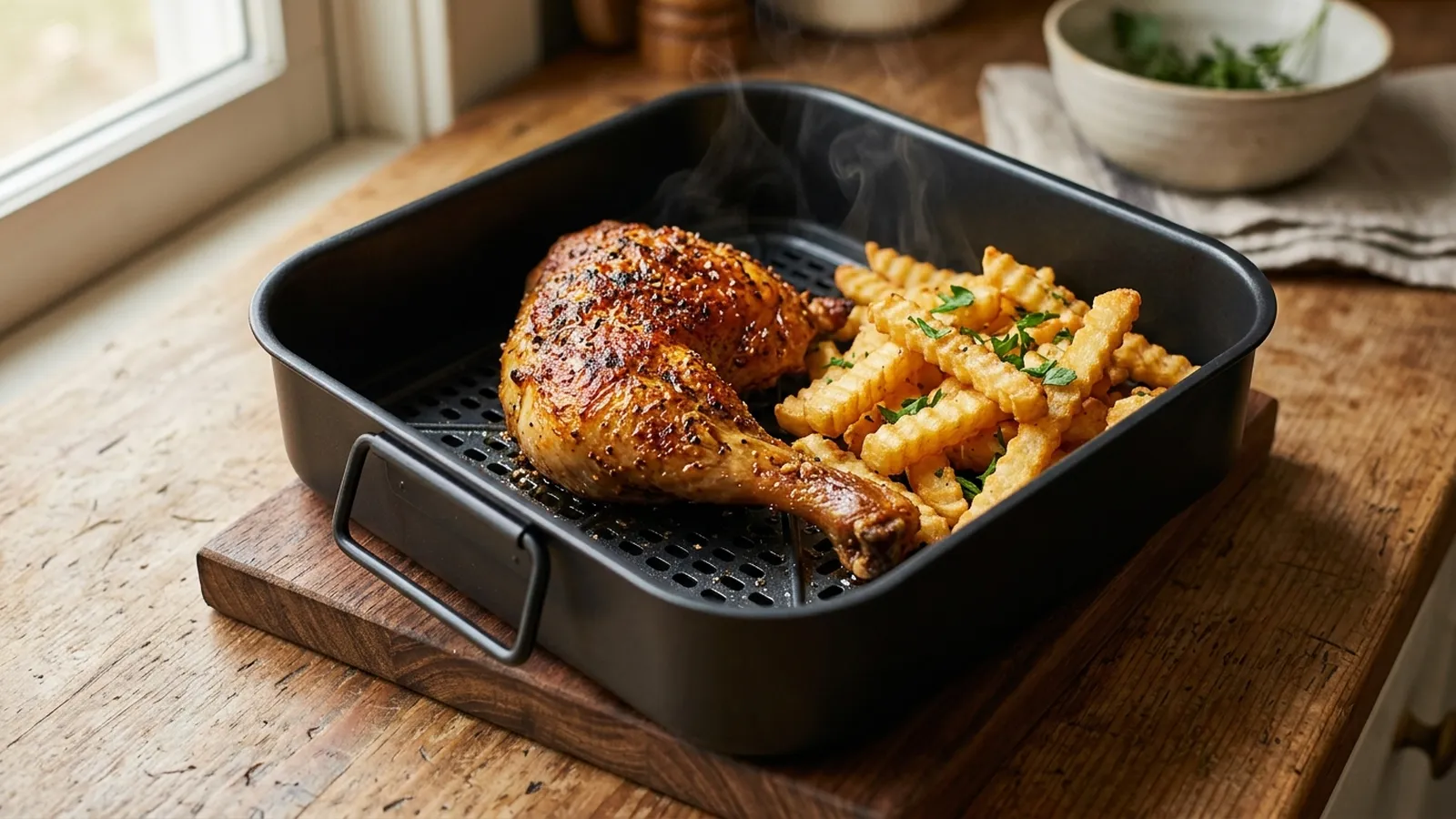
If you own an air fryer, consider yourself lucky: it is the single most effective tool ever invented for reviving takeout rotisserie chicken and french fries. An air fryer is essentially a compact, high-velocity convection oven that rapidly circulates superheated air across the food's exterior, evaporating surface condensation in seconds.
Step-by-Step Air Fryer Instructions:
• Step 1: Preheat: Set your air fryer to 350°F (175°C) and run it empty for 2 minutes. Preheating ensures instantaneous crisping upon contact.
• Step 2: Position the Chicken: Place your leftover chicken quarter (breast or leg) into the basket skin side UP. Do not crowd the basket; leave at least an inch of space for air circulation.
• Step 3: Heat the Chicken: Air fry at 350°F (175°C) for 4 to 6 minutes. If heating a thick bone-in chicken breast straight from the refrigerator, extend to 6–7 minutes. The skin will audibly sizzle and develop tiny, crackling blisters.
• Step 4: The Fry Revival: Remove the chicken and keep warm under foil. Crank the air fryer up to 380°F (195°C). Toss the limp St-Hubert fries into the basket in a loose single layer and fry for 3 to 4 minutes, giving the basket a vigorous shake halfway through. The fries emerge piping hot, golden, and surprisingly crunchy.
The Temperature Split Secret
Never reheat the chicken and the fries together at 400°F! Chicken needs moderate heat (350°F) so the interior warms through before the skin scorches. Fries need intense heat (380°F-390°F) for rapid moisture evaporation. Reheat the chicken first, then give the fries a lightning-fast 3-minute blast.
3. The Conventional Oven & Toaster Oven Technique (The Foil Tent Hack)
Don't have an air fryer? A standard kitchen oven or toaster oven can deliver 90% of the same crispy results, especially when feeding a full family with multiple leftover quarter chicken meals.
The greatest danger in a conventional oven is drying out the lean white meat of the chicken breast while waiting for the center to reach a safe 165°F (74°C). The solution used by professional restaurant chefs is the Foil Tent Method.
The Foil Tent Execution:
• Preheat your oven to 375°F (190°C). Line a large rimmed baking sheet with aluminum foil or parchment paper.
• Place the chicken pieces in the center. Drizzle or brush a teaspoon of water, melted butter, or poultry stock on the pan beside the meat. Loosely drape a sheet of aluminum foil over the chicken like a tent, crimping the edges slightly while leaving air room underneath.
• Bake covered for 10 minutes. The trapped steam warms the meat gently from the inside out without drawing out natural juices.
• Remove the foil tent, turn on the convection setting (or raise temperature to 400°F / 205°C), and spread the fries evenly across the remaining sheet pan. Bake uncovered for another 4 to 5 minutes until the chicken skin sizzles and the fries turn crisp.
This two-phase approach guarantees steaming, juicy chicken with restored golden skin.
White Meat vs Dark Meat Caution
A chicken leg (cuisse) is forgiving because its dark meat contains higher collagen and fat content. A chicken breast (poitrine), however, will become chalky and stringy if exposed to dry oven heat for more than 12 minutes. Check internal temperature with a digital thermometer; pull at 165°F immediately.
4. The Microwave: Why It Fails (And How to Minimize Damage If Rushed)
We have all done it during a rushed 15-minute lunch break: tossing a refrigerated St-Hubert chicken quarter and a fistful of fries onto a paper plate and nuking it on high for two minutes. The outcome is universally disappointing—the skin turns into wet parchment paper, the fries become limp rubber worms, and the chicken breast becomes tough as shoe leather.
Why the Microwave Destroys Texture:
Microwaves excite water molecules inside food, causing internal moisture to boil rapidly into steam. Instead of evaporating outward into dry air, that steam pushes through the chicken skin and potato crust, completely obliterating any remaining starch crispiness.
How to Minimize Damage If the Microwave Is Your Only Option:
• Cut Power to 50%: Never microwave leftover rotisserie poultry at 100% full blast. Dropping power to 50% allows heat to conduct gently through the chicken without boiling the meat fibers into toughness.
• The Damp Paper Towel Trick: Loosely drape a barely damp paper towel over the chicken to prevent surface drying. Heat for 90 seconds, check temperature, and add 30-second bursts if needed.
• Sacrifice the Fries: Accept that microwaved fries will never be crispy. Instead, chop the limp fries into bite-sized cubes, toss them in a hot skillet with a drop of butter for 2 minutes to make St-Hubert home fries, or repurpose them into breakfast hash.
5. How to Reheat St-Hubert Poutine & BBQ Gravy Safely
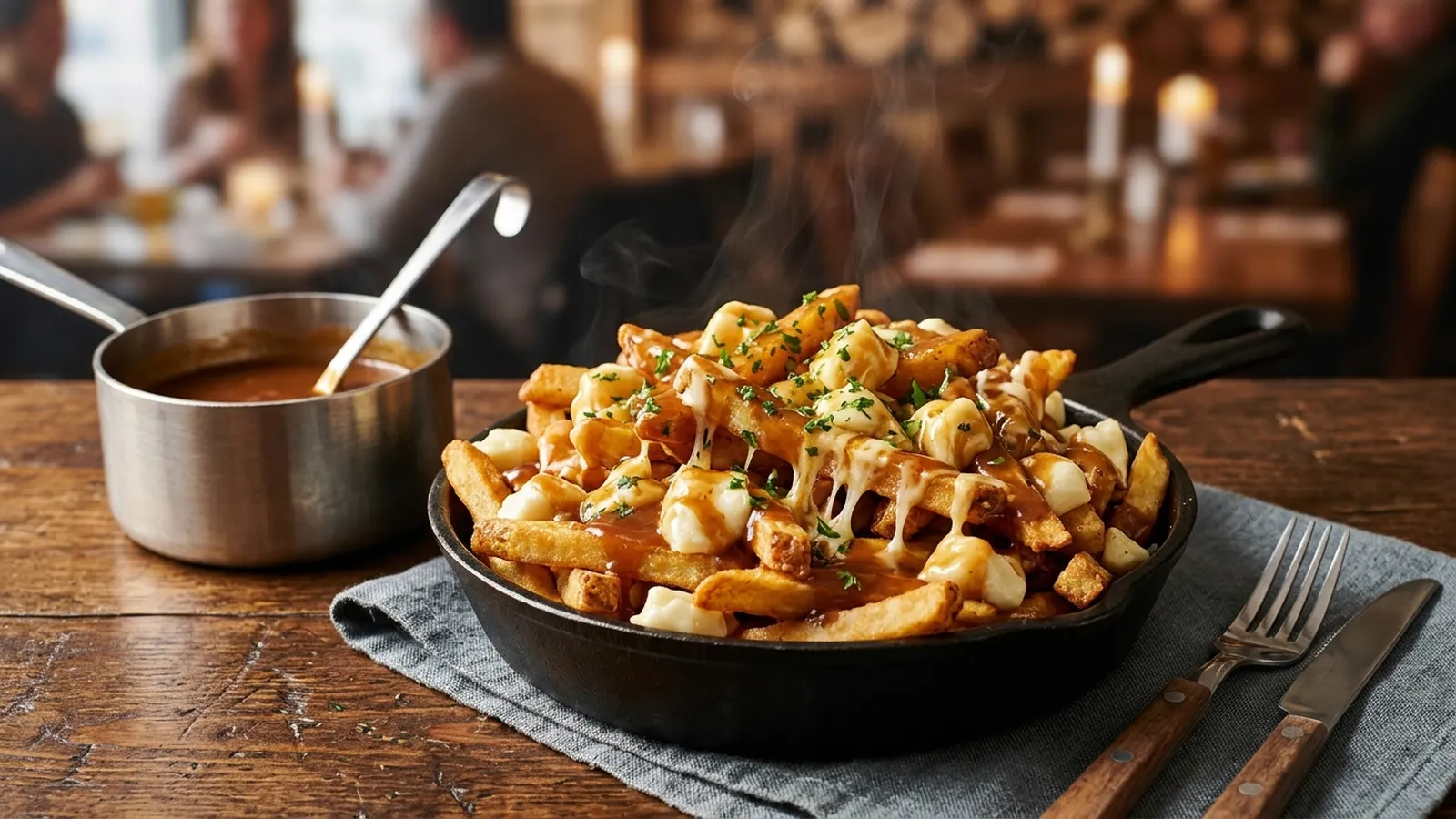
Reheating leftover poutine is considered by many Quebecers to be culinary heresy, but throwing away real squeaky cheese curds and rich gravy feels even worse. The problem: microwaving poutine turns the fresh cheddar curds into an oily, molten puddle while the fries turn into mush.
The Skillet or Broiler Poutine Rescue:
Transfer leftover poutine into a shallow cast-iron skillet or oven-safe ceramic pie dish. Preheat your oven to 400°F (205°C) on the Broil setting. Place the dish on the middle rack for 4 to 5 minutes. The direct radiant heat crisps the exposed potato tips and warms the cheese curds just enough to give them an appetizing stretch without melting them into soup.
Reheating Signature St-Hubert BBQ Gravy:
Never microwave the small plastic takeout cups St-Hubert uses for dipping sauce! High heat can soften thin polypropylene containers and warp the lids.
Instead, scrape the cold gelatinous sauce into a tiny stainless steel butter warmer or small saucepan over low heat. Whisk continuously for 2 minutes until it becomes glossy, smooth, and piping hot. If the sauce has thickened in the fridge, whisk in one teaspoon of warm water or chicken broth to restore its silky, fry-clinging viscosity.
6. St-Hubert Complete Reheating Matrix: Times, Temps & Crispy Scores
To make dinner prep effortless, here is our test-kitchen comparison chart detailing the optimal appliance, temperature, cooking time, and expected quality scores for every major St-Hubert menu component:
| Menu Item | Best Appliance | Recommended Temp | Reheat Duration | Crispiness Score | Juiciness Score |
|---|---|---|---|---|---|
| Rotisserie Chicken Leg (Cuisse) | Air Fryer | 350°F (175°C) | 5 – 6 mins | 9.8 / 10 | 9.5 / 10 |
| Rotisserie Chicken Breast (Poitrine) | Air Fryer / Oven Tent | 340°F (170°C) | 4 – 5 mins | 9.2 / 10 | 8.9 / 10 |
| St-Hubert French Fries | Air Fryer (Single layer) | 380°F (195°C) | 3 – 4 mins | 9.5 / 10 | N/A (Crisp) |
| Leftover Poutine | Oven Broiler / Skillet | 400°F (205°C) | 4 – 5 mins | 7.5 / 10 | 8.5 / 10 |
| Crispy Chicken Tenders | Air Fryer | 375°F (190°C) | 3 – 4 mins | 9.9 / 10 | 9.0 / 10 |
| St-Hubert BBQ Dipping Sauce | Stovetop Saucepan | Low Heat (Mijoter) | 2 – 3 mins | N/A | 10 / 10 (Silky) |
| Dinner Rolls (Petits Pains) | Toaster Oven / Oven | 300°F (150°C) | 2 mins (in foil) | 8.5 / 10 | 9.5 / 10 (Soft) |
7. 5 Pro Kitchen Hacks to Make Leftover St-Hubert Taste Like Day One
Take your leftover game to professional culinary standards with these five battle-tested kitchen secrets from Quebec comfort food cooks:
• 1. Separate Hot Food from Cold Sides Immediately: The minute your delivery arrives, remove the cold coleslaw, butter pats, and dinner rolls from the warm bag. Leaving cold slaw next to warm fries accelerates condensation inside both containers.
• 2. Vent the Cardboard Box on the Drive Home: If you picked up dinner at the drive-thru or takeout counter, pop open the corner tabs of the cardboard container during the drive home. Allowing steam to vent prevents fries from softening before you even walk through your front door.
• 3. The Olive Oil Mist Technique: Before placing refrigerated chicken into the air fryer, lightly mist the skin with cooking oil spray. The microscopic oil droplets accelerate thermal transfer, creating exceptionally blistered skin reminiscent of a spit roast.
• 4. Save Extra BBQ Sauce for Moistening Breast Meat: When reheating leftover white breast meat, shred it with two forks and toss it directly into warm BBQ sauce rather than reheating it whole. The shredded fibers absorb the savory gravy, completely eliminating dry texture.
• 5. Make Quebec 'Hot Chicken' with Yesterday's Leftovers: If your leftover chicken is cold and your fries are completely shot, embrace tradition! Shred the cold meat between two slices of white bread, smother with piping-hot St-Hubert canned or leftover BBQ sauce, and scatter a handful of warm sweet green peas over top for an iconic Montreal diner feast.
Final Verdict: The Best Appliance for Leftover St-Hubert
The Air Fryer takes the undisputed crown for reviving St-Hubert takeout. In under 5 minutes, it pulls trapped steam out of limp crinkle-cut fries and blisters the rotisserie chicken skin back to spit-roasted perfection without drying out the white breast meat. The conventional oven remains a dependable backup for large family-size feast platters, while the microwave should strictly be reserved for gently warming sauces, rice, and shredded meat in ceramic dishes. Follow these simple time and temperature rules, and you will never suffer through rubbery chicken or soggy fries again.
Frequently Asked Questions
Can I put the plastic St-Hubert BBQ sauce container in the microwave?
No. Takeout plastic ramekins (#5 polypropylene or polystyrene lids) can warp, melt, or leach unwanted chemicals under intense microwave heat. Always transfer the sauce into a small microwave-safe ceramic bowl and heat for 25–30 seconds, or warm it gently in a small saucepan on the stovetop.
How do I reheat chicken breast without drying it out?
Chicken breast (poitrine) has very little fat and dries out rapidly. Brush the surface with a tiny drop of melted butter or olive oil, or place a tablespoon of chicken broth or St-Hubert BBQ sauce on the bottom of a foil tent in the oven, or reheat in an air fryer at 340°F (170°C) for just 4 minutes.
How do you reheat St-Hubert poutine without melting curds into liquid soup?
In a microwave, fresh cheese curds break down into an oily liquid puddle. The secret is the toaster oven or oven broiler method: spread the leftover poutine in an oven-safe shallow dish or cast-iron skillet, bake at 400°F (205°C) for 5 minutes, or broil for 2 minutes. The cheese softens with stretch without liquefying, and the fries regain texture.
Can you reheat St-Hubert food in its original delivery cardboard boxes?
While kraft paper boxes are recyclable, they absorb humidity during transit and present a genuine fire hazard in toaster ovens or conventional ovens. Never place cardboard takeout packaging inside an oven or air fryer. In microwaves, remove any metal staples or foil liners first.
What internal temperature must leftover reheated chicken reach?
According to Health Canada food safety guidelines, previously cooked leftover poultry must reach an internal temperature of at least 165°F (74°C) measured with a digital probe thermometer in the thickest part of the meat.
How long can leftover St-Hubert chicken and sauce stay in the fridge?
Cooked rotisserie chicken and opened containers of St-Hubert BBQ sauce should be refrigerated at 4°C (40°F) or lower within 2 hours of purchase and consumed within 3 to 4 days. Cooked chicken can also be pulled from the bone and frozen in airtight freezer bags for up to 3 months.
Compare 2026 St-Hubert Dining Room Prices
Browse our quarterly verified prices for rotisserie chicken platters, baby back ribs, and Midi-Go lunch specials.
More Canadian Food Comparisons

St-Hubert Sauce vs Swiss Chalet Sauce: The Definitive 2026 Canadian Taste & Ingredient Test
Explore the culinary science, spices, clove vs tomato-herb balance, nutrition facts, and grocery prices between St-Hubert BBQ sauce and Swiss Chalet sauce.
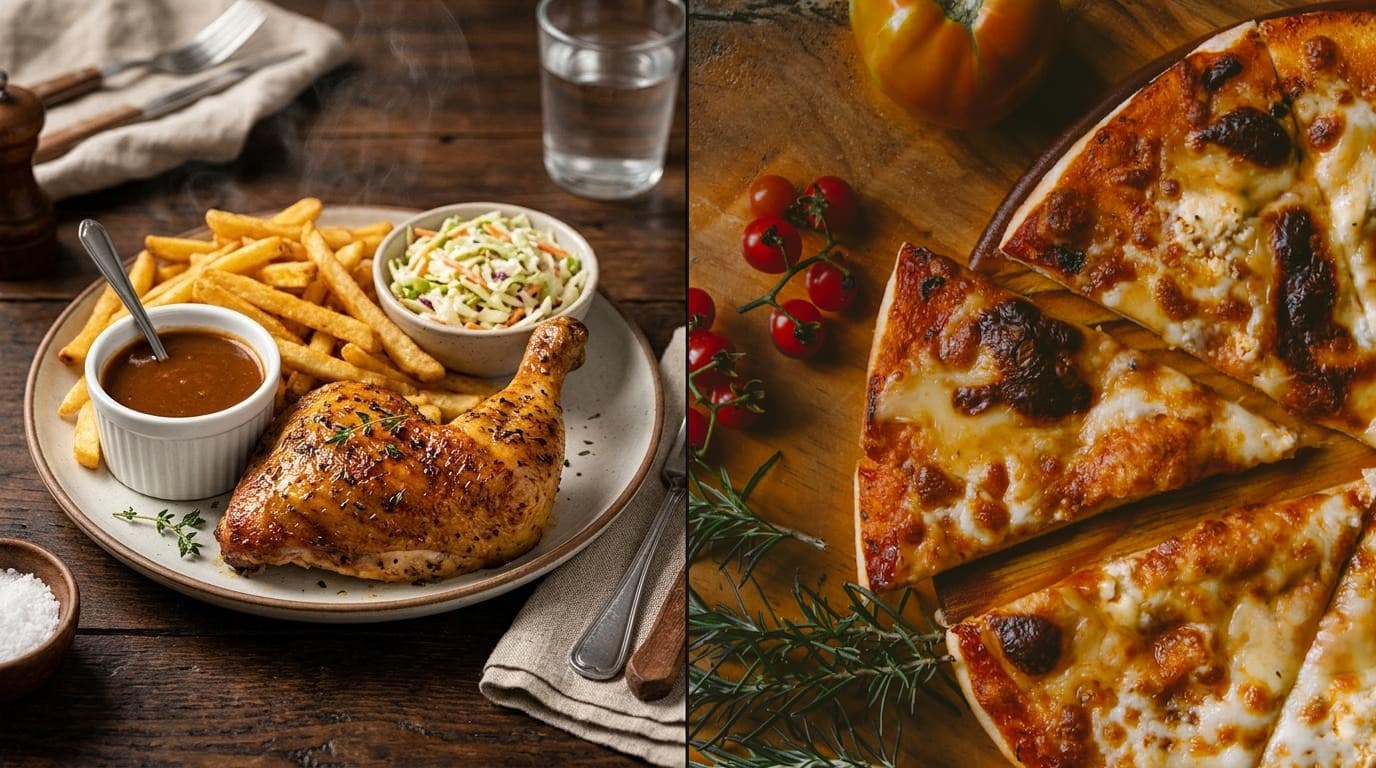
St-Hubert vs Boston Pizza: Canadian Casual Dining & Family Showdown (2026)
Compare St-Hubert's Quebec rotisserie chicken and fall-off-the-bone ribs against Boston Pizza's gourmet pizzas, Cactus Cut potatoes, and sports bar vibe.